


Mental Fitness Weekly 3-2-1
Be inspired. Discover new wisdom. And take action building your Mental Fitness.
Each Sunday, our free Mental Fitness Weekly 3-2-1 newsletter helps you reset, reflect, and take one small step forward as you plan your week ahead.

What can I expect from Mental Fitness Weekly 3-2-1?
Every Sunday, I’ll send you a short, evidence-based email full of wisdom and tools:

I’m loving - Nuggets of wisdom from voices that inspire me.
I’m loving - Nuggets of wisdom from voices that inspire me.

To reflect on - Practical reflections and insights to prompt you to pause and think.
To reflect on - Practical reflections and insights to prompt you to pause and think.

Worth applying - Simple actions you can use immediately to strengthen your Mental Fitness.
Worth applying - Simple actions you can use immediately to strengthen your Mental Fitness.
The emails come on a Sunday as this is the perfect moment to pause, reflect, and set your intentions for the coming week. When we enter each new week with clear intentions, it’s easier to stay focused on what really matters, remain calm when life becomes hectic, and approach challenges with greater resilience.
It’s Mental Fitness training – in just 5 minutes every week!
Let the Mental Fitness Weekly 3-2-1 newsletter be your weekly ritual to reflect and take a moment to yourself.
Your inbox is already overflowing, we know. So why sign up for another newsletter?
Well, Mental Fitness Weekly 3-2-1 is different:
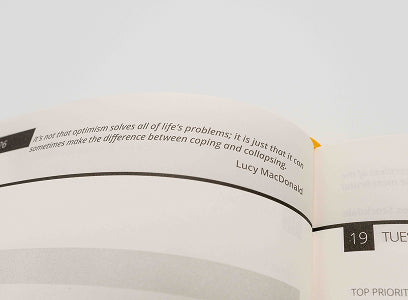
Consistent weekly insights
Each Sunday, you’ll get a short, powerful dose of inspiration and insight to help you pause, reset, and focus - so you can tackle your week with intention, not overwhelm.

Train your mind like you train your body
Just like going to the gym, Mental Fitness builds with small, consistent actions. This weekly email series is your reminder to think differently, reflect more deeply, and stay resilient no matter what’s going on.
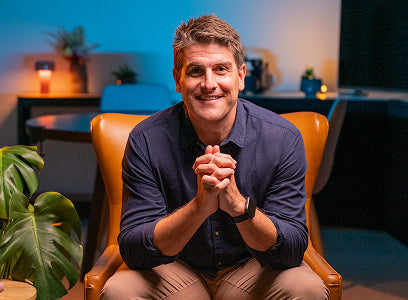
Every email is written by me
Hadleigh Fischer, and has the sole focus of sharing my latest reading and ideas with you – before they appear in our diaries or courses.
Sign-up now to receive your first email this coming Sunday. You can always opt-out.
I Want In3-2-1 Newsletter
Each week, you’ll get:
3 QUOTES I’m loving
Nuggets of wisdom from voices that inspires me.
2 IDEAS to reflect on
Practical reflections and insight to prompt you to pause and think.
1 TOOL worth applying
Simple actions you can use immediately to strengthen your Mental Fitness.
The goal of this series is to help you build a small but powerful weekly reflection habit that makes you feel more in control of your time and energy.
By starting each week with intention, you'll find it easier to focus on what really matters, stay grounded when things get hectic, and approach challenges with more calm and clarity.
These emails will be written personally by me based on my reading, research and interviews. No AI, just thoughtful, curated wisdom made for you.
Answer to help your customers feel more comfortable completing their purchase.
Answer to help your customers feel more comfortable completing their purchase.
3 Quotes I’m Loving
“If you had half an hour of exercise this morning, you’re in the right frame of mind to sit still and focus on this paragraph, and your brain is far more equipped to remember it.“ — John Ratey
“I cannot believe that the purpose of life is to be happy. I think the purpose of life is to be useful, to be responsible, to be compassionate. It is, above all, to matter, to count, to stand for something, to have made some difference that you lived at all.“ — Leo Rosten
“Character is a set of dispositions, desires, and habits that are slowly engraved during the struggle against your own weakness. You become more disciplined, considerate, and loving through a thousand small acts of self-control, sharing, service, friendship, and refined enjoyment.” — David Brooks
2 Ideas Worth Sharing
The Home as Sanctuary
In 1991, American forecaster and cultural critic Faith Popcorn wrote a piece about 17 trends that were taking over modern life.
One of them was called ‘cocooning.’ According to Popcorn, she noticed a new trend in how people were living their lives. She found that people were starting to spend more time at home, isolated from a dangerous, confusing and unpredictable world. She identified it as a response to rising urban anxiety, social complexity, and a general sense that the outside world had become exhausting to navigate.
Being exhausted, worn-out and despondent became a ‘thing’ - a cultural phenomenon. The internet, and modern smartphone and convenience culture continue to drive this trend, 35 years after it was first announced. The world doesn’t seem any less uncertain than then.
Around the same time Ray Oldenburn was writing about the decline of the ‘third place’ - Third places are ‘other places’ that aren’t home or work, and where we hang out with friends. Think, the gym, the pub, or the country club. Places we destress and escape from the pressures at home and work.
Oldenburg's concern was that the design of American suburbs were eliminating third places in favour of private domestic comfort. Today, the delivery economy, the streaming platform, and the remote work revolution have now continued what suburban architecture began. The home has not merely become a sanctuary - it has become a total environment, absorbing functions that once required people to leave.
This has implications for connection, loneliness, belonging and mattering. A common thing I hear around me is that people aren’t just all that neccessary in the modern world. We can do fine on our own.
Is it a good thing that our homes are larger and more comfortable and we can get more of ‘life’ there? I don’t know. Probably, if you’ve got a big family. I do know that people who live in the great communities of the Blue Zones (who live longer and tend to be happier) often congregate on their porches or their town squares because their homes aren’t palatial. In my view, anything that gets in the way of connection isn’t a great thing.
You could say the home becomes a sanctuary partly because everywhere else has become harder to be. And the ‘simulation of real life’ that we now spend so much time with - screens instead of nature, social media instead of real conversations - makes this seem normal - until our health starts to kick up a fuss. That’s where I start to take an interest.
What is this doing to our mental health? How should I be designing my life so I focus on what hasn’t changed in 3,000 years, while enjoying all the benefits of modern life?
So when I occasionally fantasize about my dream villa on the lake, I now stop to wonder what potential downsides that might have. Might it make me lazier, more insular, less connected and less a part of the community we’re all trying to escape from? Perhaps.
It’s Not Just the Work
Burnout is one of the most misunderstood and misused words in modern life. Most people use it to describe a gruelling week at work, or the sense that they are a bit tireder than usual. But burnout is ‘real’ and has a distinct definition and set of characteristics.
The World Health Organisation defines burnout as a workplace phenomenon resulting from chronic stress that hasn't been successfully managed.
The WHO definition consists of three characteristics. Exhaustion or depletion, increasing mental distance from your work accompanied by cynicism, and reduced professional efficacy. In other words, lower energy, more negativity, and getting less done.
Importantly, burnout isn’t the same thing as just being tired or having had a busy week or project. More specifically, in common parlance, burnout is often blamed simplistically on high workloads, toxic work environments, or at the individual level, on not setting appropriate boundaries.
These explanations however don’t get to the heart of the matter. Research shows that people burn out in jobs they once loved, in roles they chose, and with workloads they’ve previously handled effectively.
The key is our relationship to our work. Many high-workload people thrive under pressure. Others, with less objectively demanding roles, are less resilient. If ‘high-workload’ was enough, then every CEO, doctor or parent would be burning out.
Christina Maslach is one of the world’s leading researchers on the subject of burnout She identifies six specific forms of person-job misalignment that generate the syndrome: work overload, lack of control, insufficient reward, breakdown of community, absence of fairness, and values conflict. Her research consistently shows that high demands paired with high control do not produce burnout. High demands paired with low control reliably do.
In other words, if you feel like a pawn in a great game you don’t understand, and you’re being put under the pump (perhaps through a restructure, takeover or special project), you’re at greater risk of burnout.
The upshot is that organizations and their leaders need to do more to manage these six factors. This has led some commentators (such as Maslach) to conclude that individual resilience is secondary to organizational factors.
While this might be so, it strips agency from the individual while they wait for HR to implement a 5-year cultural change program. And it only takes one d***head manager leading a large team to undermine the culture of an organization with a climate that promotes burnout.
As usual, the answer is… a bit of each.
You can recover from overwork but not from losing your soul at work.
1 Tool Worth Applying
“Even If”, Not “What If”
You’re probably aware that rates of anxiety are rising among adults and young people across the developed world. Some estimates put the rates at double since 2008.
There're countless ways to combat anxiety - both the everyday kind from normal life and the clinical kind that gets in the way of everyday functioning.
But one useful linguistic tool I’ve come across and started using is called ‘Even if’, not ‘what if.’ It works like this.
When you say: “What if?” your mind is constantly full of doubt. You’re looking for all the things that can go wrong.
When you say to yourself: “Even if…. You’re approaching whatever happens from a place of strength. You’re reminding yourself that it doesn’t matter what happens, you’ll be able to deal with it. I find this resourcefulness and confidence and sense of control crucial to my ability to navigate life.
For example…
What would happen if we replaced “what if….” with “even if…”? “What if…” puts their focus on what may go wrong. “Even if …” reinforces the fact that no matter what life throws us, we can adapt, respond well
One of the big issues with anxiety is the fear of the unknown. In some ways, the defining characteristic of anxiety is uncertainty about the future and intolerance to uncertainty about the future. In other words, not knowing ‘hurts’ a little, and we’re programmed evolutionarily to need to know. Because knowledge is power and knowing a little more has usually meant we stay alive and thrive longer.
So whenever you hear ‘what if AI takes our jobs?” or “what if the price of fuel goes above $150?”, you could take action by asking: “Even if…”
3 Quotes I’m Loving
“Focus is a matter of deciding what things you’re not going to do“— John Carmack
“The evidence is clear that we are eating more calories than ever and that trying to change our energy expenditure is not going to make a significant difference to weight. Obesity is caused by increased food intake, not inactivity, and the best evidence shows that, by food, we mean Ultra-Processed Foods.“— Chris Van Tulleken
“The duty of a man is to be useful to his fellow men; if possible, to be useful to many of them; failing this, to be useful to a few; failing this, to be useful to his neighbours, and, failing them, to himself: for when he helps others, he advances the general interests of mankind.”— Seneca
2 Ideas Worth Sharing
Mental Health vs Mentally Healthy
When I ask people in my seminars and workshops what comes to mind when I say the words ‘mental health’, the answers usually range from negative to merely neutral.
Words carry meaning, certainly beyond their dictionary definitions. When people hear "mental health," the associations that surface are almost universally clinical - and very often negative: diagnosis, medication, crisis, breakdown, therapy, weakness.
However, when I ask what comes to mind when I say the words ‘mentally healthy’, I generally get quite different answers. Most people say things like: "‘vibrant, energetic, focused, positive.” The question is - how can mental health and mentally healthy have such different ‘meanings’ in everyday use?
The result is a phrase that, despite two decades of awareness campaigning, still functions in many people's minds as a synonym for mental illness. If the language we use shapes the behaviour we take, then beginning every conversation about psychological wellbeing with a term that most people associate with dysfunction is a significant problem.
That’s why we prefer Mental Fitness. This reframing, or reimagining of mental health is at the heart of everything we do at Resilience Agenda and Mental Fitness Daily.
Mental Fitness helps us move toward the real meaning of mental health. Mentally healthy is what you are working toward. Mental health, as commonly understood, is what you hope to avoid losing.
When you’re mentally healthy, you wake up most day excited by what you’re going to be doing that day. You look forward to warm and trusting relationships and giving to the people around you. You’re about to focus on what’s important, put in your best efforts, feel accomplished, and then rest and recover of an evening knowing you’ve done your best.
The Five Love Languages
Have you ever done something for your partner but didn’t think they noticed or appreciated it? Did this make you feel a bit rejected?
Or sometimes you think it’d be nice if your partner just told you a bit more often how much they appreciate all your hard work?
If that’s you, then there’s a chance that you and your partner don’t share the same love languages.
The ‘5 Love Languages’ was a concept created by marriage counsellor Gary Chapman in 1992. By languages, he meant that people give and express love in five different ways. What he found was that most people tend to give love in the language they most want to receive, not the one their partner actually needs. This can lead to conflict and resentment.
For example, let’s say you’re the breadwinner, and you think that by working hard and paying the mortgage you’re showing love to your family. But your spouse just wants you to be there and hang out more. So, they take it as a sign you don’t love them all that deeply. You give love through acts of service, but they want more quality time.
Chapman grouped the five love languages like this.
Words of Affirmation - these are verbal expressions of appreciation, encouragement, and acknowledgment. "I'm proud of you." "That dinner was delicious." "Thanks for handling that."
Acts of Service - this is about doing things to make another person’s life easier. Cooking dinner without being asked. Refilling the nappy drawer. Taking the afternoon off to give your spouse time for a massage.
Receiving of Gifts - this is about thoughtful tokens that signal "I was thinking of you." They don’t have to be expensive. It could be a book, a favourite chocolate bar left on the pillow, or buying something small at a gift-shop they’d like.
Quality Time - this is about undivided, present, uninterrupted attention. In the modern world it means phone put away, eye contact, or a walk where you’re fully present and non-preoccupied.
Physical Touch - this is pretty obvious. A hug at the door or sitting cuddled in on the couch. For many people, this is the primary signal that they are safe and loved.
In my own personal case (sorry to my wife if anyone reading this knows her) is that I value words of affirmation. But she’s not the overly loquacious type, and she likes to keep me level headed). Sometimes, I wish she told me more about all my wonderful attributes.
The best way to use this idea? Become more fluent in other people’s love languages, rather than expecting everyone to service yours. Be on the lookout for what someone - your spouse, kid, manager or mum - wants over the next few days.
1 Tool Worth Applying
What would future me do?
Every day we are faced with countless decisions and choices about how we should live and what we should do. Some of these seem small. Others are more consequential.
The challenge is that as humans we’re pretty awful at predicting our long term needs. We are terrible stewards of the welfare of our future selves.
‘Present bias’ is our tendency to overweigh immediate rewards over longer term ones. Just think of the famous marshmallow experiment by Walter Mischel (if you haven’t heard of it, do yourself a favor and read about it - you’ll be able to skip two pages from your next self-help book). We eat the cake today. Spend the money. Give in to yelling at our spouse because we ignore our long term needs.
Research by Stanford psychologist Hal Hershfield offers a fascinating explanation for why this happens. Brain imaging studies he conducted found that when people thought about their future selves, the neural activation patterns resembled those associated with thinking about a stranger, not themselves. In practical terms, our brains are inclined to treat our future selves as separate people, which makes it surprisingly easy to offload costs onto them.
This is why I use a tool (Ed. not enough sadly) where I ask myself - “What would future me do?”
When facing a decision, whether consequential or mundane, pause and ask yourself: "What would future me do?" More specifically, picture yourself five years from now, with the benefit of hindsight, looking back at this moment. That version of you has already lived with the consequences of today's choice (and hopefully thought through them deeply).
This is just a variation of sorts of the ‘choice point’ concept popularized by Russ Harris. Do I give in to how I feel or what I crave right this second? Or do I focus on my long-term values, what’s really important to me, and who or what I care about, and let my rational brain override my emotional brain.
Applying this of course, especially under stress, takes practice. That’s why it makes sense to think about low-stakes decisions like what to eat or whether you should exercise first (Ed - if you timeblock, these decisions require less willpower).
Over time, it simply becomes a habit. A part of your daily operating system.
3 Quotes I’m Loving
“It is better to fail conventionally than to succeed unconventionally.” —John Maynard Keynes
“A diagnosis that attributes all psychosocial problems to faulty wiring of a child’s brain makes it too easy to stop people asking: What in this child’s life is making them sick?” —Suzanne O’Sullivan
“Problems are not hard realities that permanently define people; rather, they are problem stories by which people know themselves and are known by. This separating of the problem from the person opens up space for seeing the problem and thinking about it in new ways, and opens up the possibility of authoring a better story - a better way of being and doing.” —Lorraine De Kruyf
2 Ideas Worth Sharing
Prescribing Exercise
Here’s something that might surprise you. Exercise works just as well as antidepressants for treating people with depression. (In most studies, the key is just as well, not always better - that’s an important caveat).
The two leading treatments for depression are, on the one hand, medications - such as SSRIs and, on the other, talk therapy - particularly Cognitive Behavioural Therapy. The problem is that some 30-50% of people don’t respond well to these two modalities.
That offers hope for a third way. That is, that doctors should be prescribing exercise as a way to combat the symptoms of depression for people experiencing it at a mild to moderate level.
That’s a claim from Dr. Brendon Stubbs, one of the world’s leading researchers into how exercise and movement impact mental health. While the claim that exercise is good for mental health isn’t new (the original research was conducted in 1999’s SMILE study by Dr. James Blumenthal), the idea of prescribing exercise is starting to become a common theme in treatment rooms, particularly in the UK.
What Stubbs has found is that regular and consistent moderate exercise (what we’d now call Zone 2 training - such as a brisk walk or gentle bike riding) can actually work better than vigorous exercise (Zones 4 or 5). This has meaningful implications for the many people who believe that exercise only counts if it's sadistic.
So why isn’t this more common?
Firstly, there’s individual barriers. It seems the most common barriers are how to exercise, and activating the behaviour and habits in people without recent experience of success in changing habits. Getting started, pain, motivation are all issues for people who aren’t in the habit of moving.
Secondly, 92% of physicians say that they have no training or expertise in how to prescribe exercise. Designing an exercise program often takes more than the 15 minutes you get in a short doctor’s appointment. And of course, there’s plenty of valid-enough reasons why people don’t exercise, and which need guidance and training to overcome.
Interestingly, a 2020 study by Evelyn Kleeman shows that physicians who were in better shape and exercised more themselves experienced fewer barriers prescribing than physicians who were less active.
As Blumenthal found over 25 years ago, the habit of exercise doesn’t just help your mental and physical health, it also gives you a sense of mastery - which tells you: “I can do this. I can do hard things, even if they feel tough. I can start things and keep going.” Pretty inspiring.
These findings keep getting replicated. Which makes the question of ‘how can I exercise more’ the question now, not just ‘should I?’
Social Offloading
You might have heard of 'emotional intelligence' - Daniel Goleman's term for the ability to read people and situations accurately and which is a cornerstone of wellbeing, leadership, and self-development.
In the new AI world, there’s a new phenomenon exerting itself on our relationships. It’s called ‘social offloading.’
‘Social offloading’ is where we outsource the task of interpreting a relationship situation to AI. The term was coined by Michael Robb, Research Head at Common Sense Media.
In their findings, ⅓ of teens already prefer interacting with AI compared to real people. And when we’re not having conversations with AI bots, we’re using them to tell us how to feel. In other words, people are putting simple text messages and emails through an AI filter to make them more palatable to the recipient.
In one famous example, a guy was about to dump his girlfriend, and he asked ChatGPT what to say. The response (which he sent to her) was a six paragraph wishy-washy fluff-fest that barely made the point of ‘I don’t want to see you anymore’ - because it was so couched in euphemism and the attempt to not offend. The girl in question said she wasn’t sure what the point of the message was.
The problem is that emotional intelligence is like a muscle. We build it through use. Yet human beings are increasingly relying on AI chatbots to mediate communication. So when sending potentially testy texts or emails, we’re putting them through AI to take off the ‘rough edges.’
This is all well and good. Except that it might be undermining the exact emotional intelligence that we need in the moment in real life conversations and situations. When you’re having a fight with your spouse, you can’t just pause and say: “Let me confer with ChatGPT before I reply.” We’re stunting ourselves in the long-term, to craft the perfect message in the short term.
The problem is twofold. First it creates the wrong expectations for what a conversation should be. And secondly, it kills our capacity to handle ambiguity in conversations. Two skills sorely needed in real life.
In the old days, we’d ask a friend or colleague: “should I say it like this?” And get some real world feedback on our comms. This was also a connection moment between two people. Outsourcing this to AI leaves us feeling a touch lonelier. Make this a habit, and those incidental connections drift.
The result, or rather, the fear, is that there’s a generation of younger people who are being bland, inauthentic and lacking in the courage to use their real voice because of a fear of offending or because they are seeking a type of perfection.
I’ve always been a big believer in the idea that because relationships are messy, that’s precisely what makes them worthwhile when we can get past all this stuff. That’s how trust is built. And you can’t trust someone who clearly isn’t invested in what they’re saying.
1 Tool Worth Applying
The “Change Your Mind” Test
You’ve probably been in one of those situations where you’re heatedly discussing some topic (for example vaccinations, climate change, or parenting tactics) and you sense the person you’re talking to is just not making sense. They’re just being irrational, aren’t open to new ideas, and your frustration starts to build.
I have a good friend with whom I have a fundamental difference in politics or ethics. That’s okay, but we often find ourselves getting stuck on the rights and wrongs of what we eat, the excesses of capitalism, or some such topic.
It’s in these situations that I’ve started using a tool, or a phrase, which helps me determine if this conversation is worth continuing, or whether I’m talking to someone who has a fixed belief, and who has no intention of revising it or considering alternatives, no matter what I say.
It’s: “What would it take for you to change your mind?”
Or another way - “what evidence would you need to see to see things my way?” If the person says ‘nothing’, which I’ve noticed people often do, then you’re in a situation where the person isn’t debating facts. Instead, they’re just defending their identity. In this case, the person isn’t using logical reasoning, which means they are being unreasonable.
It’s also fun to say to someone, if they are honest enough to say what the evidence would be, to ask them if they would update their view. If they say yes, you’ve got a lifelong friend.
The reason people don’t like changing their minds is that doing so becomes a threat to their identity. We all do it to an extent. The more we are invested in a belief (publicly promoted something or when our careers depend on it), then the more likely we are to hold tightly to that view.
If you’re in this position, and you’ve held onto a belief too tightly, and especially if its getting in the way of a relationship, probably the best thing you can do next time you speak is say: I was wrong. Here’s why.
Saying you were wrong feels great. It shows intellectual honesty. And it deepens the respect other people have for you and your opinions.
On any topic, you can always ask yourself too: What would it take to change my mind here?
3 Quotes I’m Loving
“Modern luxury is the ability to think clearly, sleep deeply, move slowly, and live quietly in a world designed to prevent all four.” — Justin Welsh
“The golden rule: never stop to decide whether a thought is “worth” writing. If it occurred to you, it’s worth recording. You can evaluate later. Polymath investor“— Polymath Investor
“Don't shut love out of your life by saying it's impossible to find. The quickest way to receive love is to give it; the fastest way to lose love is to hold it too tightly: and the best way to keep love is to give it wings. Don't run through life so fast that you forget not only where you've been, but also where you are going. Don't forget, a person's greatest emotional need is to feel appreciated.” — Bryan Dyson
2 Ideas Worth Sharing
The Zeigarnik Effect
I was doing my monthly task tidy up this week as I prepare for May. And like many small business owners and writers, I’ve got more to do than I have time for. (Thankfully this no longer causes me existential dread after reading Oliver Burkeman’s 4,000 weeks - if you haven’t, I recommend it).
I find that the nature of knowledge work (anything with a desk or a computer) is that things never seem finished unless I make wrapping things up explicit. There’s always another post to write, idea to think about, email to send, call to make etc.
This got me thinking about what is known as the Zeigarnik Effect. It is named after the Soviet psychologist Bluma Zeigarnik, who built on an observation that waiters in a Vienna café could recall unpaid orders in remarkable detail - but forgot them almost immediately once the bill was settled. Open loops stay open. Things that are finished are soon forgotten.
The point is, when a task is unfinished, it lives in our short-term or working memory. This takes up cognitive bandwidth. Sometimes we just worry about it. That’s our brain keeping unfinished business ‘flagged for attention.’’
Probably the most practical and relevant example most of us have experienced is an unfinished or unresolved thought or argument, or email you didn’t quite finish. Because we’re social beings, and we’re wired to get along with people, conflicts with others can be a pernicious example of the Zeigarnik effect. We ruminate on them.
The key message, close the loops. Just like the 2-minute rule, which says you should do something now if it can take 2 minutes to do (even if its an interruption), we can feel better about things if we have fewer open loops running. Bring tasks to a close. Bring larger projects into smaller tasks that can be ‘completed.’
For me, the classic one is upcoming and recurring birthday gifts. The invite list that’s never complete. I also try to limit how many work projects I have ‘on the go’ at any one time.
One of my favouring axioms - it’s not having too much to do that causes overwhelm, it’s not knowing what to do next.
So, what do I do? Externalize it. Write it down. Give my brain permission to forget. By making a plan, even if its just theoretical, it helps our brain close the loop.
Longevity vs Living Well
You don't have to go far online these days to hear someone spruiking a new potion or solution to the search for longevity.
Whether it's supplements, biohacking, or that guy Bryan Johnson spending millions trying to reverse his biological age, we're still lonelier, angrier, and less fulfilled than ever.
This made me think - if we’re unhappy living the life we currently have, why would we want to extend it? We want more time, but we don’t seem to be so concerned about how well we’re using it.
To be fair, the people deep in the biohacking world may well be doing great. I don't know. And if you're hustling 80 hours a week, maybe a weekly blood panel or a three-minute cryo session is exactly the edge you need to keep going.
But for most of us, the science and wisdom of what actually makes for a long and good life is fairly clear - even if it's hard to do given our cultural and economic epoch. Strong community bonds. A sense of purpose. Belonging somewhere. Being needed by someone or something. Minimizing chronic stress.
Look at the so-called Blue Zones - those communities around the world where people often live into their nineties and beyond. Older people in Sardinia or Okinawa don’t just retire and lose usefulness, they remain woven into the fabric of daily life - still needed, still connected and still doing (sometimes hard) stuff. They don't aim for longevity. They just live well, and longevity tends to follow.
I love that approach. It reminds of the quote about when you try too hard to be happy, it eludes you. But if you do meaningful things, it might happen. It’s the same here. Do the things that a good life involves, and it might keep you living longer.
1 Tool Worth Applying
SMART Work
When I give talks and workshops to companies, I constantly hear about ‘excessive workload’ and a lack of work-life balance as people’s key complaints.
For someone under the pump, this is understandable, and in some cases completely justified. But it’s also an incomplete explanation of why we lose interest in our jobs. Decades of organisational research suggest that workload is rarely the only culprit when people feel disengaged, burned out, or chronically dissatisfied. The more useful question is not simply how much work someone is doing, but what kind of work they are doing, and under what conditions.
Psychologist Sharon Parker has built a tool with 5 questions or ingredients that make a good day at work. Each element addresses a different dimension of the working experience. Where one is absent, engagement tends to deteriorate, regardless of how well the others are satisfied. I really like it, and I’m going to start incorporating this into how I design job descriptions and manage my team.
SMART is an acronym. First, is the work is Stimulating? How interesting, varied or solution-finding is required in the job.
Second, Mastery. This is the sense that you are developing, improving, and building expertise over time. Work that never stretches a person eventually begins to feel pointless. This probably explains why so many people seek to move on from a role after 2 or 3 years.
Third, Agency. How much control do you have over how the work is done, how decisions are made, or what methods or tools are used.
Fourth, Relational. How much support, purpose, social contact, recognition and esteem do we get and give from our work.
Finally, Tolerable Demands. This is the workload piece. This means ensuring that the job over the long term is appropriate. It also means the emotional strain of train or conflict isn’t overwhelming.
In other words, good work, at its most basic, comes down to a few consistent needs: clarity about what's expected, enough variety to stay engaged, some genuine ownership over how the work gets done, the resources and time to do it properly, and the confidence that support is available when it's needed.
If you’re stressed at work, have a think about which of the five factors above are missing. Importantly, if you manage people, have a think about whether these conditions are present in the work you oversee and for which people. If more than one or two are ‘low’, that’s a recipe for trouble down the line.
Most people don’t quit their jobs. They quit their bosses because they aren’t SMART.
3 Quotes I’m Loving
“Alcohol is often used as an emotional coping mechanism to numb feelings, or to mask social awkwardness, rather than to really connect on any meaningful level with the people you love.“— Gabriele Charotte
“I think the ingredients for success, or as we would say at Coca-Cola. “the secret formula,” is a combination of three things: vision, knowing what you want to be when you grow up; confidence, knowing who you are; and luck, or what I would call being in the right place at the right time“ — Bryan Dyson
“A fundamental paradox at the core of human life is that we are highly social and made better in every way by being around people. And yet over and over, we have opportunities to connect that we don’t take, or even actively reject, and it is a terrible mistake.” — Nick Epley
2 Ideas Worth Sharing
The Acceleration Decade
I recently came upon a wonderful long article (one of many topical articles about this devisive subject) about the impact of AI on individuals and society over the next decade.
Rather than being overwhelmed and discouraged, as much of the media coverage currently seems to leave us feeling (I think to pump tech valuations and make people feel dependent), I was instead encouraged.
That’s because the article highlighted a series of mindsets, habits and practices we can use to overcome the limitations and hindrances of modern life - in particular the increasing speed and complexity of everything.
Scott Barker, the author posits: We’re about to enter what I call The Acceleration Decade. It will be one of the most destabilizing decades in human history, particularly on the psyche. The change will be fast, personalized and relentless.
He came to this conclusion after an episode of personal burnout following a highly successful career (by typical achievement standards) in finance, marketing and tech. He’s one of many people who have climbed the ladder of success, and to quote Stephen Covey, found it leaning against the wrong wall.
Barker writes tenderly about how our personal and collective ailments are presenting themselves:
The cracks in the model are already showing through increased anxiety, sleep disruption, attention fragmentation, addiction pathways and loneliness.
He argues that this is because of one key defining feature of what technology manages to do. It compresses time. This is when you can order food and have it delivered in 20 minutes. Or when you can type a prompt and get a week’s worth of work in a minute, time is compressing.
Although we’ve had technological innovations in the past, the issue now is the combining of increasingly innovative technologies that lead to the acceleration of progress. And therefore, a reduction in the amount of time you have to wait for things.
I’m not talking physics, I’m talking about our subjective experience of time. Not that hours are shorter, but the distance between desire and fulfillment is collapsing. And our nervous systems were not built to handle it.
The consequence of all this for him was burnout. Or what the internet is today obsessing over - ‘nervous system collapse.’ Chronic stress that we just aren’t interupting well enough.
He goes on: “It required me to override my basic human needs. The needs of true connection, processing change, dealing with emotions and finding stillness. (The things that wisdom tells us actually matter for living a fulfilling life).
What continues to surprise me is why this is news. If you live a fast-paced life with very little time for recovery and reflection and the things that give meaning and purpose to life, of course at some point you’re going to burn out. Balancing the rat-race and our own personal needs in a sustainable way is the defining skill of the 21st century.
It’s not about blaming the world for being capitalistic, or overly-techy, or unfair - but simultaneously building our capability to deal with it, and showing up to try to improve the corner of the small world we can do something about.
FYI - I’d encourage you to read the full article from Scott Barker here. It’s on Substack - a new platform for written content by some incredible authors (watch this space for Resilience Agenda and Mental Fitness Daily)
System 1 v System 2
As you probably know by now, I love a good scientific concept. I find these mental models help me understand my own behaviour and make sense of the world around me.
One of the most important and rigorous ideas of recent decades is the concept of System 1 and System 2 cognition developed by the legendary psychologist Daniel Kahneman. It describes two ways our brain processes the world around us.
System 1 refers to our automatic, fast-thinking brain that operates with no effort on our part. For example, it doesn’t take any effort to know that 2+2 = 4 or that we should step back when a car drives past.
System 2 is our slow, deliberate thinking. It’s what we use when we’re contemplating starting a business or how much to spend on a new TV.
Why does knowing this matter?
Many of the things we think we are deliberating about and choosing consciously are actually decisions or beliefs that have already been made or formed by our automatic system 1.
What Kahnemann found is that we often have a feeling and then build a story or rationale for it later on using System 2. That’s why first impressions are so important. It’s how the online world seeps into our consciousness and impacts what we believe. It’s also how we so often ‘believe’ or fall for what we are shown on social media even though we know that everyone is showing the highlights of their best lives on Instragram, not stuck on the couch eating chips with puffy eyes.
It can also lead to false confidence in our problem solving and decision making, especially when we don’t go back and double-check our thinking.
You might have heard of the famous bat and ball problem. It goes like this. A bat and a ball together cost $1.10. The bat costs $1 more than the ball. How much does the bat cost? (the answer is at the bottom of this email). Most people answer really quickly, and get it wrong.
System 2 gets tired, and likes System 1 to do all the work. When we’re in a high-stakes negotiation (when we’d want System 2 to work), often System 1 is in charge.
Just knowing it’s there can keep our overconfidence at bay, and make us think twice before accepting everything at face value.
1 Tool Worth Applying
The Best Friend Test
I’ve been working on self-development for nearly 20 years. I love it. And in the past couple of years I’ve started working on a topic I would have always dismissed. It’s self-compassion. It’s made such a difference.
I know - your eyes probably rolled. That sounds a little soft doesn’t it? And that’s exactly what I thought for so long. If I’m not hard on myself when I screw up, then I won’t achieve my goals or potential. Turns out that’s wrong.
Self-compassion is the life’s work of psychologist Kristen Neff. It turns out you can still have high standards, be disappointed when you fail to reach your goals, and avoid the part where you berate yourself.
The key is the language we use when we fail.
She calls it ‘the best-friend test.’
“Would I say this to a friend who has just failed or had a setback?”
When you catch yourself beating yourself up and telling yourself how awful, unlovable and pathetic you are as a person (this is mindful awareness yet again being a vital component of good thinking and good living), she invites us to ask ourselves one question.
And of course, the answer is usually - “no.” You wouldn’t tell your friend she’s a worthless loser who deserves nothing. We shouldn’t say that to ourselves either.
That’s the trick. Practice the best-friend test on yourself. And give yourself a friendly hug of encouragement. Then, go and set a new goal or new strategy and get back on the horse.
So, remember ‘the best-friend test’ next time you’re having a down day. It takes 10 seconds.
3 Quotes I’m Loving
“Don't explain your philosophy. Embody it.“ — Epictetus
“You should never take criticism from someone you wouldn't take advice from.“— Aaron Rodgers
“Part of the issue with self-optimisation is clear in the name: it’s all about the self. And while taking care of your needs is, of course, important, fixating on achieving single-digit body-fat, “inbox zero”, and Zen levels of mindfulness can also look like narcissistic self-absorption that leaves minimal time for family, friends and community.” — Luke Benedictus
2 Ideas Worth Sharing
“My Bad” - How to Take Responsibility
I don't know about you - but I think conflict - like proper, bad-blood conflict - is one of the worst parts of human experience.
On the flipside, I love a good discussion or disagreement about ideas. But when someone emotionally hurts me, or gets unfairly upset with me, or is rude, or meanly critical, I get pretty sad.
And repairing these rifts is something that most of us are just so bad at. I met someone recently who was estranged from their sister and brother - hadn’t spoken in 5 years, separated from their partner, and not really all that close with their mum.
“How sad” I thought to myself. Whatever the issues were, what was it about how the situation deteriorated that led to such a rupture?
One principle I think has served me well is that the relationship comes first. This is a value of mine. What am I doing (I always look to my own actions first) or what is the other person doing that is making things break down here?
There’s the relationship - the big picture. And then there’s ‘the issue.’ Today it's the washing on the floor. Yesterday it was the price of the gift for a friend’s wedding. Tomorrow, it’s whoever’s job to go visit Grandma on Saturday.
The science shows that one of the most important components of a relationship is its ‘emotional climate’. Is it warm, or cold? Author John Gottman talks about how couples (in this case) who are more responsive to one-another’s bids for attention are less likely to divorce.
And one of the ways this gets more interesting is when people are big enough to own up to mistakes. To repair outbursts. To admit being wrong. To realize that saying: “I was wrong” or “That’s not how I meant it” doesn’t mean losing the argument.
The reason people avoid saying "I was wrong" is not usually that they don't know they were wrong. It is that admitting it feels like a status loss. The ego interprets an apology as a concession of power. Something bad will happen next.
In a finding my 15 year old self would laugh at, what the research consistently shows is that a well-executed, humble admission fault is actually a way to gain status. To be a bigger and better person.
My favorite? “Oh, my bad.” Saying “my bad” signals confidence, self-awareness, and emotional maturity.
This is how you break free of spirals of bickering and resentment. Where you don’t have to be right (or make a big point) over the thing at issue. Such as, whether the knives should be downward in the dishwasher. You might have a preference. Each argument has their merits. But it doesn’t need to sacrifice the warmth of the evening on the couch to make the point.
When you say “my bad” or “sorry”, people don’t rub your face in it. People worth having in your life recognize the courage it took to say that, react totally differently, and end up saying: “Oh, don’t worry about it, it was only small” but then going away thinking how differently you handle things to most people. And that leads to respect for next time.
Freedom vs Constraint
I was at the hairdresser today and I asked the barber whether he had ever considered opening up his own salon. To go into business for himself.
He said ‘nope’ - I’ve seen the effect on my friends and previous employers, and the stress is too great.
He then said something that reminded me of myself 20 years ago: “I just value freedom. That’s the most important thing.”
In my 20s, single, making my way in the world, all I wanted was freedom. To be unconstrained. No boss. No restrictions. No restraints. And I lived a free and wonderful life throughout my 20s - travelling, working in different places, studying. It was great.
But as I’ve gotten older, and especially over the past decade, I’ve decided that freedom is great - but it isn’t enough. I know someone who has recently come into a significant inheritance. They are free. But they are still miserable. That’s because meaning is lacking. Nothing matters.
Why? Because the things that matter in life can’t be bought. They need to be earnt. Deep connection and old friends or building something satisfying.
I’m reminded of Stephen Covey’s work in the 7 Habits of Highly Effective People (a wonderfully wise, if at times slightly dull book). In it, he talks about dependence, independence and interdependence.
We all start dependent. On our parents and caregivers. I need you. But it also relates to the attitude so many people take into adult life. It’s the adult who blames circumstances, organisations, the government, or other people for their outcomes.
Then there’s independence. I can do this by myself. I’ll admit I was seduced by this one in my earlier years, and I’m still finding my way out of. This is the self-reliance, individualism that defines so much of modern Western life. A lot of people conclude that this is the goal of life, when really it’s only the half-way point.
Finally, interdependence. This is about doing it together. Life. Starting a business. Being involved in the community. I was visiting a friend in the country the other day, and saw how connected he was to his street, to his local clubs, to his roots and school friends. The company where he works (and I used to) was successful because people teamed up to achieve a common purpose. This inspires me in my work.
So, for the people seeking freedom - sure - pursue that. Whether that’s family freedom. Or financial freedom. But don’t let that distract you from what you’ll come back to in 20 years and realize matters. Being connected.
The loneliness epidemic I talk about so often is partly a story of people stuck at independence. Western culture spent fifty years celebrating self-sufficiency - the self-made man. But as so many high-flyers find, achievement without someone to share it with is pretty hollow.
1 Tool Worth Applying
The CRIT Framework
Have you ever tried putting a prompt (a question or instruction) into AI and being disappointed by the output?
While I remain skeptical about the high-level and societal effects of the technology, I’m doing my best to learn a few ways to incorporate AI into my work and business. (I want to make clear that writing these newsletters with AI is not one of them - although I do use it for ideas and research).
One thing I’ve started doing recently is giving the AI model (ChatGPT or Claude for example) more information and structure with which to give me an answer. Giving it context.
That’s where I learnt the CRIT framework from my friend Ivan. He’s a tech-guy, and he uses author Geoff Wood’s technique, to design more thorough prompts.
CRIT is an acronym which stands for Context, Role, Interview and Task.
The Context means giving the AI tool your thinking. Tell it who you are and what you’re trying to achieve. For example: I’m a newsletter writer who helps people integrate Mental Fitness into their lives. I'm looking to expand the reach of my weekly newsletter.
The Role is giving the chatbot a job. Act as a digital marketing consultant with experience helping education brands.
The Interview is a unique step. Before asking for any output, ask the AI to ask you to clarify a few things. Ask me three questions about me, my brand or my goals to help you?”
For the Task, make it clear and specific. Based on the above, give me three unique non-obvious suggestions to help me frame my thinking and strategy.”
Most people skip ahead to the task: “Give me a list of…” “How should I…?” But all you get is an average search result. The interview is the key step. This is what turns a chatbot from a glorified Google Search into a thinking partner.
Is this strictly a Mental Fitness tool? Perhaps not, but if it helps you organize personal information better and to avoid getting bad inputs to your mind, then it can help.
3 Quotes I’m Loving
“The greatest danger in times of turbulence is not the turbulence. It is to act with yesterday’s logic.“ — Dr. Peter F. Drucker
“In entertainment, as in dining, modernity has transformed a ritual of togetherness into an experience of homebound reclusion and even solitude.“ — Derek Thompson
“If anyone tells you that a certain person speaks ill of you, do not make excuses about what is said of you but answer, ‘He was ignorant of my other faults, else he would not have mentioned these alone.’”— Epictetus
2 Ideas Worth Sharing
The Resilience Myth
I was in the airport the other day, and I was browsing the self-help section. That’s where I noticed a few new resilience books that all related to soldiers, special forces and extreme athletes. And to be honest, I didn’t like it. It wasn’t the resilience I have come to know, love and share.
One big myth of resilience is that it's a fixed trait - something you either do or don’t have, like a certain eye colour. The science shows however that resilience is learnable, and can be acquired by experience - by just dealing with the experience of something hard, or, it can be acquired through tools and skill-training - like what we do at Resilience Agenda and Mental Fitness Daily.
Another big myth is that you can just choose to be resilient in the moment. When someone close to you gets sick, when you’ve just heard you’ll be losing your job, or when you’re stewing about what to say to someone in a strained relationship.
In these cases, people just ‘expect’ you to ‘be’ resilient - as though you hadn’t thought about it earlier. You just decide right then and there. But of course, in the moment, the situation, and your emotions take over. If it were easy or natural, we’d all do it.
What the ‘choosing resilience’ approach and the ‘born resilient’ approach miss is the step in between the situation and the outcome.
Real resilience involves three steps, not two. It’s not just the situation and response.
Instead, real resilience is about situation, tool, and response.’
You don’t just choose to be more resilient. You have to do something. It requires a habit, or applying a skill, or thinking different. These are the things that make the biggest difference. Ideally, these skills have been learnt or practiced in the past, in less pressured settings.
For example, the breathing technique before a difficult conversation, the cognitive reframe when it looks like you will lose that client, or the habit of writing down what’s on your mind, rather than doom-scrolling the news to numb out.
Without the tool in the middle, resilience is just another word for willpower, and willpower, as any behavioural scientist will tell you, is neither reliable nor evenly distributed among people.
The people who navigate adversity well are not simply grittier than everyone else.
They have more and better skills. And they know when and how to use them.
The Next Ten Minutes
You know those times when you arrive to an appointment ten minutes early, or you get a spare ten minutes after a meeting ends early? The question of ‘what should I do’ looms large.
But we often waste these important moments of our day. And the way we use them, or misuse them, sets us up for failure or success or stress more than we often appreciate. Let me explain.
Most people treat these moments as time that doesn't quite count, like a gap to be filled rather than used effectively. I’ve found the default habit for most people is to pull out their phones and ‘check something.’ The news, messages shares, footballs scores. Whatever.
But the action takes time, might upset us, and becomes the ‘wasted time’ when we later wonder ‘where did the day go’? Brigid Schuld calls it ‘time confetti.’
In those ten minute gaps, you have enough time to tick off important items from your to-do list if you want. But more importantly, you have enough time to take action on so many of the ‘too-hard-basket’ Mental Fitness activities you never seem to have time for. Things that the energetic version of you once decided were a good idea, but that you dismissed because you didn’t have enough time.
For example - movement. You don’t need to do an hour-long workout to move. Get on the floor for a stretch. Do some squats, or go for a quick walk. That’s enough.
Or that idea you’ve been bubbling around. Write it down.
Or connection. We’re often so busy that we say we haven’t got time to reach out to the people we’re close to. But in ten minutes you can finally get back to that person who you’ve been putting off replying to. Or reaching out to that person who has disappeared from your nights out and you just want to check-in on.
It just needs to become a habit. An ‘if-then’ moment. For example: When I’ve got a moment, I’ll reach out to someone. Do this daily, and you’ll stay in touch with everyone you need to. (I also like to batch send and batch respond to people at key points in the day so I’m not constantly distracted by fragments of conversations).
For me personally, I’m trying to stay off the news at the moment. Usually, I’m pretty good at this. But with the war, and the entertaining Orange Man up to something new each day, and it being a place I’m interested in (I’ve visited Iran twice), I’m pulled toward it.
The consequence of this mindlessness is that it gets in the way of connection - one of my core values. I saw this recently when I was hanging out with someone, and they spent almost the entire time stuck in their phone scrolling for updates. I know more about Trump’s tweets than a week ago. But this person and I are no closer.
And living wisely means avoiding situations like this.
So, to take action on this - build a ‘set habit’ for when you notice you have ten minutes. A standing rule decided in advance. When I have an unscheduled ten minutes, I will do one specific thing.
My tip - start keeping a really organized, prioritized, and domain specific list of things to do. That means having a category for: “Things I can browse online” - bookings, presents, etc. “Things I need to be ‘out’ for”.
I’m not saying pack every moment with errands and tasks. Just if you’re online, make it meaningful.
1 Tool Worth Applying
“I am having the thought that…”
One of the most common ‘cognitive errors’ we make as humans is what psychologists call fusing with our thoughts.
This happens when we fail to separate the idea that the thinker is having the thought. Rather than recognising a thought as a mental event passing through the mind, the fused thinker treats it as objective fact. We believe that we are our thoughts, and take them seriously, literally, and uncritically.
We do this when we have our own 60,000 thoughts each day. Most of the time, this is harmless. But, when we aren’t in the habit of critically examining our thoughts, we start to believe things that simply aren’t true, aren’t completely true, or which might be true, but simply aren’t helpful for our goals or wellbeing.
The problem becomes acute when a thought is negative, distorted, or simply unhelpful, and our minds accept it without scrutiny. "I am going to fail at this", "Nobody here respects me." or "I won’t be able to handle this."
So what can we do? Well, just because we have a thought, doesn’t mean it’s true. We shouldn’t instantly believe everything we think or hear.
One helpful tool that has helped me relate differently to my thinking is an expression I learnt from psychologist Susan David. Instead of saying "I am anxious," you say "I am having the thought that I am anxious." Instead of "I cannot stand this situation," you say "I am having the thought that I cannot stand this situation." The key is the phrase: I am having the thought that…”
What it does is firstly separate the thinker from the thought. It also gives us some distance, and some space to ask. “Is this true?” And that often severs the often unhelpful link between the thought and your perceived identity.
You are not your thoughts. You are not your beliefs. It’s just so comfortable to hang onto them. What are you believing that might not be true?
3 Quotes I’m Loving
“The chief enemy of good decisions is a lack of sufficient perspectives on a problem.“ — Alain de Botton
“Not all people are called to be hermits, but all need enough silence and solitude in their lives to enable the deep inner voice of their own true self to be heard at least occasionally.“— Thomas Merton
“You measure the size of the accomplishment by the obstacles you had to overcome to reach your goals.”— Booker T. Washington
2 Ideas Worth Sharing
Is this ball glass or rubber?
Commencement speeches at US colleges seem to be places where a significant amount of pithy and hopefully inspirational wisdom gets shared by successful people with those who aspire to bright future.
Steve Job’s 2005 speech delivered at Stanford just before his passing is immortal for encouraging people to follow their dreams and to ‘stay hungry, stay foolish.’
But there’s another commencement speech that I like which has impacted how I live my own life and how I plan to live the rest of it.
In 1996, the CEO of Coca Cola - Bryan Dyson - was speaking to graduates at Georgia Tech (Coca-Cola happens to be the biggest employer in the area). In it, he encouraged people to understand three ingredients for success - vision, confidence and luck. Knowing what you want, knowing who you are, and being in the right place at the right time.
But the most famous takeaway from this talk was his analogy of the glass and rubber balls.
“Imagine life as a game in which you are juggling some five balls in the air. You name them — work, family, health, friends and spirit — and you’re keeping all of these in the air. You will soon understand that work is a rubber ball. If you drop it, it will bounce back. But the other four balls ~ family. health, friends and spirit — are made of glass. If you drop one of these, they will be irrevocably scuffed, marked. nicked. damaged or even shattered. They will never be the same. You must understand that and strive for balance in your life.”
Speaking to graduates about to embark on their careers, they were no doubt hungry and eager for success and advancement. And while making money and climbing the corporate ladder and making a difference are all valid goals, often they come with trade-offs and costs.
So often, we over-invest in our careers - ending up working for employers who suddenly restructure our roles making us redundant or replace us with AI bots - that we ignore what we say truly matters deep down, and what wish we’d focused on at the end of our lives.
The key point is that when you lose your job, you typically find something to replace it with. But getting to middle age and realizing that you’ve got no friends? That you’ve developed a difficult to treat lifestyle disease, or that you’ve got no interests beyond your work is a pretty sad and regrettable state of affairs.
And what can happen - and is happening all too often in our hypercompetitive modern world - is that all that time invested in our careers just to ‘keep up’ leaves us vulnerable to burnout when something changes.
The lesson? Diversify your life. The best leaders I know have friends. They have stress outlets. They explore their interests. They likely got to where they are pursuing them, not ignoring them. Even if they love what they do.
Hold Your Beliefs Lightly
If you asked people to agree or disagree with the assertion: “I am open-minded and tolerant of new ideas”, I imagine you’d get the vast majority of people saying “yes” to this statement.
The problem is in reality we so rarely do this in practice. Many of us hold views that were put there by suggestion from someone else, by the big-tech algorithms, or by outdated knowledge we learnt 20 years ago at university.
We don’t update them based on evidence, facts and recent developments. We aren’t in the habit of systematically checking-in on what we believe. And that matters because what we believe impacts how we think, which then impacts how we feel and act.
You might have heard of confirmation bias. This is one of the core psychological traits we all have whereby we seek out evidence that confirms our existing beliefs and ignore evidence to the contrary. If climate change is destroying the planet, then every bush-fire is evidence of that fact. If carbs are the source of weight-gain, then every loaf of bread is a toxic minefield.
When you’re got a fixed view on something and you’re only interested in expressing it, and don’t engage in the process of learning new facts, insights or opinions, division and conflict are the result (just look online).
That’s why the expression ‘to hold your beliefs lightly’ is so powerful. As the economist John Maynard Keynes is supposed to have said when pressed by someone about changing his mind on something: 'When the facts change, I change my mind - what do you do, sir?'
It means that we hold our beliefs provisionally. Not a fixed and final view we’ll have til the day we die. But a: “this is my belief until evidence emerges to the contrary.”
One of my favourite ways to think about this when I’m talking to someone who is being difficult is to ask them one question: “What would have to happen for you to change your mind?” Or: “What would make you change your view.” If they can’t tell you that, you can conclude that they aren’t being rational about the situation.
Research on psychological flexibility (a key principle of Mental Fitness) shows that people who can update their beliefs, adapt to change, and tolerate ambiguity tend to have better emotional well being and resilience.
In other words, we’d do better to hold our beliefs about the world (in particular our political views and our social attitudes) a little more like scientists. Not holding beliefs tightly, but instead asking continually - how might I be wrong?
The problem is, changing our minds is hard. Admitting we were wrong is hard. But it’s a heck of a lot easier when we hold our beliefs lightly. And that gets easier (and our interactions with others become more pleasant) when we start with: “I could be wrong, however I believe that…” or “This might change in future, but…”
Try it and see what you think.
1 Tool Worth Applying
The 5-4-3-2-1 Exercise
Sometimes when we’re anxious we just can’t stop our thoughts from racing. You might be about to give a presentation or meet someone new.
“What if they don’t like me?” “What if I forget my words?”
Feeling a little nervous about new or uncertain situations is totally normal. When this becomes regular and excessive and out-of-proportion then it can become debilitating.
So, it helps to have a reliable ‘go-to tool’ for breaking out of these spirals. Or, even if you’re just a little jittery, to bring yourself back to calm.
One I like is called the 5-4-3-2-1 exercise. It’s commonly used in therapy, but can be used by anyone at any time to ‘distract’ ourselves from emerging panic and bring us back to reality - to the present moment.
It works like this. The five numbers represent our five senses. Sight. Touch. Hearing, Smell and Taste. The idea is to think of 5 things you can see. 4 things you can touch. 3 things you can hear. 2 things you can smell. 1 thing you can taste.
Look around at what you can see. Individual items. The lights on the ceiling. A plant or a stop sign. What can you touch? Your clothes. The table. Some leaves. You get the point.
What this does is it directs your mind’s attention from what’s troubling you (your thoughts - the 60,000 daily thoughts that make up our experience of daily life) and onto something else. What’s interesting is that sometimes you have to focus really hard to smell something. Or to notice the taste in your mouth. These are the everyday sensations we only notice when we’re thinking about them.
It doesn’t matter if you don’t do the correct counts for the correct sense. That’s not something to get anxious about.
This only needs to take about 30 seconds. By that time, your nervous system often resets. You’re back in reality - in the present - and things feel more certain, more true, more calm - even if just for a few moments.
Combined with the calm breathing techniques (the key takeaway of any breathing technique is usually slow, deliberate out-breaths - notice how it requires conscious attention to breath out slowly) - you should have a little toolkit for feeling calmer on command.
Remembering to do it in the moment is the skill. Built through practice when things are less full-on.
3 Quotes I’m Loving
“Education is an ornament in prosperity and a refuge in adversity.“ — Aristotle
“In a nutshell, the fountain of happiness can be found in how you behave, what you think, and what goals you set every day of your life.“ — Sonja Lyubomirsky
“Everybody is identical in their secret unspoken belief that way deep down they are different from everyone else.” — David Foster-Wallace
2 Ideas Worth Sharing
Too little, too much, or absent
In my work talking to companies about mental health, and writing about mental health in ways to make it more ‘palatable’ for people to absorb, I’m always keen to learn new ways of simplifying things to help people feel more confident managing their own mental health.
That’s why I was happy to discover Edward Hallowell’s description of what a mental illness is in his book Driven to Distraction. (I should point out here that mental health and mental illness are not the same thing - a separate point).
Rather than being mysterious or unknowable, Hallowell argues that a mental illness is when a normal brain function is either overactive, underactive, or absent. I’ve found this a helpful way of thinking about the different issues people may be facing.
For example, with anxiety disorder, our normal and healthy ability to estimate danger and fear the unknown or the uncertain future is overactive to the extent that we can’t function. For major depression, the reward centres of the brain may be underactive which reduces motivation. And in more severe personality disorders, absence of empathy may be a defining characteristic resulting in anti-social behaviour.
I find this simplification makes understanding mental illness a little more human. Rather than thinking ‘what’s wrong with me?’ we can instead think ‘what might be out of balance?’
Just this simple reframing may encourage people to have a different relationship to their own mental health, to seek new solutions, or ask for help. And for others to have a little more empathy. And that is a good thing.
The 100th time
I have this idea for a video to make one day where I walk around asking people if they value wisdom, understanding themselves better, and whether living a meaningful life is worthwhile. I imagine most people would say yes.
In the second part of the video I would go around asking the same people if they enjoy or participate in ‘philosophy.’ I imagine I would mostly get blank stares and polite nods.
The thing is, practicing philosophy and loving wisdom are exactly the same thing. The word philosophy means…love of wisdom. It’s this misunderstanding of what philosophy means that I hope to correct a little through our work with Mental Fitness Daily.
Philosophy is such a misunderstood term. It’s not about dry academic debate, the definition of obscure words, being indifferent to suffering or all about the meaning of life.
Instead, real philosophy is about how to live well - especially in a world riven by uncertainty, war, powerful people misusing their privilege and endless distractions.
What I love about philosophy is that it connects me with people across history who have wrestled with the same human challenges we all face from time to time. Grief, failure, jealousy, purposelessness, addiction. Almost every human problem has been felt by someone before me. Some of these people wrote down (or made videos about) what it was like and what they did about it. This becomes a resource of guide-book for us.
What this means is that my experience of a problem probably isn’t the first time that experience has ever been felt. I’m not alone in this. We get a similar experience of communion from reading great fiction.
When I read (or watch philosophy), I learn timeless principles of emotional regulation, decision-making, problem-solving, and interpersonal skills. When something goes wrong in my life, for me, I’m comforted that it’s generally less of a shock (“oh that shouldn’t have happened”) when I’m reminded this is how life is. Philosophy helps me prepare.
Think about heartbreak - the end of a relationship. When you’re 15 and this happens the first time, the world feels like it’s collapsing and you’re inconsolable. But the 100th time you’ve seen or read about lost love, or maybe even lived through it, the pain isn’t quite the same.
It’s still there. Still raw. It’s just less of a shock. What’s happened is you’ve built perspective. The 100th heartbreak isn’t easy. But it's no longer unimaginable.
About 18 months ago, I lost my dear mum. It was difficult. I cried a lot. I still miss her. But it wasn’t a tragedy. It wasn’t an injustice. And that made it just the slightest bit easier to handle. I’d foreshadowed her loss in advance. Just as I now do with my wife and son. And then wake up grateful every day they are still there to appreciate.
In this way, philosophy acts like mental and emotional rehearsal. A toolkit, or a handbook for resilience.
The issue is that in today’s world, we’ve eliminated so many of the fears and anxieties of the past (and this is a good thing) that we often don’t get to practice the art of resilience in real time.
For much of human history, people lived with constant reminders of mortality - plagues, wars, the death of children, physical labour, and hardship. These weren’t one-off shocks. They were recurring experiences that shaped people’s worldviews. Life was suffering, and the question was how to face it with grace.
Today, many of us can go through the first quarter of our lives without confronting a major loss, illness, or setback. So when one finally hits, it can feel like the world is falling apart - not just because it’s painful, but because it’s new.
Philosophy helps us understand that there’s really nothing new under the sun, just the human experience rhyming in new ways. Others have walked our path and found their way through.
1 Tool Worth Applying
STOP
One of the values I try to live up to is “I act on my values, not just how I feel.’ I don’t always get it right, but the idea is that I try to respond thoughtfully to situations rather than impulsively. This helps me avoid saying things I’ll regret or making choices I’ll later regret.
Sometimes, our emotions - our cravings, our need to lash out, our impulses - just seem to take over. In that case, we can STOP, and make different choices.
STOP is a tool from DBT (Dialectical Behaviour Therapy), a type of therapy often used to support people with extreme emotions and help people make better decisions under stress.
STOP is an acronym for:
- Stop
- Take a step back
- Observe
- Proceed mindfully
Stop just means to freeze and interrupt the automatic action. Bite your tongue or surf the urge to grab the piece of chocolate for just a moment. This gives you enough time to think things through.
Taking a step back means creating a little space between what’s happening and your reaction to it. We can do this by breathing out slowly. This calms our emotional brain and turns on the thinking brain that helps us make smart decisions. Instead of reacting automatically, we’re responding - which implies the choice of acting more thoughtfully.
Observe is about noticing what you’re thinking about the situation. What automatic thoughts come to mind. What judgements did you come to? What do you want to do or say?
Finally, proceeding mindfully is about making a conscious choice about how to respond based on what’s important to us. What action will I take now that matches what I value? Or, what will help in the long run, or help me achieve my goals? What kind of person do I want to be?
If you’re familiar with mindfulness or being aware of your thoughts, the STOP tool is a practical way to bring this to life in everyday moments. Like with a colleague. Or your kids.
3 Quotes I’m Loving
“You do not rise to the level of your goals. You fall to the level of your systems.“ — James Clear
“Achievement is just a moment in pencil unless you can share it with people you care about. Then it becomes real, a memory in permanent ink.” — Scott Galloway
“We need 4 hugs a day for survival. We need 8 hugs a day for maintenance. We need 12 hugs a day for growth.” — Virginia Satir
2 Ideas Worth Sharing
The Flexible Perfectionist
At the start of the year, I was setting some personal goals when my wife asked me a simple but insightful question: “Is it helpful to put so much pressure on yourself? Why does this matter so much - especially with a baby on the way?”
Every goal we set - every habit, hobby, or aspiration - we choose because it feels important. Somehow we’ve decided it matters. It helps us become the person we want to be.
But sometimes, we forget to ask why. Is it for joy? Growth? Identity? A sense of obligation? Our ego? That fact that we’d started and can’t quit anything without calling ourselves a failure?
I realised that as a high-achieving, Type-A personality, I often want to do things well. I’m constantly procrastinating out of fear of not doing things well enough. But that mindset doesn’t leave much room for being average… and still enjoying things anyway. Especially when there’s no audience.
I love music. I’m a decent guitarist, but no one’s asking me to headline a festival. I’m trying to learn piano so I can play Elton John. I sing (badly) in the kitchen. And that’s all okay. These things give me rest, and enjoyment, but I don’t put pressure on myself to be great at them - even though I do want to improve.
This got me thinking about what else I can enjoy, but not need to be great at. Modern life often tells us to ‘monetise our passion; or ‘be the best’ at every interest. But some things are worth doing simply because we like them. Turning them into a side-hustle takes away much of their intrinsic fun.
The point is, it’s okay to be average, even terrible at something, if you enjoy it. Not everything needs to be optimized (this coming from an optimizer).
I’ve decided I’ll call this flexible perfectionism. I put enough pressure on myself to write and present and speak well. I’ll just enjoy my music.
It’s valuable to have hobbies and interests where our performance does not really matter. And where we aren’t constantly comparing ourselves to others.
Tiny Noticable Things
I was sitting down to have a coffee with a contact in London recently - his name’s Craig - and he shared a story that stuck with me. It was about appreciation, one of the 10 tools from our Mental Fitness Toolkit.
Craig told me the story of how he once went to a conference and a gentleman named Adrian Webster introduced a concept called Tiny Noticeable Things (TNTs).
TNTs are small actions of thoughtfulness to show someone we value them. It’s where we go the extra mile for somebody, or simply reach out to show them we appreciate them. A hand-written card, a special callout in front of everyone at work, saying thanks, or making something from scratch and delivering it.
Up until this conference, Craig wasn’t exactly the wellbeing type - he was a tough, corporate guy who thought Mental Fitness and wellbeing related topics were irrelevant to him and that emotions were better off left at home. But the TNT concept stuck with him, and started the snowball toward a new mindset and a full embrace of the Mental Fitness ethos.
So Craig goes home that night and as he’s sitting around the dinner table he starts talking about ‘this guy’ who came to speak at a work conference today. It’s one of those dinner table conversations where everyone’s sort of in their own head ignoring each other. He explains TNTs to noone in particular, everyone grunts, and goes on with their meal.
The next morning Craig goes to the fridge on his way to work to pull out his lunch pack before driving off. Sitting on top of the lunchpack is a note - “Dad, thanks for going to work everyday for us. Thanks for everything.”
Craig just stood there staring at the note. He couldn’t believe it. He didn’t realize his actions, his decision to bring up TNTs at dinner would have such an effect on his daughter. That someone noticed!
The message? Appreciation works. But its also that small actions, even when they’re tiny, do make a difference. And you never really know when people are listening and how we might impact others. That’s encouraging for me.
1 Tool Worth Applying
The Emotional Volume Knob
Sometimes we’re overwhelmed. Sometimes we’re so caught up in our emotions we just want them to ‘just go away!’
And naturally, and quite commonly, we do our best to avoid experiencing or feeling difficult emotions. Why? Well, because they feel bad. It’s like a radio with static that’s annoying. The sensible thing to do is to switch the radio off. But is it?
Like trying to hold a beach ball under water, when we ignore our emotions, rather than accept that they are there (which is different to liking them being there), they tend to pop back up in other ways. What we resist comes back to bite us and drains energy from other areas of our lives. Therapy is all about this effect.
An alternative to switching off the radio - or switching off our emotions and just avoiding them - is to instead turn down the volume on them. Turning down the volume helps us to step back from them, so that the critical voice, or the pounding physical sensation isn’t quite so loud, distracting and overwhelming.
The Emotional Volume Knob is a tactic from Acceptance and Commitment Therapy. It works like this:
- First, you notice the thought or sensation that is bothering you. Bring it to mind.
- Second, visualize a volume knob on top of the thought.
- Third, turn the volume down until you feel comfortable with its volume. It’s a little less loud.
- Fourth, remember that you are the one in control of the knob and that the thought is separate to you. As we love to say at Resilience Agenda - you are not your thoughts.
When to use it? For a start, when you’re beating yourself up about something. When you’re feeling jittery or panicky or stressed. Or, when you can’t get a conversation or a mistake out of your head.
We don’t need to eliminate uncomfortable feelings. Sometimes, we just need to turn the volume down.
3 Quotes I’m Loving
“You will never change your life until you change something you do daily.“ — John C. Maxwell
“There are two things people want more than sex and money…recognition and praise.” — Mary Kay Ash
“The key to daily practice is to put your desired actions as close to the path of least resistance as humanly possible. Identify the activation energy – the time, the choices, the mental and physical effort they require – and then reduce it.” — Shawn Achor
2 Ideas Worth Sharing
The Why Try model
I recently came across an idea called the ‘why-try’ model about the impact of stigma, specifically self-stigma, on life quality and mental health.
What is this stigma about?
Stigma comes from the ancient Greek word: “to mark” or “to brand.” Someone who was stigmatized was supposedly ‘wearing’ a mark that made others aware of their malady. This leads to negative beliefs and assumptions by others that often cause discrimination or exclusion.
Stigma is one of the biggest issues in the mental health awareness world. It’s when people assume people with a mental illness are ‘weak’ or ‘broken’ or ‘choosing’ to be depressed.
Before modern psychology and neuroscience, mental illness was attributed to moral failure, spiritual weakness or possession by demons. Asylums and films like Shutter Island reinforced fear and “othering” of people.
A key assumption is that psychological illnesses are markedly different to physical illnesses. It discourages open conversation, making the topic ‘taboo’, and possibly most perniciously, it discourages help-seeking behaviour - either through professionals or independent lifestyle adjustments.
Public stigma is when leaders think: “people with depression can’t handle any responsibility” or “anxiety is just overthinking - why can’t you just get on with it.”
But there’s also self-stigma. This is where so many people fall into a trap. People struggling believe these things too.
One study called this the ‘why try model.’ In the words of the studies authors:
Self-stigma comprises three steps: awareness of the stereotype, agreement with it,
and applying it to one’s self. As a result of these processes, people suffer reduced
self-esteem and self-efficacy. People are dissuaded from pursuing the kind of
opportunities that are fundamental to achieving life goals because of diminished
self-esteem and self-efficacy.
In other words, as a result of self-stigma, people lack two of the key ingredients of taking action on their mental health. Confidence in their own abilities. And the belief that they can handle things.
Because of what society says. Because of their own lack of positive reference points that remind them ‘I can do this.’ And because of our self-talk when we are down.
So, if someone in your life is struggling with their mental health, there’s a good chance they have internalized several limiting beliefs about what they are capable of. As advocates and supporters, we can encourage using the tools and language of Mental Fitness.
The myth of stress elimination
I went to my doctor recently, and among other things we talked about, one of his final messages was: “oh just try to reduce your stress a little bit.” But with it came no actionable advice or ideas.
Good thing for me that my profession is to know about this stuff - even though I don’t always get it right. I’m a Type-A, almost-perfectionist, high-achiever, and that means I drive myself and my own expectations pretty hard. Maybe you can relate
I’ve also got a life. I’ve got a business. A house to manage. Relationships to nurture. A son. We’ve been wrapping up my late Mum’s estate. There’s always things going on.
The problem with the ‘stress elimination’ message is that it is often implied to mean, or people take it to mean, that they should reduce the stressors - the things that cause stress - in their lives.
But this is impractical for most people. Generally, it’s terrible advice. So the good advice for how to deal with inevitable stressors tends to get lost too.
And yes, I could probably do a little bit less on the movement front. I could invest a little more passively. I could take less of an interest in supporting my wife with our son. But I don’t want to.
The key point is this - stress is inevitable. Especially, if you want a life with anything remotely meaningful in it. The key is to know how to manage that stress, to prevent that stress from tipping over into chronic stress - the bad kind, and probably most importantly, knowing when you’re approaching that ‘limit’, and knowing what you can do about it.
1 Tool Worth Applying
“I am the kind of person who”
When we set goals, we often focus on outcomes. But research from BJ Fogg, later popularised by James Clear in Atomic Habits, suggests we’re far more likely to follow through when our goals are tied to identity, not just results.
For example - “I’m a runner. I run three times a week” is a better motivation for running a marathon than “I want to run a marathon.” The first ties behaviour to identity and focuses on a process, not a distant finish line. Identity gives our actions meaning.
This works for breaking bad habits too. If you’re trying to quit smoking or adding sugar to your tea, you can set that goal. Or, you can change your identity. “I’m not a smoker.” If you’re ‘not a smoker’, you probably don’t smoke. Or “I’m the kind of person who doesn’t add sugar to hot drinks.” When we use the phrase “I am” it reinforces our commitment to who we are.
Just this simple change of language can make all the difference. It works because once we’ve decided that something is part of our identity, we feel discomfort when our actions contradict our identity. Being consistent is a core psychological need, and so to resolve the tension, often it’s our behavior that changes first.
I’ve seen this clearly in my own life through writing. If I want to create meaningful work - whether it’s our diaries, a video, or this weekly newsletter - I need to write. I’ve always loved reading, but for a long time I lacked confidence in expressing myself through writing.
Eventually, it clicked: writers write. Even when it’s no good. As Hemingway said: “The first draft of everything is s**t”. Musicians write riffs or songs the same way - most won’t be great, but a few will be. Focusing only on the end product misses how creative work actually happens.
As James Clear puts it: “Every action is a vote for the person you want to be.” I want to be a writer, so I’ll keep writing.
PS - I’ve had a few people reach out and tell me how valuable they are finding these newsletters. It is so motivating. If you enjoy something, please take a moment to tell me how and why it impacted you.
3 Quotes I’m Loving
“Strategy is about setting yourself apart from the competition. It’s not a matter of being better at what you do – it’s a matter of being different at what you do.“ — Michael Porter
“The chief task in life is simply this: to identify and separate matters so that I can say clearly to myself which are externals not under my control, and which have to do with the choices I actually control.”— Seneca
“Living gratefully begins with affirming the good and recognizing its sources. It is the understanding that life owes me nothing and all the good I have is a gift, accompanied by an awareness that nothing can be taken for granted.”— Robert Emmons
2 Ideas Worth Sharing
Blue and green spaces
There’s a growing body of evidence that spending time in nature helps us protect and improve our mental and physical health - not to mention our focus and ability to lead a happy and fulfilling life.
To some this might seem obvious. But to others, especially those who live in big cities, are fairly sedentary, or who don’t have ready access to nature, building time in blue and green spaces into our lives can seem a daunting prospect.
What are blue and green spaces? Green spaces include parks, gardens, forests or leafy streets. Anywhere with a bush or a tree. Blue spaces are water-based environments. Rivers, lakes, the ocean, or fountains.
Both provide multi-sensory experiences that help us calm the nervous system, enhance our mood and reset our stress levels. We tend to relax there, have fun there, and spend time with others there.
The reason why nature works is that it provides what’s called ‘soft-fascination.’ This is a theory developed by Rachel Kaplan. The idea is that nature is just interesting enough to hold our attention - things are happening that are interesting to observe, but they are not so interesting that they demand our attention - think walking through a busy city with stimuli all over the place.
Instead of focusing heavily on something - we can just zone out. It’s relaxing. This gives our thinking brain a chance to recover. There’s the added benefit, which Kafta would have approved of where, if we let our minds rest and take a walk, we often come up with our best ideas.
Because our bodies are genetically wired to be in natural settings, they have a way of reducing our stress response.
So how much time in nature do we need? The science varies. And I’d argue that more is better, and that daily is a good habit to aim for. But just two hours a week can make a difference.
So whether its walking your dog around a park, sitting by a fountain having your lunch, or going away to the hills for the weekend, making blue and green spaces a part of life helps us feel calmer, stronger and more focused.
And if you can’t go outside? Go get some indoor plants.
Our VUCA World
Do you ever get the sense that modern life is spinning out of control? That the pace of technological change, pressures and expectations, and the way people behave is just changing too quickly?
Then you might be suffering from VUCA. The word VUCA is an acronym originally used by the US military to describe the turbulent, unpredictable and unsettling nature of combat situations. But I like how it can help us navigate modern life.
VUCA stands for:
- Volatile - volatility describes the speed and degree of change. Things move fast and farther than in the past.
- Uncertain - uncertainty relates to things being unpredictable. While life has never actually been predictable, there’s a sense that things we expected were normal are now less so.
- Complex - complexity is about the number of things we need to keep track of - the mental load - of managing a modern adult life. There’s just so many balls to keep in the air, many in areas where we aren’t expert, all the while, national and international events seem to seep into our consciousness more and more
- Ambiguous - ambiguity relates to things being a bit hazy. Sometimes we see something, but don’t know what to do with it, or what tool we should use.
These ideas help me think about why I want to build my Mental Fitness. Psychological flexibility, strength, endurance, resilience, all help us to ‘cope’ or indeed thrive under volatile, uncertain, complex or ambiguous conditions.
These aren’t necessarily bad. But they’re bad if we’re unprepared for them. I can’t control what happens in the world around me, but I can often control what it means to me. That’s a core Mental Fitness mindset. It means we can find opportunities amid panic and rubble.
When things are volatile, we get stressed more easily. This is where we need tools to get calm on command. To regulate our nervous systems.
Uncertainty is stressful because our minds prefer stability. However, with the skill of acceptance, we can learn to accept that uncertainty is the way of the world.
Complexity means we need first principles or values to fall back on. To think about what matters most and not let noise interrupt our understanding of signals.
And ambiguity means we need to have the skills to feel confident that we can cope, even when we don’t have all the answers. Journaling can help here.
1 Tool Worth Applying
The One Thing
I love to prioritize - what I call ‘sequencing’ to my tolerant and bemused wife. One of my most powerful daily habits is to sit down in the morning (or the night before) and list out the top three things that I need to get done that day.
Sometimes, what happens is that I’ll start my top three - and then I think of other things. Soon my prioritized list has 7 things on it. It’s in order, that’s an improvement on most to-do lists, but I don’t get through everything. It’s unsatisfying, and mostly stressful.
On other days, perhaps a weekend where I give myself permission to relax and be less productive - I often only write one top priority for the day. Somehow this focus helps me direct my energy to that one task. I find that the pressure to get to the other points helps me really relax into the work.
Thinking about this made me think of Gary Keller’s book - ‘The One Thing.’ The key insight is about identifying the daily activity that will give you the most leverage. In other words, the biggest long-term impact.
For me, I’ve found that some activities follow the 80/20 rule - Pareto’s Law - where you can get 80% of the work done by doing 20% of the work. Take a powerpoint presentation for example. You can overthink it, you can do research, you can layout notes, type things into AI - but the real key to delivering a powerpoint presentation is to have a powerpoint presentation. To lay out some slides. They don’t have to be good yet. It just has to exist. I like to call it my ‘minimum presentable version.’
I do this for these newsletters. I write in depth and without a lot of editing. Then later I come back and polish it into something I’m happy to publish. Then I schedule it. If I want to go back to it on a Friday or the day before, I do, but I know that there’s a version out there. My bias is toward action.
Keller encourages us to ask ourselves - “What’s the one thing I can do such that by doing it, everything else will be easier or unnecessary?” I like to apply this to different domains of life. But I also use it as an organizing principle for my top 3 daily projects.
For me, there’s a piece of ‘deep work’ I need to get done. There’s always a key relationship I need to invest in that day. And there’s managing my energy and focus - where I ask myself, what am I doing for my mental or physical health. That’s why I also put one goal for each into my schedule:
So my one thing might be:
- Write next week’s 3-2-1
- Take Ollie for a walk for an hour
- Reach out to Sandy by phone.
I then block out when I’ll do these things. If I do this, it’s a good day. When these are done. I can add new things in. And at the end of the day, I tick them off satisfied.
3 Quotes I’m Loving
“You will never feel like you have enough time. Start anyway.“ — Oliver Burkeman
“The Golden Rule of Habit Change: You can't extinguish a bad habit, you can only change it.” — Charles Duhigg
“Ritual takes thoughts that are known but unattended and renders them active and vivid once more in our distracted minds… Ritual doesn’t aim to teach us anything new; it wants to lend compelling form to what we believe we already know.” — Alain de Botton
2 Ideas Worth Sharing
The Physical Effects of Loneliness
Did you know that loneliness is a health hazard? So much so that it's as bad as smoking a pack of cigarettes a day?
Sure you might have heard (maybe from me) about how connection with other people is vital for our mental health. But it’s also the #1 predictor of wellbeing across the lifespan in general - and that includes our physical health.
Being lonely, according to Dr Robert Waldinger, who runs the 80 year Harvard Study of Adult Development says that being lonely is the equivalent to smoking 15 cigarettes a day. That’s not a metaphor. That’s the conclusion drawn from decades of studies. And given what we already know about the devastating effects of smoking, that comparison should stop us in our tracks. (Here’s the study in case you want to read it - click HERE)
Many of us understand that being connected is good for us. But for a variety of reasons, we don’t prioritize or invest, or live in a culture encouraging connection, or have the necessary skills in relationships to make them flourish.
Being lonely isn’t just emotionally harmful. Our bodies pick up on it too. Why?
Because when we’re isolated or lonely over time, our bodies perceive this as a threat. This is a stressor - and stressors, when unresolved, over time lead to chronic stress. (Stress by itself isn’t ‘bad’ - it's when stress lingers and we stay stressed for long periods that it's bad for us). Evolutionarily, being alone made us vulnerable to predators, starvation, or falling off of rocks without help.
Over time, this chronic stress does what all stress does. It drains our energy, weakens our hearts and lungs, reduces our immunity to infection, and it worsens our sleep. Given that we spend a quarter of our lives asleep, and given that poor sleep plays a significant role in bipolar disorder and major depression, that’s a lot of risk for our mental health.
This is why, as a part of our Mental Fitness, we need to invest in our social fitness.
Some of us feel out of practice when it comes to relationships. We’ve let friendships fade due to work, parenthood, moving cities, or long hours. Others have internalised the idea that they’re “just not good with people.” Others might feel uncertain navigating social life after a diagnosis (or self-diagnosis) of ADHD, anxiety, or autism-spectrum traits. Technology means we spend more time staring at screens, alone.
But while the challenges may be real, they aren’t barriers to connection, they are just a starting point.
Like any skill, relationships can be trained and strengthened, albeit with some of us having more skill than others, and all of us starting from different places.
We can learn to ask better questions. We can repair disagreements and conflict. We can learn to listen, to share, to forgive. These aren’t personality traits, they are practices. And just like physical fitness, the more we train them the stronger we get.
The Cardinal Virtues
Many of us - especially if you’re reading a newsletter like this - are always trying to find ‘new’ and quick-fix ways to improve our lives and achieve our goals.
But what if almost everything you needed to know about how to live a good life was figured out 2,000 years ago by ancient philosophers?
Life doesn’t always go to plan. We all have setbacks, failures, letdowns, slow-progress, and separations. But when life gets hard, we can get into the habit of asking ourselves: “what kind of person do I want to be at this moment? How will I deal with this?” Remember, to paraphrase Epictetus, it’s not events which cause us distress, it’s what we choose those events to mean to us.
For me, when I’m facing unavoidable adversity, I measure my success not based on things ‘getting better’ or my problems going away, but on how well I dealt with the cards I was given. Did I do what was reasonable, logical in the circumstances.
Helping me are what are called the Cardinal Virtues - courage, wisdom, temperance and justice.
Don’t think of virtues as something your grandma would preach to you about. Instead, they are ‘ways of being’ during difficult times.
The first, courage, is feeling the fear and doing the thing anyway. That’s a lost art in the modern world. We’ve come to expect certainty and predictability - and when it doesn’t happen - we often find ourselves unable to take action.
The second, wisdom, is about knowing the right course of action in any situation. Wisdom helps us to make sense of the world. As Ecclesiastes said: “What has been will be again, what has been done will be done again; there is nothing new under the sun.” As mad as our world seems to be at times, human nature hasn’t really changed. Having wisdom helps us with discernment, and understanding the repeating patterns of life.
The third, temperance, is about discipline, self-control, moderation, modesty, composure, and balance. When it comes to handling my emotions, I’d describe myself as temperamental. When it comes to my desire for home-cooked food, coffee and french fries, I’m far less temperamental. We all have areas for improvement - this is most certainly my one.
And finally, justice is about fairness, kindness, goodness. Doing the right thing, even when it's hard or uncomfortable or has a cost. Not abusing our power or privilege.
At any moment, life is demanding one of these virtues from us.
Yet when you see how people behave on social media, how our leaders treat each other and those subordinate to them, you can see why the virtues were so rare and so powerful.
Having power, and not shamelessly exploiting it, that requires overcoming some of our natural drives. And if you want respect - or appreciation - or love from others, what some would argue is our core driver, then displaying virtue is a wonderful way to go about it.
I’m far from perfect, but trying to embody some of these traits is part of my north star for living a good life.
1 Tool Worth Applying
The Peak-End Rule
When we’re having an experience, we often think that our minds are like video recordings - where we remember everything about the experience, and can then play it back later. Or you might imagine that we average out the highs and lows of an experience.
It turns out this isn’t the case. That’s because of a phenomenon called the ‘peak-end’ rule. The peak-end rule was discovered by the eminent psychologist Daniel Kahnemann. He observed that human beings tend to remember the ‘peak’ of the experience and its ‘end.’ Hence, the name peak-end rule.
Our minds remember two moments: the emotional peak and the end of an experience. How something felt at its most intense, and how it finished.
Imagine a marriage that starts well, perhaps the wedding day was the highlight, or having kids, or a great holiday as the peak. And then the end - the separation, where everything ends in acrimony.
Kahneman’s classic study was on…colonoscopies. Ouch. What Kahneman found was that people remembered the highest pain level, and the end of the colonoscopy, regardless of how long the procedure took.
This happens because our minds highlight the emotional events. The peak sensation and the relief of its ending.
This explains why a single awkward comment, or the way a conversation ends can overshadow an otherwise good meeting. Or why a long, difficult day can feel “good” if it ends with a sense of closure, progress, or calm. (This is why I like to have a daily shut-down ritual of writing down tomorrow’s priorities, and listing everything important on a separate sheet before doing other things).
So how can we use this?
One way is to think about what the likely emotional peak of an experience will be, and be present for it. And how something will end. Like being present for goodbyes. Being mindful of the moments.
Last week I was at a Queen tribute show. And my favourite Queen song is ‘The Show Must Go On’ - that was the peak for me. I prepared myself going in that when they played that song I would be fully immersed in it. And then at the end, the encore, I wanted to squeeze the last drop of enjoyment and satisfaction out of the show. It worked, I have a great memory of both those moments.
The way we finish meetings, workouts, and conversations determines how we’ll remember them. So when parting ways with someone, be present, stay off your phone, and make that a highlight you’ll cherish.
3 Quotes I’m Loving
“The virus of hurry has infected every area of our lives, and we're paying a very high price“ — `Carl Honore
“Most people don’t see social connection as a health issue, even though the data’s been clear for years. That’s a problem, because people ignore risks they don’t think are real.” — Ben Miller
“Don't shut love out of your life by saying it's impossible to find. The quickest way to receive love is to give it; the fastest way to lose love is to hold it too tightly: and the best way to keep love is to give it wings. Don't run through life so fast that you forget not only where you've been, but also where you are going. Don't forget, a person's greatest emotional need is to feel appreciated.” — Bryan Dyson
2 Ideas Worth Sharing
The Friendship Bench
It’s been a common talking point of mine for several years now that there just aren't enough therapists out there to support people in the way they expect to be supported when they have mental health challenges.
It is also a core goal of Resilience Agenda and Mental Fitness Daily that everyday people have greater mental health literacy, awareness, and conversation skills to be able to support others when they’re having a tough time (to be clear - not just when they’re experiencing a mental illness - there’s a difference.)
That’s why I was so heart-warmed (is that a word?) to learn of a project in Zimbabwe called The Friendship Bench.
In Zimbabwe, mental health care is stretched far beyond breaking point. In a country of around 17 million people, there are only a handful of psychiatrists.
Faced with this reality, psychiatrist Dr Dixon Chibanda asked himself a simple question: “What if support didn’t have to start on a therapist’s couch?”
What if it could start on a park bench instead?
Dr Chibanda trained fourteen local grandmothers in basic interpersonal skills and simple cognitive psychology techniques - how to listen, how to ask thoughtful questions, and how to help someone untangle a problem rather than be overwhelmed by it, much like a coach. Then they sat on benches in their communities and waited for people to come along.
And the people came…lots of them.
Over time, over 500,000 people came and sat with the local grandmothers to simply chat and be. To experience companionship, connection, and the gift of time. Basically, to be seen.
The story of The Friendship Bench, which has recently been turned into a book of the same name by Dr. Chibanda, shows how mental health support doesn’t necessarily need to come from professionals (although that’s a good idea in more severe cases).
Simply becoming versed in the language of mental health - and in particular an engaging approach to it that we like to call Mental Fitness - can be a start.
The lesson isn’t that grandmothers should replace psychiatrists. It’s that they can’t do it alone. Even with therapy, people need supportive communities around them. If they had them in the first place, fewer of us would end up needing therapy at all.
The Key to Ultra-Processed Food
Last week I shared the NOVA classification scale on processed foods. And it got me thinking about a book I read recently - Food Intelligence - by Kevin Hall and Julia Belluz. (Kevin Hall is one of the most respected food scientists alive). The book aims to correct many myths about nutrition and help people become a little more food (there are many).
However, the key takeaway for me was a distinction around why so many of us are struggling with obesity and how ultra-processed foods play a role.
For people who watch what they eat, it’s common-sense that ultra-processed foods should generally be minimized as much as possible. However, within the ultra-processed food category, there’s a couple of characteristics that make certain foods so easy to eat too much of.
Those characteristics are energy density and hyperpalatability.
Energy density is about the calorific load in a food. Until recently, the thinking was that because fat is dense with calories (there’s 9 calories per gram of fat, while there’s 4 per gram of carbohydrate or protein) it was to be avoided. The heart health campaigns led to the ‘low-fat’ label of recent decades, and became a basic nutritional principle.
But what went in instead of fat? Or what was taken out? This change meant that many of our ultra-processed foods had less fat in them, but they had more sugar and other additives.
Energy dense foods are also typically drier than other more nutritious foods. They have lots of salt, but they also have the water removed because that often reduces the shelf-life. Think of chips, biscuits and powdered foods. Dry as hell. So, perhaps it isn’t the fat that makes them calorie-rich, but the lack of ‘filler’ - like fibre and water, which creates a density of calories.
The other characteristic is hyperpalatability. I found this fascinating. In nature, foods are usually either salty, sweet or fatty. Most aren’t all three. And as a species, formed by thousands of years on the calorie-short savannah, we’ve developed a love of, and a mechanism for storing calories in the form of fat. We crave them, me especially.
But many (highly tasty) ultra-processed foods combine two of these flavours in a way that makes them more likely to be addictive and more likely to add pounds to our waist-line. Think potato chips (a weakness of your writer) that are salty and fatty. Or chocolate (fatty and sweet). These combinations are irresistible.
The logic here is pretty compelling. I haven’t made any major changes to what I eat as yet - I feel my daily diet of vegetable-based home-cooked meals is pretty good. But it also means I need to step back and rethink my love-affair with Philadelphia cheese. And its made me more thoughtful, which is a start.
1 Tool Worth Applying
How to End Screen-Time Fights
Ever heard of a tech-use agreement? It’s the way-forward for parents with screen-obsessed kids so you can avoid fights over smartphones and social media. That’s according to technology strategist, psychologist and Resilience Agenda good-friend Jocelyn Brewer.
A tech-use agreement is a negotiation and plan of action between two parties - let's say parents and kids - over how technology might be used in a particular situation. For example, a school, a home, or the bedroom.
The point of a tech-use agreement is to decide on rules that ensure the harmony and functioning of the whole community, not just one side or person. It helps everyone decide what’s fair, and gives an impartial ‘this is what we agreed to’ to refer back to when boundaries are pushed.
Like everything Jocelyn suggests, it’s about reframing our tech consumption as something intentional and deliberate, rather than being unconscious about it.
To create one, Jocelyn suggests forming a plan, and then creating a living physical document that hangs somewhere in the house for everyone to see.
She proposes what she calls the POTTER process:
- Parents plan and prep - essentially getting on the same page about what you’re trying to achieve as a couple
- Organise to meet - giving kids time to prepare and think about what they want and seems reasonable
- The Talk and Taming Tantrums - this is a conversation, not top down rule-making, and overcoming resistance from the kids that things are changing
- Establish a new plan - this is literally where you write it all down, or type it up, and put it on the fridge
- Review and revise regularly - a strategy only works if it's working. Review after a week, a month, a school term, and see how it's going. Change what isn’t working.
Doing this doesn’t mean the fights will stop and everything will be perfect. Instead, everyone will have had a chance to have their say. Everyone will know what the other side values. And everyone will have had a chance to give their opinion on whether this is fair or not.
To learn more about tech-use agreements, find Jocelyn’s talk about tech-use agreements on YouTube.
3 Quotes I’m Loving
“Knowing yourself is the beginning of all wisdom.” — Aristotle
“The human needs a framework of values, a philosophy of life…in about the same sense that [they need] sunlight, calcium, and love.” — Abraham Maslow
“People get a lot more from jobs than just a paycheck. A job gives them a reason to get up in the morning, imparts structure to their day, gives them a productive role in society and self-respect, and presents them with challenges, the overcoming of which provides satisfaction. [With artificial intelligence] how will these things be replaced?”— Howard Marks
2 Ideas Worth Sharing
The Nova food system
You’ve probably heard the news by now about ‘processed foods’ being not especially good for our health. As the argument goes, food that is ‘processed’ isn’t healthy or nutritious for us because it’s not ‘natural’. It’s processed. The clue is in the name.
And while this is not a bad starting place to look for dietary interventions to counter the 70% rates of overweight and obesity in some nations (and the resulting effects on diabetes, heart-disease and fatty-liver disease), it's not quite the full picture.
In South America, in particular Brazil and Peru, food-labelling regulations are much stricter than in most Western nations. And from this region, Brazil, comes one of the most interesting ways to think about food that I’ve seen in a while.
Brazil is the home of the NOVA food classification system. It tries to classify foods based on the degree of processing that goes into them. The more processed they are, the more likely they are to be bad for our health.
Nova (meaning the new classification in Portuguese) groups food into four categories:
- Unprocessed or minimally processed foods
- Processed culinary ingredients
- Processed foods
- Ultra-processed foods
Unprocessed foods come directly from plants or animals. These are virtually unchanged from their original form. Think lettuce or beef. In this category, things can be subtracted from foods (like dirt or shells), but not added to them (like fat, salt, sugar etc).
Processed culinary ingredients are things like honey, oils, butter or sugar. These are the ‘basics’ that help make nutritious food tasty. They have some processing, but nothing really added to them. Avoiding these across the board would likely result in a fairly bland diet.
Processed foods are where salt, sugar or oils are added to the original product to change their flavor or palatability. This includes things like canned or pickled vegetables, freshly made cheese and good baker’s bread.
The distinction is important because there are good cheeses and good breads that aren’t altogether unhealthy (typically from places like farmer’s markets), but which do ‘technically’ come under the label processed. Chickpeas and beans in a can are an example of a processed food, but it would be hard to argue that this processing outweighs the benefits from eating them. They form a staple of my diet.
Finally, there’s ultra-processed foods. This is the one that matters (next week we’ll explore the nuances within this category too).
Ultra-processed foods are industrial formulations of food. This is when you’ve got a dozen ingredients, most of which you’ve never heard of, and as a rule of thumb, generally wouldn’t use in a home kitchen. It’s anything with a flavor enhancer, emulsifier, added colorings, or strange numbers added to it. Generally things in packets like microwave dinners and sweetened breakfast cereal. Typically, these things live in the centre of the supermarket.
As a rule of thumb, a friend of mine (who is a Doctor and nutritional health coach) tries not to eat foods that have more than 5 ingredients on the list.
The key insight is that processed foods aren’t always bad. It’s ultra-processed foods - materials that are stripped of their water and fibre and then ‘reconstituted’ together with all those chemical products - that we should be limiting as the backbone of our diets.
Interested, not interesting
For the longest time, I thought that I needed to be interesting for people like me. That meant I had to do interesting things, say interesting things, or be unique in some way so that I’d stand out.
But about 15 years ago, I read Dale Carnegie’s classic (and awfully named, let’s be honest) How to Win Friends and Influence People. And it changed my life.
I learnt that instead of being interesting, the way to make friends and build genuine relationships, I would be better served by being interested than interesting. This works for any type of relationship really - from finding a partner, building a network, or converting people to sales.
What does it mean to be interested rather than interesting? It means I focus my time and attention in a conversation encouraging the other person to speak. To make them feel comfortable. And to give them a chance to shine.
Not only has it worked a treat, it has made my life infinitely better and reduced the stress of social interaction with the people into whom I come into contact.
It’s the basics of civil interaction with other people - but which is so rare today. So many people (like I used to be) want it to be about them. But the more you try to stand out, the harder it is for other people to get close to you.
Being interested is about asking better questions - possibly the most valuable skill I’ve learnt in the last decade and a half. It means being genuinely curious about other people - their backgrounds, why they think the way they do, what makes them tick - which is achieved by asking thoughtful, open-ended questions.
These questions require active listening to what was just said, repeating what people are saying back to them in their own words, and giving them space to think out loud, not just butting in or finishing their sentences when there’s a pause in order to make your own point.
Most of all, it’s about making the other person feel heard and important, which meets the ‘appreciation’ and ‘attention’ need we’re all crying out for - and which does more for building connection than almost anything else.
It reminds me of a quote attributed to Winston Churchill’s mother about meeting two different UK Prime Ministers.
“When I dined with Mr. Gladstone, I felt as though he was the smartest man in
England. But when I dined with Mr. Disraeli, I felt as though I was the smartest
woman in England.”
So, if you want to win people over to your way of thinking, be interested, and focus less on being interesting.
1 Tool Worth Applying
The Catastrophe Scale
Not all problems are of equal importance. We often over-react when we let our emotions run the show.
When we get into the habit of overreacting to every news story, perceived insult, uncertain thought, or gyration in our investment accounts, our bodies get stressed, and we feel a lack of control over how our lives are unfolding.
We tend to catastrophize when we interpret ordinary problems as existential crises. A lost phone becomes a nightmare. A tense meeting becomes a disaster.
It’s not that these things don’t matter, it’s that our language and perception inflate their emotional weight. That inflation is draining, and affects what we do. Over time, that inflation becomes our default setting.
This is where the Catastrophe Scale can help. The Catastrophe Scale is a practical tool from Cognitive Behavioral Therapy (CBT) that helps us reality-check how bad something actually is. It helps us put things into perspective.
The Catastrophe Scale works like this:
Step 1: Identify the situation
Something has gone wrong. You’ve spilled coffee on your laptop. You missed a deadline. Trump said something shocking again. Bitcoin fell 10%. These things are unexpected and annoying, but they happen.
Step 2: Notice your automatic reaction
You might think: “This is a disaster!” or “Everything is ruined..now I’ll never….” That’s your brain doing what it does under stress - predicting, overgeneralizing, and magnifying doom so you focus on it.
Step 3: Ask, “How bad is this on a scale from 0 to 10?” For example, 3 = spilling olive oil on your pants. 6 = you lose your phone. 8 = A significant but manageable life challenge (e.g., divorce, job loss) and 10 = Worst possible thing (e.g., death of a child, genocide).
Step 4: Reframe: Say to yourself: “This is a 3, not an 8. It’s uncomfortable, but it’s not catastrophic.” This should help you internalize the belief that ‘things could be worse’ about the situation. It helps put a lost toy and the start of world war on different levels of emotional importance.
It’s not saying some setbacks don’t matter, or that they don’t affect us in different ways at different times. It’s about realizing that not every setback is a disaster, and that most things are ‘overcomable.’
This is a great exercise to do with kids or colleagues who might be having a meltdown. But, don’t skip one key step. Validating their emotion. Introducing the tool during a meltdown probably isn’t the wisest thing either.
Before using the scale - especially if you intend on doing it with others - start by acknowledging how they feel. Say: “That must have felt full-on” or “I can see why that would be really disappointing.”
Only after we feel seen can we step back and find that perspective. The order matters. Once everyone’s calm, you can ask, “Okay - how big a deal is this really?” Often, you’ll find yourself having a laugh about how much we blew a mountain out of a molehill when the milk was spilt.
3 Quotes I’m Loving
“The golden rule: never stop to decide whether a thought is “worth” writing. If it occurred to you, it’s worth recording. You can evaluate later.” — Julia Cameron
“Reclaiming our idle time and reorienting ourselves away from screens is one of many small yet radical acts that have the potential to improve the quality of our daily experiences.”— Christine Rosen
“When people feel like they belong, according to psychologists, it’s because two conditions have been satisfied. First, they are in relationships with others based on mutual care: each person feels loved and valued by the other. When other people think you matter and treat you like you matter, you believe you matter, too. Second, they have frequent pleasant interactions with other people..” — Emily Esfahani Smith
2 Ideas Worth Sharing
Tyranny of Tiny Tasks
Do you find that no matter how hard you try, your to-do list never gets any shorter? In that case you could be afflicted by the Tyranny of Tiny Tasks.
Mine to-do list doesn’t seem to ever shorten either. And it's not for lack of trying. But let’s face it, to-do lists in general are a terrible way to organise a meaningful and productive life. But still, somehow, things keep getting added faster than I can cross them off.
Lately, I’ve realised why. It’s because those seemingly tiny, incidental tasks are constantly sneaking in through the cracks. Tasks that feel too small to schedule, but too important to ignore.
I guess you could call it the overwhelmingness of life admin, especially if we’re one of the sandwich generation - caring for, and managing the lives of parents and kids. Filling out online forms. Tracking subscriptions. Managing bookings. Getting your money back for a dodgy purchase. Getting back to that person who emailed from two weeks ago with a ‘Yes.’
These tasks can sit on our minds causing low level annoyance and are just a bit draining.
They aren’t big things - at least individually. But collectively they add up to a burden of ‘overwhelming life admin’ - the ;tyranny of tiny tasks.’
In the New Yorker, technology writer Tim Wu explains it like this:
“The problem is that, as every individual task becomes easier, we demand much more of both ourselves and others. Instead of fewer difficult tasks (writing several long letters) we are left with a larger volume of small tasks (writing hundreds of emails). We have become plagued by a tyranny of tiny tasks, individually simple but collectively oppressive.”
It’s easier than ever to book a flight or online but now you’re your own travel agent (did I cancel the first car rental?). It’s easier to access medical test results online - but now you’re your own health secretary. Instead of fewer big tasks, we’ve ended up with a hundred small ones, scattered throughout our day.
What results is multitasking. Or the tangle of threads staying open. It shows up as a lack of focus. I know all about the science of multi-tasking - or what’s more accurately called task switching - because I’ve still flicked over to 5 tabs while writing this.
This is why I’ve recently just reimplemented the ‘2-minute rule.’ Popularized by Dave Allen, the 2-minute rule proposes that anything that can be done in 2 minutes should be done now, while you think of it.
I’m finding it working. In the past, I’d write it on a list (in the low importance section). But having it on a list was still cognitively demanding and annoying. I’d never get to it because of the higher priority tasks I needed to do. And I’m finding life is smoother with this new bias to action. Even if I need to interrupt myself while writing this piece.
Memento Mori
Two thousand years ago, when Roman generals would lead a victorious march through the streets following a victory in battle, the triumphant General would quite rightly be the centre of attention on top of a chariot.
However, what was less obvious to the adoring public watching on was that in the chariot to the side was an aide, whispering in the General’s ear "Thou art mortal.” A reminder that despite his power and the adulation of this moment that some day, he too would die. It was a way of instilling a degree of humility in this glorious moment.
Death isn’t something we’re very good at talking or thinking about in the modern West. People dismiss it as ‘bleak’ or ‘unsavory.’ But next to breathing (and taxes), it’s the most obvious thing there is in life. Yet, we’ve culturally forgotten to ‘use’ death and its inevitability in order to craft a good life. Other cultures do this better.
Considered from the appropriate perspective, death isn’t morbid. Instead, appreciating that we will someday die and thinking about how we will approach death can help us to reflect on what really matters. It helps us to move beyond the noise and the daily drama and focus on what our lives are really all about.
We can start with how it all ends, and work backwards. As Charlie Munger says, think about what you’d like people to say about you in your eulogy and start living accordingly.
One valuable idea I’ve come across is Bronnie Ware’s Top 5 Regrets of the Dying. A palliative care nurse, she interviewed people close to death about how they would have lived differently had they been wiser or had different options. Her list includes:
1. I wish I’d had the courage to live a life true to myself, not the life others expected of me.
2. I wish I hadn’t worked so hard.
3. I wish I’d had the courage to express my feelings.
4. I wish I had stayed in touch with my friends.
5. I wish that I had let myself be happier.
I read these for the first time about a dozen years ago, and I reflect on them regularly to help find perspective and calm when daily life speeds up and threatens to extinguish my resilience and resolve. When I’m wondering what direction my life is going, and whether I’m using my time well.
What kind of life will you wish you’d led on the day you die? And will you be able to say you avoid any of those regrets?
1 Tool Worth Applying
Scheduled worry
Sometimes, we just can’t stop worrying about something that’s on our minds. This might affect us in bed, or more usually, during the day, when we have a task or project we know we should be working on, but we just can’t focus on. Or, we’re trying to enjoy time with our kids or a hobby, and we’re just preoccupied. We not ‘in the present’.
Very often, worries turn into distractions, which result in diving into our phones for an emotional salve, which wastes time, and then makes us feel worse.
This is why I like the idea of ‘scheduled worry.’ Instead of allowing worry to interfere with our daily lives, we block a particular time of the day - say, 5:30-6:00pm to devote to worry. To worry until our heart’s content. To unload everything. Instead of worrying when we shouldn’t, or feeling guilty about it, we embrace our need to worry…but we plan a specific time for it.
One way I like to do this is through writing. Sometimes this is called journaling (although that can get a bad name among busy people who feel it’s fluffy or a waste of time). To be effective, journaling doesn’t have to be a daily habit. I find its best used as a tool to come back to every so often when I need to wrestle with big relationship, financial, business, health or meaning decisions.
To plan for scheduled worry - simply choose a time where it’s okay to worry - and you’ll do nothing else. After you’ve scheduled and completed your worry time, you should feel a little bit better. This is true even if your problems haven’t gone away.
To make the most of worry time, try to make it a regular thing, not just a once-off. It might be on your commute home. It might be as you go for an evening walk (without headphones or podcasts). Think of it as a tool you can turn to.
Try to do it in a place where you otherwise wouldn’t spend time. Avoid bed, or your office, which should reduce the chance these places become associated with worry.
Finally, when you do get to worry time, try to focus on the controllable aspects of the things that are worrying you. If its out of your control realising what things areis one of the core pillars of Mental Fitness), then it’s important to accept that and start to investigate how we can change how we think about it.
If it is in our control, then we can make an action plan for change. This usually involves changing something we do - taking action - something which we can schedule into our calendars as a reminder. Even just writing it down is a start.
Before I go to bed each night, one of my daily 3 questions is: “what’s on my mind?” - which usually means what am I worried or fixated about.
Doing this in writing helps me to download it from my mind. I’ve taken action on it. I’ve freed myself from the need to ruminate on it. I’ve acknowledged it. I do it in dot points and phrases. Not full sentences and artful prose.
3 Quotes I’m Loving
“An imbalance between rich and poor is the oldest and most fatal ailment of all republics.” — Plutarch
“Meaning arises from our relationships to others, having a mission tied to contributing to society, making sense of our experiences and who we are through narrative, and connecting to something bigger than the self. ”— Emily Esfahani Smith
“We now dwell in an informational and technological environment so radically different that it has transformed the very way we come to be, our way of existing, our manner of being in the world. What you find important, what you care about, even what you believe - is being co-authored by systems optimized not for truth or wisdom, but for engagement and profit.”— Tristan Harris
2 Ideas Worth Sharing
Amor Fati
As you might know by now, I love the thinking and writing of the Stoic philosophers.
Rather than being dry and abstract (or what we commonly think philosophy) is, Stoic philosophy is the way philosophy should be. A love of wisdom. Practical ideas for a good life. Helping us to solve real-world challenges. In fact, Stoic philosophy is the theoretical basis of the the number one evidence-based therapy method for anxiety and depression - Cognitive Behavioural Therapy (CBT)
One of my favorite Stoic ideas is called ‘Amor fati.’ That’s a Latin phrase that means to love your fate. It’s the idea that instead of merely accepting what happens to you in life, you go a step further, and embrace it.
When ‘life happens’ - we often fight it. Most commonly this sounds like: “that shouldn’t have happened” or “it shouldn’t be like this.” One of the more advanced skills of Mental Fitness is taking an automatic thought like this and subjecting it to scrutiny. Asking: “Is that true?”
That’s where acceptance can be so valuable. That doesn’t mean you have to like your situation. But it means you acknowledge where you are - that the thing happened - and gives you a place to start as you begin trying to solve it. If you’ve ever seen the film The Bucket List, it stops you being Jack Nicholson and thinking ‘this sort of thing doesn’t happen to me!’
It turns out, acceptance isn’t an automatic skill for most people. Yet it’s a key goal of therapy or self-development. Learning to accept our imperfections. Our limitations. Our failures and our pasts. Or accepting that our job is unsatisfying. Or that our marriage is a bit tired. For many people, this is progress enough. If you don’t know where you are, it’s hard to know where to go.
A more advanced skill however, is amor fati. This is where we embrace our fate and the challenges that we are facing as opportunities. This is not for the faint hearted, and I understand how this might sound unrealistic for someone battling to get from one day to the next.
But it’s a powerful mindset shift. When things are going wrong, even when we can’t change them, after accepting this situation, we can ask ourselves: “What skills or courage or resilience or resourcefulness can I show here” to deal with this?” As you start to respond to a situation, and not just react to it, can you embrace the challenge as a ‘test’ of your resilience and resourcefulness?
In my own life, my version of success isn’t things always going the way I want them to. My version of success is dealing well with things as they happen. Embracing the full experience of life’s emotions, not just the ones I ‘like’. If I have a problem, and I deal with it skillfully, I can get as much or even more satisfaction out of it as things going my way easily.
It’s about saying: “This happened, and I’m going to grow from it - somehow.” Maybe you don’t know how yet, but you decide that you won’t let it defeat you. You might welcome the challenge for its ability to make you more compassionate, more reflective or more generous. At some later point, you’ll say, “I handled that well.” For me, the key is to make that choice as soon as possible, to avoid ruminating or acting in ways that don’t suit your long-term values.
The question to keep in mind is - “How can I use this?” You can’t always choose your circumstances - but Amor Fati says you can usually choose your response.
A word of warning. Don’t try to use this idea on others when they’re emotional.
This isn’t something to say directly to someone who has had a recent adversity. Or to motivate someone dealing with discrimination. This is a personal mindset you need to choose to use for yourself, at the right time, after a period of personal development - rather than a slogan like ‘everything happens for a reason’.
Deliberate Rumination
Worry. Anxiety. Uncertainty. As many of us know, going over the same old thing in our heads can be exhausting.
Psychologists call this rumination - the habit of overthinking things (often endlessly and without resolution) in our heads. The term comes from the ‘ruminating’ that cows do when they chew and chew and chew and chew to extract the nutrients from grass.
Rumination often gets a reputation as being bad because it implies overthinking, spiralling, or excessive worry. But there are two kinds of rumination. Intrusive rumination, and deliberate rumination.
Intrusive rumination is the first kind. Worry. Automatic negative thoughts. Catastrophizing. It’s often unwanted, uncontrolled, distressing and is linked to anxiety and depression.
This kind of rumination is a problem because it doesn’t go anywhere. It saps our energy and focus, and we don’t actually end up solving any problems in the end anyway.
But there’s another kind of rumination. Deliberate rumination. You could call it ‘intentional reflection.’ This is when you intentionally spend time thinking about a past event or ongoing challenge, not to relive it, but to understand it, process it, and find meaning or solutions in it.
That’s where journaling can be helpful. When we journal, we pour our thoughts onto paper, and then we start to structure them and understand them. Studies in post-traumatic growth following adversity show that people who engage in deliberate rumination are more likely to make sense of what happened and move forward with confidence and renewed clarity. They maintain hope and motivation and grit, despite setbacks.
The key is to ask ourselves: “Did I choose this thought, or did it just take over?” “Is this helping me solve something, or just making me feel worse?” “And, am I coming up with anything new as I keep thinking about this?”
When you’re being deliberate, you’re able to think about something else quite easily. Or write it down. When it’s intrusive, you can’t get it off your mind. Often, this is when we need to do something different. Like getting our heart-rate up, distracting ourselves through conversation, or simply setting time limits on how long you’ll keep worrying.
1 Tool Worth Applying
The Rule of 72
We don’t normally veer into finance or money here at Resilience Agenda, but I wanted to share a really valuable tool with you that I’ve come to use when planning my finances.
It’s called the ;Rule of 72.’ It basically helps you figure out how long it will take to double your money at a given interest rate. Also, interestingly, in these times of rising prices, it helps you figure out how quickly your money will decay if you leave it sitting under the mattress or in the bank without much interest.
It works like this. Take your ‘rate of savings’ or your ‘rate of return’, and divide it into 72. That gives you how many years it will take to double your money.
For example, if you earn 5% at the bank every year, it will take you just over 14 years to double your money (assuming you reinvest the interest). The math is simple. 72/5 = 14.4.
If your return rate is 10%, you double your money in 7.2 years. 72/10 = 7.2
This also works with prices. If the cost of something goes up at 3% per year, it will double in price after 24 years. 72/3 = 24
I find it's a cool way to think about savings and costs.
3 Quotes I’m Loving
“Time is what we want most, but what we use worst.” — William Penn
“The beginning of a habit is like an invisible thread, but every time we repeat the act, we strengthen the strand, add to it another filament, until it becomes a great cable and binds us irrevocably in thought and act.” — Dr. Orison Swett Marden
“Corporate leaders have a responsibility to steward the lives of the employees who are in their hands. The people who come to work are the husbands and wives and sons and daughters of family members who love them. Leaders should ensure that at the end of the day, their employees return home in good shape, prepared to live fulfilled lives outside of work.”— Jeffrey Pfeffer
2 Ideas Worth Sharing
Curiosity or Judgement
We all know people who get defensive. More often than we’d like to think, we get defensive ourselves. This can happen when someone says something and we feel attacked. Our ego is at stake, and we automatically react.
One of the things I’ve noticed people do, (and I used to do alot), is to interrupt the person sharing their feelings, offering feedback or giving criticism in order to protect their own feelings. If you just ‘don’t hear it’ or you ‘shout over it’, it can’t hurt.
What I’ve noticed is that some people are just not capable of listening to criticism or feedback without rejecting it or lashing out.
One thing that has helped me get better at this is mindfulness. I know, that sounds wishy-washy to some people. But it’s valuable when it’s used specifically. More specifically, being able to separate what was said from how I receive it is a fundamental Mental Fitness skill.
It’s not what happens to us that matters, it’s what it means to us that matters. This is one of the core principles of Mental Fitness. And our mindset to criticism or feedback is informed by whether we’ve practiced being defensive, or open.
Let’s say my wife mentioned that I haven’t yet emptied the bins. Or my boss tears into my performance with a client. I can take that with one of two different attitudes. One is curiosity, one is judgement.
When we’re curious, we let the person have their say, we pause, and we think and say things like: “Tell me more. Help me understand that better. I hadn’t noticed that myself.” Or we might think to ourselves, “What can I learn from this?” “What part of what they are saying could be true.”
But we often don’t do this. We reject it, outright, because it feels bad. It makes us feel vulnerable. And typically, we say or do something stupid that inflames the situation with the other person.
What that does however is get in the way of the connection between you and that person. In that moment, they don’t feel heard. In all likelihood, they aren’t trying to criticise.
This isn’t simple to do at the moment. Which is why reflection, journaling, and meditation are tools that help us practice our desired attitude before we need it.
So, next time someone criticises you, pause, take a breath, don’t react, but respond, and see what happens when you say: “Oh, okay. Tell me more.” You’ll be surprised what happens next.
Naming strengths
There’s a great concept in positive psychology called ‘strengths’ that I’ve been spending some time thinking about recently.
Strengths are the qualities that help us thrive. They’re not just things we’re good at, they’re things that energise us, guide us through setbacks, and help us to show up in the world at our best. You know something is a strength when you do it well, enjoy doing it, and feel energised afterward, rather than depleted or drained.
We tend to perform better and stay more motivated when we use abilities that come naturally to us. Examples include being an attentive listener, making people laugh, being super focused, or staying calm under pressure. When you use them, you’re not just “good at stuff” - you feel more confident, more in control, and more like yourself. The more you use them, the stronger they become.
Research in psychology shows that people who use their strengths regularly report higher levels of wellbeing, lower stress, greater confidence, and stronger relationships. Why? Because using your strengths increases your sense of agency, the belief that you have something valuable to offer, and the power to make a difference in your life and in the world around you.
Using our own strengths is great. But a wonderful way to use strengths and deepen our relationships is to notice strengths in others. It’s called ‘strengths spotting.’
Strengths spotting is the practice of noticing, naming, and reflecting back the strengths you observe in others, based on their actions, words, decisions, or even how they respond to challenges.
It’s something that I’ve increasingly tried to build into my life over recent years to add depth to my relationships with people. It makes them feel good, I feel purposeful doing it, and my ability to connect and even sometimes influence others increases.
Many people aren’t aware of their strengths, or when they are employing them. And they remain lacking in confidence. They feel adrift. Not sure where they fit. Yet when someone else notices that we stayed calm, or were encouraging to the new person, it feels really good. It builds confidence. We start to do it more. Using our strengths becomes a habit, and it creates an upward spiral.
Saying to someone: “You know, you always have a way of bringing positive energy into the room” makes someone who might feel like they don’t fit in really start to belong. It deepens relationships because people feel seen and heard. You’re paying attention to them, which is basically all anyone wants.
And when we’re reminded of our strengths, it fuels resilience. We feel capable. Being told about our wins is a wonderful way to find the resolve to get through our next challenge.
So, this week, who can you encourage or appreciate by noticing a strength? Even better, make it a habit.
1 Tool Worth Applying
The Bought-Status Test
I’m going to assume you wouldn’t describe yourself as a materialistic person. (Ed - Who does?) Yet, despite this, we each have ‘our thing’ that we like to buy - for me its guitars and nice coffee. For others, it’s fancy furnishings, luxury cars or high fashion.
If you’re like me, and you value rational thinking and being smart with money, it can help to understand exactly why you want a particular purchase.
Writer Chris Guillebeau calls it the ‘Bought-Status Test.’ When you’re buying something, he asks, are you buying it because of its status and how it will make you look, or because of its function? While we might say we’re just ‘buying quality’, are we really, or are we just deceiving ourselves?
It’s a really valuable tool for figuring out if the thing you’re considering buying actually serves your values, or, just props up your image. For example, what purpose does the designer handbag serve? What are you trying to achieve? Is it, ‘I like nice things, because I appreciate details’, or ‘wait until Debbie sees this’?
To make this really clear, Guillebeau invites us to consider this challenge: “Would you still buy the same model or version of the product if you were stuck on a deserted island, and nobody could ever see you use it?”
Putting this tool to work can help make us more reflective, help us save money, and break the link between our identity and our possessions (if that’s what we want).
3 Quotes I’m Loving
“We can say of any life in particular that its meaning lies in relation to something larger than itself.” — Will Durant
“Happiness without meaning characterizes a relatively shallow, self-absorbed or even selfish life, in which things go well, needs and desires are easily satisfied, and difficult or taxing entanglements are avoided.” — Emily Esfahani-Smith
“When you used to ask “What should I do?” or “What does this mean?,” you might have turned to an elder, a pastor, a sacred text. Now you might ask an AI. AI is now mediating your agency - sometimes before you even reflect on it. Your thinking is increasingly scaffolded by intelligences that do not share your moral intuitions, your spiritual aspirations, or your values.”
— John Vervaeke
2 Ideas Worth Sharing
The AI Affirmation Problem
Artificial Intelligence is a big thing, in case you hadn’t noticed. And according to a study by Harvard University, the number one use case for chatbots is therapy.
Yep, people are talking to their chatbots like ChatGPT or Gemini like therapists or personal life coaches. As someone who likes writing and journaling, I’ve been trying to think about how this affects my own habits, thinking and the future of Resilience Agenda.
Partly because of the convenience, cost and access issues, people are replacing or supplementing therapy - a very useful form of life skill training - with chat bots. But that comes with a few issues.
One is that it simply isn’t real. The clue is in the name. It’s artificial. And while being intelligent is great, ChatGPT isn’t (yet) wise. You can be really smart and think and do dumb things.
The second is that AI is designed to agree with you, not challenge you. A good therapist listens, but then prods and guides and helps you reframe your thinking. You come away with a different perspective. AI is a sycophant. It tells you what you want to hear, and then asks you a question at the end (something like, “would you like me to tell you how you’re right and they are wrong?”) so that it keeps you engaged and hooked. I’m unsure how helpful that is in everyday life.
The third is that what makes the therapeutic relationship so valuable is the relationship. The ‘human touch.’ AI doesn’t have taste, or emotional context. As they sometimes say, 90% of communication is non-verbal. Where’s that in AI? And AI can’t wrap its arms around you should you be grieving or break down. AI doesn’t care about you. Yes, your therapist wants their fee, but once that’s in the bag, they usually care. That feels good.
Despite the undoubted promise of AI, I’m a big believer in two things. One is that there will be unintended consequences from using AI like this that we just aren’t awake to (who’d have thought Facebook would swing an election or topple a regime way back in 2008). The second is that as technology becomes something on which we depend on more and more, it will be our ability to be human that will be our greatest differentiating characteristic and advantage.
So, if you are using AI for this purpose, trying to be ‘meta-aware’ of how it might be affecting other aspects of your life in the background. (and if you’ve had some good experiences or insights, please write to us).
Meaning over ease
I was on the phone with someone the other day who said something to me about parenting and building a business (two things I’m doing). When I asked how they were going, their response was ‘it isn’t easy.’
Afterwards, this struck a chord with me. Without meaning to be judgmental, but I couldn’t help but think that it overlooks one of the most powerful motivators for action and energy. Meaning. Let me explain.
The implication of this person’s comment is that thing should be easy. At first glance, this makes sense. Things that are easier are better, right?
Ease is, or has become, the yardstick by which many people commonly measure the worth of anything. Food delivery is more ‘convenient’ or easier than cooking at home. Therefore, better. Staying at home and avoiding the uncertainty of conversations with strangers is easier. Therefore better.
But what this perspective misses is that many of the most valuable things in life are valuable and meaningful precisely because they are not easy. As we’ve gotten richer and life has become easier, we’ve also become more obese, more disconnected, and more depressed. I think there’s a lesson there.
People are proud when they climb Everest. Overcoming setbacks and building a business over many years isn’t easy, but its enormously satisfying. Keeping a marriage together for 50 years isn’t always easy, but is incredibly rewarding. Looking back on raising kids (I’m told) is partly about thinking of of how well you’ve come through the tough times.
The language we use matters. And being in the habit of thinking or saying ‘I wish it were easier’ can invalidate the potential meaning and purpose we can get from undertaking difficult things. Almost nothing of value is easily obtained. As the cliche goes ‘the best things don’t come from comfort zones.’
And so, whatever struggle you’re in at the moment, try to reconnect with the ‘why’ behind it. Or, start to look for what the meaning or greater purpose that you might one day look back on. This can keep us going.
1 Tool Worth Applying
The To-Day List
Do you keep a to-do list? I do, but I don’t use it to plan my time. That’s because to-do lists are a terrible way to structure your life. First, they are never ‘done.’ Second, they are unsatisfying. And third, they don’t account for the fundamental constraint that keeps so many of us tired and overworked. Time.
The key problem with to-do-lists as they are commonly organized is that they are a wishlist of almost every possible thing to do - now and in the future. There’s things that are important, urgent, nice-to-do, or interesting.
We often imagine that we’ll be happy when we ‘get through’ our to-do list. But think about it. Have you ever completed your to-do list? I know I haven’t. Even when I do get through the ‘big things’ that I need to focus on, I’m always responding to emails, booking new trips and dealing with bills. There’s always something to do - some unfinished task.
Long to do lists keep us busy, but not necessarily effective at the right things. When we aren’t clear on what’s really important (like key work projects, key relationships or key health priorities), we feel busy, but then feel stretched and depleted later on. Unstructured to-do lists lead to cognitive overload, and don’t help us to answer the question ‘what’s next?’
A better approach might be called the ‘to-day’ list. This is the core of our Mental Fitness approach and the way we build our Mental Fitness diaries. It also helps us define what matters ‘today’ and to set boundaries that mean we can show up again tomorrow with calm, energy and focus.
With a to-day list, you consult your mega to-do list (or the mental one that keeps you up at night that lives in your brain), and you decide - what’s important today?
For me, I like to think about the ‘one thing’ that I really need to get done today. It might be writing this email. It might be an important meeting, or preparing a presentation. And I direct my time and energy toward that thing.
I try not to have more than 3 top priorities for each day. In fact, I usually don’t allow myself to add extra things in until I’ve scratched off one of the first three.
So if you want to feel productive without feeling busy, then stop working from a to-list, and start working from a calendar. A to-day list. And prioritize what matters - not just your work, but also your rest, your connection, your reflection, or anything else that matters.
3 Quotes I’m Loving
“Being poor is not having too little, it is wanting more.“ — Seneca
“Explicitly planning out when, where, and how to act after having set a goal increases your chance of getting started on time and staying on track.”— Peter Gollwitzer
“Those only are happy who have their minds fixed on some object other than their own happiness; on the happiness of others, on the improvement of mankind, even on some art or pursuit, followed not as a means, but as itself an ideal end. Aiming thus at something else, they find happiness by the way.”— John Stuart Mill
2 Ideas Worth Sharing
The Preferred Indifferent
I’m always looking for new ways to think, feel and act in ways that improve my energy, fulfillment and happiness. That’s why I love the Stoics, and their practical wisdom for thinking well.
One of my ‘go-to’ concepts is called the ‘preferred indifferent.’ The concept refers to things that are desirable, but not essential to living a good life. That’s because Stoics believe that ‘living courageously, ethically and wisely’ (that’s my translation of their term ‘virtue’) is the thing that matters most in life. Things like money, fame, and success are nice, but not essential for that purpose.
That’s why they are called ‘indifferents’. This means we’d prefer them, but we are indifferent as to whether we have them. Nice, preferable, but not essential. More money is usually better than less. It’s nice to have more influence than less. But because money can be used for good or for ill, it isn’t neccessarily good. Influence can be used for bad purposes.
What this means is that when we prefer something, instead of craving it, wanting it, or needing it, that thing loses some control over our character and actions. By shifting a want to a preference, we’ re managing future disappointment as well. It’s a subtle distinction of language that makes all the difference. It’s a bit silly, but it works for me.
So, next time you covet your neighbour’s new kitchen, you might say: “I’d prefer to have a new kitchen, but it’s not essential, and I’m grateful for the one I’ve got.”
How to Become Lonely
If you’ve been following my work for any period of time, you’ll know that connection - ‘other people’ - is/are a huge theme of my life, the science of wellbeing and Mental Fitness.
Other people matter. According to Robert Waldinger, who runs the 100-year Harvard study of adult development, connection is the number 1 predictor of wellbeing. Not just mental wellbeing, physical wellbeing as well. Lonely people get sicker, die earlier, and are unhappier on the way. This doesn’t just apply to older people either.
Connection is the opposite of loneliness. Loneliness is the absence of connection when we want it. (It’s not the same thing as being alone by choice). In his book The Good Life, Waldinger outlines five causes of loneliness in the modern world.
The first is social substitution. This is where online interactions and social media replace real in-person connection in our lives. As a thought-experiment, he says, if this were not the case, the COVID lockdowns wouldn’t have felt so terrible. Reddit isn’t the same as a hug.
The second is the erosion of community and participation in shared spaces. With food delivery, less volunteering and sport or club attendance, we have fewer opportunities for casual connection. It’s also why I hate self-checkouts at the supermarket. I like to say hi.
The third is busyness and overwork. While relationships seem like they’ll always be there to pick up later, work has this urgent element to it that has a way of taking over. This leads us to treat connection as a ‘nice-to-have’, not an essential component of health and wellbeing. Relationships are the classical ‘glass ball’ that’s hard to put back together.
The fourth is change. When we move cities, change jobs, or become a new parent, our social routines are disrupted. It takes effort to make new connections. But sometimes, things just get in the way and we aren’t able to make the effort. Without intentional effort, new networks can be hard to rebuild.
Finally, there’s individualism. Our society teaches us that independence and self-sufficiency is the ultimate aim. I bought into this lie for the first 30 years of my life. But real happiness, success and fulfillment comes from interdependence with others. Do your own thing, sure, but do it with others along the way. That’s why I love what I’m doing with this newsletter and our courses and our diaries.
Yes, people might be our greatest source of problems. But they are also one of our greatest sources of joy. The question is whether the glass is half empty, or half full, and whether our mindset treats people as the enemy or the answer.
1 Tool Worth Applying
Implementation Intentions
It’s that time of the year when we start to make new year’s resolutions. All those changes and habits that will make this year different. But, most new year’s resolutions fade by February. Mostly, I think, that’s because they are not well designed.
But what makes a successful resolution different from an unsuccessful one?
You’ve probably heard of SMART goals before. That’s the idea that it's not enough to simply say: “I want to get healthier.” Instead it helps for our goals to be specific, measurable, achievable, relevant and time-bound. It’s such a cliche that some of us overlook it. But there’s a simple way to think about this.
That’s where Peter Gollwitzer’s tool of ‘implementation intentions’ can be so helpful. What it means is that we focus on the process more than the outcome. We focus on the inputs more than the result. We focus on the next action that takes us where we want to go. And be really specific about it.
Research shows that people who form specific implementation Intentions are far more likely to follow through on their goals. Because when the moment to act comes, they’ve already decided what action to take - without needing to rely on willpower or motivation or how they feel. They just do.’ [Ed. - says the procrastinating writer writing this]
Forming implementation intentions, Gollwitzer found, was the key to making goals actually happen. In other words, breaking the goal down into smaller daily actions. For want of a better word - plans. (I know that term is triggering to some people!)
These are ‘if-then’ plans which help turn vague or abstract goals into daily reality. We take a cue from our environment. And then ‘stack-on’ a habit or next step on top. This is the term author James Clear popularized in his book Atomic Habits.
For example, if I get up at 6:30, then so I’ll go outside for a walk. If it’s 5:30pm, then I’ll shut down my computer no matter what. If I’m brushing my teeth, then I’ll remember to think of 3 things that I’ve done well today. If It’s a new day, then I’ll write 500 words.
As you plan your goals for the new year, ask yourself:
- When will I do this?
- Where will I do it?
- What specific action will I take?
If you can’t answer those clearly, the goal might not stick.
3 Quotes I’m Loving
“According to the Mayo Clinic, the person you report to at work is more important for your health than your family doctor. “ — Bob Chapman
“Recovery? It’s the three Ps. It’s people, place, and purpose. [It’s] the road map to a full and meaningful life. And the road to recovery, to these three Ps, does not run simply through clinics and hospitals. As we shall see, it requires something more than medical care.”— Thomas Insel
“Hope can be found in the small goals. In times of crisis, that is extremely important. At work, starting off your day by accomplishing a small task is important. Perhaps it’s tidying your desk. Or writing a checklist of the three big priorities you need to focus on. Maybe it’s clearing time in your schedule to take a break or sending out a quick thank-you to a colleague. It’s mostly about checking off one thing - and then patting yourself on the back for it.”— Jennifer Moss
2 Ideas Worth Sharing
The Gratitude Burden
As part of my work, I conduct workshops and talks and presentations for companies across the world. I talk about all sorts of Mental Fitness tools. Things like physical wellbeing, digital nutrition, mindset, problem-solving, time management, reframing.
But one of the most controversial topics I talk about is gratitude. The science couldn’t be clearer. Gratitude is an attitude that contributes to good mental health. It feels good to do it, and it ‘broadens and builds’ our creativity and resourcefulness, according to researcher Barbara Frederickson. It’s a way of slowing down the pace and grind of daily life.
Yet, people commonly dismiss it. If they don’t ignore it, thinking it's just ‘too simple’ or childish for their lives and their complex problems, they actively oppose it. “How dare you expect me to be grateful when I’ve got to deal with [insert someone’s biggest current problem].’
But that’s the big misunderstanding with gratitude. To be grateful doesn’t mean we have to be happy with everything in our lives. Or to be ‘grateful overall.’ Instead, it’s about noticing what is good while other things are going wrong (which they always will).
The key to a sustainable, interesting and life-affirming gratitude practice is to be really specific. Don’t just be thankful for ‘your family’ or ‘your health’, but that your husband picked you flowers out of nowhere or you were able to work hard enough to run that 5k in under half an hour.
To make accepting gratitude easier, at Resilience Agenda, we’ve renamed gratitude to ‘appreciation’ in order overcome the soppy positive-vibes stigma that the term carries for some people. And I find qlso that appreciation has an ‘active’ component to it. Both remembering to do it ourselves. To savor once-dreamed-of or pleasant moments when they arise. But also to express them to others. For example, when we say: “how good is this”, or telling someone how much we appreciate them or something they’ve done for us.
Actively looking for what’s going well has changed my life. Don’t let such a valuable tool become a yearly habit.
Are you Digitally Exhausted?
I believe there's a growing dissatisfaction with how our digital lives are making us feel. It’s not necessarily the devices themselves, but how the information we consume on them, and the automatic habit of constantly turning to them has come to dominate our time, energy, and attention.
In the wake of Jonathan Haidt’s controversial but highly influential book The Anxious Generation on the damage being caused by phones and social media to kids, even policymakers are starting to take notice.
The Australian government, for example, has just recently begun exploring reforms to address youth screen time and social media exposure with their social media ban for kids under 16. Whether or not it’s workable, the proposal reflects a growing recognition that unchecked digital exposure (or screen time as parents like to put it) is having serious consequences.
But policy alone won’t change how we live. And it doesn’t solve the problem for adults - many of whom are unknowingly missing out on the good life because they’re glued to screens more than they’d like to be. Unlike the way many of us carefully curate what we put into our mouths, most adults often haven't consciously designed their relationship with technology. And whether they mean to or not, their actions are modelling disconnection, distraction, and digital fatigue to the young people around them.
The problem is that our digital tools often feel like they are helping us, but are actually disempowering and overloading us. As Paul Leonardi writes in his book Digital Exhaustion, many of us use over 40 different apps and platforms and services in a given week (go on, add them up). He argues that this is a recipe for overload and scatteredness. That ‘constantly behind’, distracted or frazzled feeling is, he argues, the result of a deeper and deeper assault on our attention by the world’s technology wizards.
And ideas like ‘screen time limits’ and ‘digital detoxes’ and ‘deleting social media’ sound good in theory, but aren’t actually workable, sustainable or habit-forming - which means we ‘binge’ when we lapse.
That’s why I recently came back to the idea of ‘offline is the new luxury.’ This was a trend or meme that was making the rounds a few years ago that suggested that ‘the good life’ involved reclaiming time and space for quietness, reflection and a sense of direction over how our days were unfolding by disconnecting from digital tools. The fact that this seems radical shows just how embedded digital consumption is in our culture.
We’ve become so enmeshed in the habit of turning to our phones for everything - stimulation, answers, entertainment, escape, we’ve forgotten to just be and take it all in. To experience the moment. To reflect on our accomplishments. Plan the future.
That’s why I like to remind myself that technology is a tool. It isn’t a place where life should be lived (RIP the metaverse). It’s something that we should use to help us live a meaningful life, not be a pale purchasable imitation of one. Certainly not one spent constantly interrupted, doom-scrolling and trolling.
Being ‘offline’ doesn’t need to be a luxury. It just means we need to know the right amount to be online, to do the right things online, and be online at the right times. Moreover, to be mindful of how our time online makes us feel and what it does to other things we value. Most of us probably get this balance wrong.
For many people, Christmas is a time of reflection and time away from work. It might also be a time away from the demands and everyday habits of our mobile phones.
Try to block out periods - 10 minutes here, a walk there, an evening there, a weekend-day there without using your phone. See what happens. How uncomfortable is it? What do you crave? What are you missing out on? It’s worth it to recalibrate your energy for 2026.
I love engaging with politics, history, the news, finance, new psychology. My goal is put that on hold for a few days while I focus on things that can only be enjoyed once a year.
1 Tool Worth Applying
New Month’s Resolutions
This is a short tool. But it’s a good one. Especially with New Year’s Day around the corner.
You’ve probably decided to make at least one or two personal changes for the new year. You might have explicitly written these down as goals, or just decided, I’m going to do that.
You might also have heard of the stat that some 70% of new year’s resolutions don’t last until February. Mostly that’s because often goals are poorly designed or overly ambitious. The result is that people commonly ‘give up’ until next year, where they’ll yet again try and fail to change something.
The solution?
New month’s resolutions. This is where you commit to a goal or habit change at the start of each month. New Month’s Resolutions offer 12 chances a year to reset, refocus, and recommit to your goals. Monthly goals are more achievable and less overwhelming than big yearly resolutions.
Science shows that it takes about 21-28 days to build a new habit. Perfect for a new month. When you try in January and don’t quite succeed, don’t give up. Start again in Feb. Or March.
That way, you learn along the way. And, it takes the pressure off what really should be a bit of a relaxing time as one year closes and another year of opportunity begins.
3 Quotes I’m Loving
“Virtually everything we do is to change the way we feel - yet most of us have little or no training in how to do this quickly and effectively.“ — Tony Robbins
“You ask what life has done for me? - It has given me a few chances to break away from my natural selfishness and for this I am deeply grateful. ”— Ernest Dimnet
“There's a song by Baz Luhrmann called Sunscreen. He says worrying about the future is as effective as trying to solve an algebra equation by chewing bubble gum. The real troubles in your life will always be things that never crossed your worried mind.”— Tim, from the movie About Time.
2 Ideas Worth Sharing
Our Vanishing Third Spaces
You know that feeling you sometimes when you’re not at work, you’re not ‘at home’, but you feel welcome, relaxed and connected? That’s what ‘Third Spaces’ are. But they are becoming harder to find, and we are showing up to them less and less.
‘Third spaces’ are places like cafes, libraries, gyms, sports clubs, community centres, churches, bookstores or parks where people connect, recover and pass time. They are nothing more than informal public places to gather. Often, these lead to new friendships, a sense of belonging, and a sense of community involvement.
As a society, we’ve collectively stopped going to churches, playing organized sport, or volunteering together as much. This has meant we’ve given up many of our best opportunities for civic engagement and connection. And in their stead, we’ve replaced them with pale imitations that seem like they’re doing the job, but increasingly are making us mad and miserable. Think twitter/X, Facebook, online forums. Often better than nothing, but not better than the real thing.
The term ‘third spaces’ was coined by sociologist Ray Oldenburg, who commented: “Life without community has produced, for many, a lifestyle consisting mainly of a home-to-work-and-back-again shuttle.” These days, as remote work becomes the norm, and we shop, work and even socialise online, those vital, unplanned interactions with others are fading away.
Proponents of the new way of doing things cite the fact that it’s ‘easier’ to sit at home and connect online. The problem is that online communities are also very easy to leave. Not getting what you ‘want’ from that community? Just leave. This transcience is the opposite of connection and community. Toughing it out when it gets hard. But in person, there’s more friction to that. And very often, that’s a good thing.
And so, I’d encourage you to join me in one of my 2026 resolutions - to refocus on others and the community locally as much as we care about what’s happening on the other side of the world. So, what are your third spaces going to be?
Homo Prospectus
How much do you think about the future? If you’re like me, then, probably a lot.
It’s very common to think fearfully about the future. Anxiety, climate catastrophe, or AI taking our jobs. The great unknown of what lies ahead.
But what if thinking about the future were a skill?
Psychologist Martin Seligman, one of the world’s most influential thinkers and the founder of the positive psychology movement thinks we should think about the future a lot more. And he thinks that if we do this skilfully, we might experience better mental health. He calls his theory ‘homo prospectus’ - meaning, the human who looks ahead.
For nearly a century, psychology focused on the past. Our childhoods, our formative experiences. But Seligman’s research has found that human beings are prospective by nature. We spend much of our mental energy anticipating what’s coming next. We simulate conversations before they happen. We worry, hope, plan, and imagine - constantly constructing possible futures. Doing that well doesn’t come naturally to us and is a learnable skill, he says.
Seligman argues that this ability to imagine, speculate or visualize the future is what makes us uniquely human. What we’ll say to someone. Where to go on the weekend. How to avoid running out of money before our paycheck comes in. The skills are planning, goal-setting, and visualization. When we build skills in these areas, our lives operate more smoothly.
So what can we do?
This means proactively picturing positive outcomes, setting meaningful goals and working toward them, and anticipating and reframing life’s setbacks and challenges.
When we can imagine a better future, we are more likely to be motivated and equipped to make it happen. To take action toward it. Action cures fear. Action leads to momentum, which creates a spiral of hope and agency and fulfilment. If we can’t imagine it, it’s unlikely we’re going to be able to build it.
As we approach the new year, what systems or rituals or habits do you have to ‘think ahead better’, and overcome our natural instincts to catastrophize and focus on the worst?
1 Tool Worth Applying
The view from above
There’s a wonderful concept in Stoic philosophy called ‘The View from Above.’ It’s a mental habit that can be practiced anywhere that can help to alleviate anxiety and provide us with perspective when things feel overwhelming.
It works like this. The view from above encourages us to ‘zoom out’ to a broader perspective when our problems feel all-consuming. Instead of dwelling on our problems and anxieties, we step back, and take a ‘cosmic’ view of the universe and our place in it.
For example, picture yourself and the issue that is all-consuming today from the roof of your house. From a drone above your street. From an aeroplane 30,000 feet in the air, and then finally from space. Or perhaps in time. Will I be worrying about this like this a year from now.
Going further, try looking down (from above) and see that you are but one person in a world of 8 billion people, on one of a number of planets, in one of billions of galaxies in the solar system. Deliberately and intentionally making ourselves feel small can help us reorient our perspective, one of the 10 tools of our Mental Fitness Toolkit.
When we take this mindset, our stressors and challenges start to feel less overwhelming. Not because they don’t matter, but because they don’t matter quite as much, or often in quite the same way as we automatically think.
Modern psychology agrees with ancient philosophy. Psychologist Daniel Kahneman once said, “Nothing in life is as important as you think it is while you are thinking about it.” He didn’t mean we shouldn’t care about anything, just that our mind plays tricks on us by overmagnifying things in the moment. Our minds amplify what feels immediate.
But the Stoics remind us to step out of the stress of everything happening everywhere all at once. To take the long view. The view from above. When we do this, we experience humility. We aren’t the centre of everything.
Our world encourages us to be the central character in our own story (and that’s a good idea in many ways). But sometimes, it’s a relief not to be. Recognizing that we’re a part of something bigger can be humbling.
The world was here before our problems. And it will be here long after today’s travails are forgotten.
3 Quotes I’m Loving
“Worry often gives a small thing a big shadow.“ — Swedish Proverb
“Primary prevention does not worry about individual risk. Like a vaccine, it assumes anyone could become exposed. Some of the skills learned in psychotherapy, like mindfulness, reframing, and emotional regulation, not only treat PTSD and depression but could potentially help anyone. Why not teach them to everyone? That’s the theory behind future proofing.”— Thomas Insel
“About 80% of all episodes of depression have been preceded by a stressful life event. The most depressing stresses are events that involve both loss of an important relationship and social rejection. So a man who has initiated divorce proceedings against his wife will be at 10 times greater risk of depression, because of the loss of the marital relationship; but a man who is being divorced by his wife will be at 20 times greater risk of depression, because the loss of his marriage is compounded by the humiliation of being dumped.” — Edward Bulmore
2 Ideas Worth Sharing
The Algorithm
I spend quite a bit of time thinking about how the way we use our devices impacts our wellbeing. Not just kids, who are often told to reduce their screen time, but also adults, who often need to take a look in the mirror and model better screen time habits themselves. ‘But I’m working’ doesn’t cut it in the eyes of kids observing our behaviour.
Anyway, recently I’ve been thinking about the nature of ‘engagement’ - that wonderful metric beloved by social media companies. Engagement is the holy grail. If you can get people to engage - which means to like, share, or comment on posts - then the platform is more social, and more appealing. I get it.
But there’s a flipside to this. What the social media companies (and people like Donald Trump) have figured out is that the best way to get people to ‘engage’ is to rile them up. To get them angry. To elicit strong emotions. To find someone or something to be against. To play into our natural tribal insticts. Going onto social media these days is much like having Christmas dinner with your angry uncle, only every day of the year.
What’s developed over time is that we’re designing conflict into the algorithm. When someone posts something outrageous, or something we disagree with, we almost can’t help but tell them how wrong they are. Outrage, argument, and identity-based division keep us scrolling, clicking, and engaging. It may not have been designed like this originally, but it’s an unintended consequence that has since come about.
Why? Because when conflict is embedded into the algorithm it captures attention - and attention equals revenue.
As Nicholas Carr wrote in The Shallows, our brains are being rewired by the tools we use. Online, conflict isn’t a by-product of the system - it's the point. Something to keep in mind next time you jump online, especially social media.
Surplus Value
I was reading Scott Galloway’s new book Notes on Being a Man recently. Apart from the humble-bragging, it’s a pretty good read. He has a way with words.
Galloway has been making waves recently for the way he is defending young men (the vaping, crypto-trading, basement-dwelling, video-gaming, incel kind) from cultural critiques. At the heart of it is his concept of ‘masculinity’ and what it means in the modern world to ‘be a man.’ His argument is that young men are getting a bad rap, and need more understanding from society, because they too have been dealt a tough hand by modern society.
Anyway, one concept stood out to me. The idea of ‘surplus value.’ It’s not a term I’d specifically heard before, but it neatly summarizes one of my core aspirations. Give more than you get.
According to Galloway, "the key to a rewarding life is creating surplus value - doing more than you’re paid for, loving more than you’re loved, giving more than you take."
Surplus value is about giving more. Not only does it benefit others, it’s meaningful. This applies at work - not just showing up, but doing our best and contributing. In society, where civic involvement is lower than ever among busy young people, and most of all in relationships.
Things like giving appreciation, affection, kindness. Little investments that pay dividends, but many people don’t have the time or bandwidth for. Over time, these small investments compound into a good and fulfilling life.
1 Tool Worth Applying
How Many Things Out of the Ground?
Eating is a hobby of mine. I like to cook, eat out, and try new things. And when people ask me what I eat, I often describe it as a barbell approach. I eat a heap of very nutritious food at home, and I indulge in sweets and chips when I’m out.
This distinction between nutrition and a vague ‘healthy’ is important. Most people focus on weight-loss when it comes to food. Calories in, calories out. And while that’s important, it doesn’t tell you anything about the quality of those calories.
Calories are just energy (technically a kilocalorie measures how much energy it takes to heat one kilogram of water by 1 degree). But 1,000 calories of cheetoes and 1,000 calories of broccoli have very different effects on our bodies. The broccoli has nutrients and fibre.
Despite the off-the-mark obsession with carbs many people have (they aren’t all equal), one thing that is fairly uncontroversial is that vegetables are good for you. As food writer Michael Pollan famously said: “Eat food, not too much, mostly plants.” That’s great advice.
It’s particularly good advice for our mental health. Because fibre is what the ‘good gut bacteria’ in our microbiome like to snack on. That means that a diversity of plant foods leads to optimal health. This is the core take-away from my favorite mental health researchers such as Uma Naidoo and Felice Jacka.
How can we have more variety in our daily eating? The key is to make a game of it.
Felice Jacka has a game she plays with her kids and herself at every meal. She makes a point of counting ‘how many things am I eating that came out of the ground’? Her goal is to get to about 25 things out of the ground into her body in a day, and roughly ten per meal.
This is a great way to think when preparing meals too. If I’m making yogurt for breakfast, I add seeds and nuts and honey and berries. Reminding me of this trick, when I’m cooking a humble pasta, I’m more inclined to add beans or eggplants. And of course, the humble salad is where you can really go overboard.
(And yes, in our house, salt and pepper count).
3 Quotes I’m Loving
“I can't give you a sure-fire formula for success, but I can give you a formula for failure: try to please everybody all the time.” — Herbert Bayard Swope
“Texting puts people not too close, not too far, but at just the right distance. The world is now full of modern Goldilockses, people who take comfort in being in touch with a lot of people whom they also keep at bay.“— Sherry Turkle
“Directionally, a lot of the old cliché expressions are probably right: If your great-grandmother would not recognize it, you’re probably better off not eating it. If you bought it on the perimeter of the grocery store, it’s probably better than if you bought it in the middle of the store.”— Peter Attia
2 Ideas Worth Sharing
A growth mindset to feedback
You might have heard about the concept of a growth mindset - the ‘attitude to failure’ concept popularized by Carol Dweck. When someone fails, she says, they can either have a fixed mindset, or a growth mindset.
With a fixed mindset, the failure or setback proves they are ‘not good enough’ and so they give up. With a growth mindset, the failure or setback shows they just haven't figured out yet how to overcome it. That word yet is key. This person keeps going.
I like to draw a similar parallel to ‘feedback’ and criticism. Feedback - that euphemism that captures a continuum from well-meaning advice through to straight-out abuse - can be helpful, or discouraging - depending on how we receive it. Like anything, it’s not what happens, it’s what it means to us that matters.
So when someone - our boss, our partner, a fellow road-user - offers us some feedback, in what spirit do we ‘receive it’? With curiosity? Inquiringly, with a desire to understand why they think that and potentially learn something? Or with judgement - assuming it’s an all-out assault on our character and worth. “That can’t be right, you’re an idiot.”
Getting defensive is a natural reaction. But just because it’s natural doesn’t make it helpful or ideal. Instead, we can ask - “what can I learn from this?” Or my favorite - “okay - tell me more.” Try this, and see how the person offering feedback reassesses their viewpoint. This often saves plenty of fights and misunderstandings.
So, next time you receive feedback, ask yourself: “What’s the most generous interpretation of what they’re trying to tell me?”
Viktor Frankl’s Three Sources of Meaning
One of my favourite humans in history is holocaust survivor and author of Man’s Search for Meaning Viktor Frankl. He spent three years in concentration camps, losing his wife and family along the way. Before the war, a psychiatrist in Vienna, he became world-renowned for his empowering and inspiring approach to dealing with unimaginable suffering. This story is outlined in Man’s Search for Meaning.
I don’t know what the meaning of life is - philosophers have been arguing about that for centuries. But I do know where to start looking for meaning in life.
Frank’s worldview - what he claims was the source of his power of survival - developed into a concept called ‘logotherapy’ - not just as a tool for treating mental illness, but as a way of interpreting life’s most extreme adversity and setbacks.
According to Frankl, there are three ways to experience meaning in life - loving someone, building something significant, and the attitude we take to unavoidable suffering.
Loving another person is deeply meaningful. I’ve just had a son, and the level of meaning and depth in my life has just increased forever. God-willing, he’ll outlast me. The same, to a lesser extent, comes from time spent with my wife, and my friends around the world.
It took me 30 years to figure this out - but it could be argued other people are the point of life. Science also shows that loving other people is also close to the best thing we can do for our mental and physical health.
Giving ourselves to others through connection and empathy allows us to transcend our own limitations and ‘diversify’ our happiness through others. Unfortunately, many people go through life being ‘pissed off’ all the time - angry at people. Immigrants. The government. Other drivers. Parents who despite being loving and trying their best gave them ‘issues’ and whom we’re unable to forgive and whom we resent.
Then there’s building something. Meaning can come from leaving a legacy. Changing the world. Creating something. Raising a child. Launching a business. Creating a piece of art. Building a treehouse. That’s what drives me with Resilience Agenda. I find meaning in sharing the Mental Fitness message with the world.
Finally, we can find meaning through how we respond to suffering. How we deal with it. The character and traits we show on the way to overcoming. If you think this is about ‘succeeding’ or always overcoming, that’s not the point. Sometimes, we can’t change our circumstances.
Think about how people often remember those who battle and then lose their fight with cancer. It becomes the central theme of their eulogies and memories. This is perhaps the most unique and powerful idea in Frankl’s work. The way we dealt with the cards we were dealt.
We can choose our attitude to pain. It’s not easy. And the default path is resignation, capitulation, hopelessness. That’s not to be judged. But, when we find ourselves in a situation of unavoidable suffering, when our power is taken from us, it is possible to find strength and growth through it. Not because of it. Not despite it. Through it.
If you haven’t already - read Man’s Search for Meaning. (Ed - it’s not just for men).
1 Tool Worth Applying
The Hemingway Bridge
There’s nothing worse than sitting down to relax after dinner, and feeling a creeping sense of unease about work tomorrow. What you’ll do. What fires you’ll need to put out. For me, this can be particularly intense on Sunday evenings. I hear it's got a name - the S’mondays.
That’s why I love the idea of the ‘Hemingway Bridge.’ The story goes that Ernest Hemingway - author of For Whom the Bell Tolls and The Old Man and the Sea - would stop writing each day not when he ran out of ideas, but when he knew exactly what came next. That way, he didn’t dread starting again the next morning. Instead, he looked forward to it.
The principle is simple: finish your day by making the next step clear. That means the next ‘action step’ in the real world. For me, I start every day by reviewing my top priorities - ones I’ve set at the end of yesterday’s work stint.
In my writing and business life, (and I admit I don’t always do this), but I like to know the first ‘real world action’ to take the following morning. I find that procrastination is fueled by the vagueness of tasks. Times when I don’t know where exactly to start. But when the first thing I need to do is crystal clear, it makes getting started so much easier.
But if I’ve already decided what I’m going to do - something as specific as “Review yesterday’s 3-2-1 draft” - then I just do that. And more often than not, inspiration strikes once I’ve started. That’s one way to beat procrastination.
I call it the five minute rule. For the first five minutes of work, I'll likely be unfocused, and it won’t feel good. Steven Pressfield, author of The War of Art, talks about how getting through the pain of starting is the key to creative or valuable work.
Pro tip - don’t leave work on a Friday without what productivity guru Dave Allen calls a weekly review. Get all the open loops out of your mind and onto paper (or a digital note system). Download them from your mind. Then prioritize them by importance. Finally, start making plans for the folllowing week, or at the very least, Monday morning, so you’ll know what to do. When its all on paper, it doesn’t live in your head over the weekend.
3 Quotes I’m Loving
“You cannot cross the sea merely by standing and staring at the water.“ — Rabindranath Tagore
“How we spend our non-working hours determines very largely how capably or incapably we spend our working hours.“— BC Forbes
“The problem is that, as every individual task becomes easier, we demand much more of both ourselves and others. Instead of fewer difficult tasks (writing several long letters) we are left with a larger volume of small tasks (writing hundreds of e-mails). We have become plagued by a tyranny of tiny tasks, individually simple but collectively oppressive.”— Tim Wu
2 Ideas Worth Sharing
The Four Horsemen
I’ve often wondered what makes a good relationship. There are many positive input factors, like empathy, listening etc. But sometimes the best thing to do is to invert, and figure out what to avoid. As Charlie Munger likes to say: “Tell me where I’m going to die so I never go there.”
Relationship expert John Gottman believes there are four things that cause relationships to die. He calls them the Four Horsemen, named after the Four Horsemen of the Apocalypse.
The first is criticism. Not just legitimate complaints, but personal, stinging insults.
The second is defensiveness. In response to being criticized (fairly or unfairly), most people don’t say: “Oh, I understand how you could say that”, but instead, make excuses, defend themselves, and delegitimize the opinion of the complainer.
The third is contempt. This is simply disrespect, attacking a person’s worth. Research by Gottman claims that contempt is the single biggest predictor of divorce (he does lots of couples counselling).
Finally, stonewalling. This is a common issue for men (I just rewatched the Godfather as the archetypal example). “This is too hard to deal with”, so I’m just going to ‘go silent’ or disengage from the conversation. Even better, I’ll go watch sports, porn, gamble, go drinking…the list goes on.
Avoid those four, basically, by being kind, understanding and empathetic, you’ll reduce your odds of falling out.
Everyday Mindfulness
When you come to know just a little bit about mindfulness, you often wonder two things. Firstly, why isn’t this more obviously practiced than it is (I think the answer is the woo-woo add-ons that come with it). And second, why aren’t I able to ‘be like this’ - that is, mindful, more often.
In the past three weeks, I’ve been enjoying the rollercoaster of emotions of having a new baby. And from all the advice and learning I’ve done, I realized that as a man, I have one role - support my wife. That’s the role of a new father.
At this stage of the process, this comes back to chores. Household tasks. The day to day. I’m on nappy duty most of the time. The kitchen is often a mess. And although nothing has changed here, I’m the cook. From what I hear, this can be a big change for guys.
And what I’ve noticed, as something I’ve been practicing for a couple of years now - is how good these moments can be when you pay attention to them. When you slow down to really take them in. Everyone is telling me how fast it goes. Well, it goes slower when I’m ‘where my feet are.’
It’s what Harvard psychologist Ellen Langer calls everyday mindfulness. Not meditation. Just focusing on what you’re doing as you’re doing it. Putting regrets and worries to the side.
You see, on the one hand, people often complain that they have no time to slow down and take a breath. On the other hand, people (I’m often guilty of this), race through everything they are doing with a sense of haste that is both ineffective, unsatisfying and stressful, trying to ‘get somewhere else’, where they’ll be just as eager to move on from!
When we focus on everyday mindfulness, we’re doing the right thing (the thing that needs doing) - but we’re focusing on it. We’re feeling, smelling, seeing it. And when we have a thought about whether Bitcoin will go up, or what our boss said to us, or anything like that, we refocus.
This is how to slow down time.
1 Tool Worth Applying
The Choice Point
There’s a wise story in Alice in Wonderland, the book by Lewis Carrol. Alice asks the Cheshire Cat which direction she ought to go. The cat looks at her and says: “That depends a good deal on where you want to go.” Alice replies - “I don’t care much where.” To which the cat says: “well then it doesn’t matter which way you go.”
It’s sometimes like this with our emotions and goals. Often we’re tempted by something. We ‘feel like’ eating something we don’t really want to, or scrimping out on that workout we ‘should’ be doing.
There’s a tension between what we feel like, and what we want to do. It’s called the ‘intention-action gap.’
One of our big ideas in Mental Fitness is ‘act on your values, not just how you feel.’ That’s because although our feelings are useful - they aren’t always a reliable guide for long term decision making. That’s the job of the neo-cortex. Very often, this best version of ourselves, when we’re calm, knows what we need.
Psychologist Russ Harris calls the tension between our instincts and our values as the Choice Point.
Picture a fork in the road. You have two options: Follow the emotion. Or act on your values. This is what it means to be emotionally agile or flexible.
You have a choice - I could grab that bag of chips I’m craving, or choose to resist because I value my health. Or, I could yell at this person who I’m angry with, or I could be gentle and say nothing right now because I value kindness more.
The more you practice this, the easier it gets. In doing so, you’re strengthening the prefrontal cortex — the decision-making part of your brain that overrides our impulse brain.
So don’t be like Alice, wandering through life without direction. Build emotional agility - and remember the choice point - so your thoughts, feelings, and actions match up with what truly matters.
3 Quotes I’m Loving
“You are what you scroll through.“ — Jocelyn Brewer
“The greatest weapon against stress is the ability to choose one thought over another.” — William James
“Reclaiming our idle time and reorienting ourselves away from screens is one of many small yet radical acts that have the potential to improve the quality of our daily experiences.”— Christine Rosen
2 Ideas Worth Sharing
The Experience Machine
Let’s try a thought experiment. Imagine a machine that can simulate any experience you choose. Essentially, it’s like The Matrix - and it allows you to experience utopia, bliss, success - whatever you want to call it, and avoid pain, failure or setbacks.
Once you’re plugged in, you’re connected up to wires, floating in a tank, you won’t know it's fake - and you’d have no more problems.
So here’s the question: If given the option to permanently leave the real world and live out your dream life inside the machine, would you do it?
This is the challenge posed to us by Robert Novick in his 1974 book Anarchy, State, and Utopia.
Novick’s ‘answer’ or conclusion is that most of us wouldn’t want to live in this machine because it isn’t ‘real.’ Feeling good isn’t enough. And it shouldn’t be the primary driver of our decisions in life either.
There’s something unsettling about knowing that our experiences might be fake. In the tank, we’d be passive. In real life, we’d crave agency, a sense of control.
So what’s missing? The answer, in my view, is meaning and purpose. There’s lots of ways to find meaning and purpose [what this newsletter is all about] And it leaves us with a startling conclusion.
That even when life doesn’t go our way - when it doesn’t ‘feel good’, there can still be meaning and purpose behind the scenes, just waiting to be discovered. Meaning in effort. Meaning in progress. Meaning in suffering even. If only we look for it.
The All or Nothing Thinking Trap
One of the most common thinking traps each of us fall into from time to time is called ‘all-or-nothing thinking’ (or sometimes ‘black and white thinking’). It’s where we interpret situations in extreme, absolute terms - success or failure, perfect or disaster, always or never.
There's no middle ground, no nuance, no shades of grey - just black or white. “If I’m not the best, I’m worthless.” “If things aren’t under control, there’s a crisis.”
It’s a form of rigid thinking that limits our ability to reflect, adapt, and respond with resilience. It’s appealing to our instincts because it reduces a complex world into right or wrong. Good or bad. It’s seductive because it appears to make things simpler.
This kind of thinking often shows up after a perceived setback: for example, “If I can’t do it perfectly, there’s no point doing it at all.” or “I missed a workout, so, I’ve failed.” It’s these words like always, never, totally, or ruined that are the clues to identifying all or nothing thinking.
But, this is the opposite of flexible thinking. And it fuels perfectionism and procrastination. It makes us stressed. And it stops us from finding solutions from the opportunities of the middle ground.
To overcome it, spot those extreme words. “You always do this”, and be more situation specific. Realise that most things are ‘somewhere in the middle’. And especially around success, understand that progress is sometimes good enough, even when you didn’t quite get everything done that you wanted to.
Instead of 0 or 100%, try to put things into percentages. The number doesn’t matter. The fact that it's not an extreme is what counts.
1 Tool Worth Applying
Digital Minimalism
Anyone who’s read my work or heard me speak knows I’m big on building a more intentional relationship with technology - especially our smartphones.
Like many people, I love what my phone gives me access to. But I’m also finding, more and more, that the way I use it can leave me distracted, stressed, and off-balance. I catch myself using my phone in ways that don’t align with my values or support my well being.
I also believe we are at the start of a movement or era where the way we use our phones determines not just how we use our time, but how productive, happy and successful we are. Mindless use of phones in a decade will be about as socially acceptable as smoking in my view.
Author Cal Newport has coined a term for the solution. He calls it Digital Minimalism.
Digital Minimalism is the practice of using technology intentionally, not habitually. It’s where we use our online tools as tools, not as a place where we unthinkingly live our lives. It’s about resisting the default mode of constantly being on (and holding) our phones and reclaiming time for what we’re missing: focus, human connection, purpose, and deep work.
Digital Minimalism is the opposite of digital ‘maximalism’, the unspoken mindset we have that says: “If there’s a new website, app, platform or tool, I’d better sign up, just in case I’m left behind.”
But while one technology on its own might be valuable, when we pile them all up, they can become overwhelming. Having a dozen different places to ‘answer messages.’ We need to curate six different personalities on six different platforms. It’s exhausting.
Instead, Digital Minimalism encourages us to define the specific apps, websites, creators that serve our current needs and values, and eliminate or at the very least reduce those that don’t serve those goals. What content serves the kind of life I want to live?
If watching cat videos helps you relax, that’s great. But did you choose to watch them? Or did the algorithm hijack your attention while you were looking for a recipe for dinner? For me, they don’t, so I don't watch them. That sense of control helps me feel clearer and calmer.
According to Newport, clutter in our digital life leads to clutter in our mental lives. We feel scattered, behind and overwhelmed. And so, he recommends we do a Marie Kondo, and just tidy things up.
I recently unsubscribed from every email list I was signed up to (I wrote them down just in case) - there were 44! I deleted apps I hadn’t used in over a year. I decided which periods of my day and week I won’t use my phone. (the first half hour of the day, and weekend mornings).
And the one I’m working on right now? Trying to replace activities that ‘went digital’ with activities in the real world. Just because your phone can do something doesn’t mean it needs to. Because, otherwise, you’re on it all day, and you’re only a click away from the rabbit hole the smartest minds on earth want to take you down.
3 Quotes I’m Loving
“Every person is a bridge, spanning the legacy they inherited and the legacy they pass on.“— Terrence Real
“This is a very important lesson. You must never confuse faith that you will prevail in the end—which you can never afford to lose—with the discipline to confront the most brutal facts of your current reality, whatever they might be.” — James Stockdale
“Writing is, without dispute, the best facilitator for thinking, reading, learning, understanding and generating ideas we have…If you want to learn something for the long run, you have to write it down. If you want to really understand something, you have to translate it into your own words. Thinking takes place as much on paper as in your own head.”— Sönke Ahrens
2 Ideas Worth Sharing
Gratitude Fluency
Can I suggest a challenge? Get out the timer on your phone or watch, set a countdown for 1 minute, and try to list or write down as many things as you can that you are grateful for.
If you’re like many people who don’t make gratitude a regular habit, it might have taken 10 or 15 seconds to get started with your first item, and then perhaps you listed 4 or 5 in a minute. Were you to do this for a week, or a month, you’d probably be able to do 10 or 15 by the end.
This is called ‘gratitude fluency.’ Gratitude fluency is the ability to easily recognize, articulate, and express gratitude in a meaningful, authentic, and consistent way. It’s not just about being thankful once a year, or occasionally, but instead, using gratitude as a tool, an antidote, to unhappiness or stress. When the words flow easily, like learning any language, we’re fluent, and better able to express ourselves.
The concept of gratitude can sound ‘trite’ or ‘polyanna’ to many people. And so they dismiss it. But the science is overwhelming. Gratitude is an attitude, and it doesn’t depend on circumstances. If you’re waiting for ‘things to be okay’ before practicing gratitude, you’re never going to get fluent. In any situation, there’s always something to be thankful for, even as simple as ‘this could be worse.’
The secret to actioning gratitude, and becoming more fluent in it, is to be specific. Don’t just say ‘I’m thankful for my family.’ That gets boring. Instead, say: “I’m thankful that my wife supported me when I lost my job.” Or, “I’m grateful how my son was so thoughtful of his sister when she was ill.’
By being specific, you overcome the need to be grateful ‘for everything’, and instead, you become grateful for the little rays of sunshine on even the darkest days. That habit builds up over time.
“You’re Probably Right”
How often do your conversations end in annoying arguments and drama? Then you have to go, you don’t see the person for a while, or it turns into a subsequent drama on text for the next week. I know I’ve had plenty. And while some relationships thrive on this kind of back and forth, many, especially newish relationships are weighed down by these kind of disagreements.
As writer Shane Parrish says: “Most arguments are ego competitions disguised as truth-seeking. Learning to say “you’re probably right” will save you a lot of time and energy.”
There’s a concept in writing and speech called the ‘rider’. The rider is an additional phrase in a sentence that helps us explain ourselves, but which isn’t the main point of the sentence. I’ve found that I’ve become more persuasive, more convincing, and more trusted the more I use these kind of phrases.
My favourites? “I could be wrong but…” “I’m still trying to understand…” and “you’d know more about this than I do…”
Somehow, phrases like this have a disarming effect on people. Next time you’re trying to ‘win’ an argument - try one of these, and see how the other person responds.
1 Tool Worth Applying
Spotting Strengths
Many of us are looking for ways to make our lives richer, more meaningful and more connected. One exciting area of psychology research is called ‘strengths-spotting.’
Strengths are personal traits or perspectives that we exhibit when we are ‘at our best.’ You know something is a strength when you do it well, enjoy doing it, and feel energised afterward, rather than depleted or drained. Research in positive psychology shows that people who use their strengths regularly report higher levels of wellbeing, lower stress, greater confidence, and stronger relationships.
They’re the things you naturally do well, like listening, making people laugh, being super focused, or staying calm under pressure. The more you use them, the stronger they become.
Noticing and using our own strengths is great. But even better is noticing the strengths of others. It’s called ‘strength-spotting.’
Strength-spotting is the practice of noticing and identifying strengths in oneself and in others, especially during everyday situations, conversations, or challenges.
It’s where we remind people of the value they bring. “I love how you always…” Too often we value something in another person, but we just don’t tell them often enough. This leaves us with regrets later in life, and leaves that person without a much-needed pat on the back.
Psychologist Dr. Ryan Niemiec suggests three steps for strength-spotting:
- Notice behavior or language that reflects a strength
- Name the strength (there’s a strengths vocabulary at VIAcharacter.org)
- Affirm the strength with feedback or appreciation
When we recognize someone’s strengths, we point out resources they may not have even realized they had! This builds their confidence in their ability to tackle their next challenge.
3 Quotes I’m Loving
“Beware of the stories you tell yourself and others, for you will be lived by them.“ — Donald Meichenbaum
“We miss out on necessary conversations when we divide our attention between the people we’re with and the world on our phones. Or when we go to our phones instead of claiming a quiet moment for ourselves. We have convinced ourselves that surfing the web is the same as daydreaming. That it provides the same space for self-reflection. It doesn’t.” — Sherry Turkle
“Open-ended questions are easy to find, if you focus on: Asking about someone’s beliefs or values (“How’d you decide to become a teacher?”). Asking someone to make a judgment (“Are you glad you went to law school?”). Or asking about someone’s experiences (“What was it like to visit Europe?” )“
— Charles Duhigg
2 Ideas Worth Sharing
The Three Questions That Shape Your Destiny
I’m a big believer in the idea that it isn’t what happens to us that matters, it’s what events mean to us that matters. This simple yet profound idea is at the core of Mental Fitness, cognitive therapy, and ancient wisdom.
In most situations, there’s a quick default meaning. But that’s why we need reframing. This allows us to look at things another way. Reminding ourselves that there’s a situation, and our response to it is both encouraging and effective for solving problems.
I was listening recently to an interview with happiness guru Tony Robbins. And as he has a habit of doing, he can summarize things clearly and in an action-oriented way.
According to Robbins, at any moment, three decisions are shaping our experience of life. Not just occasionally, but constantly. These decisions are how we create meaning and direction and a sense of control in our lives.
They are:
- What are you going to focus on?
- What does this mean to you?
- What are you going to do?
When we focus on what’s wrong, we feel anxious and powerless. When we focus on what’s working or what’s in our control, we feel hopeful and resourceful.
Then there’s what things mean to us. As Viktor Frankl said: “In any situation between stimulus and response is a space. In that space we choose our freedom.” Our brains love to ‘make sense’ of things. To explain. But sometimes, these automatic explanations don’t serve us. Automatic ‘thinking traps’ can take over, which lead us to catastrophize, or misinterpret what’s happening to us.
When something goes wrong, is it proof ‘you aren’t good enough’, or that ‘you just haven’t found the right approach yet.’ When someone doesn’t answer an email quickly, does it mean they don’t like us, or were just busy?
How we interpret ‘setbacks’ and ‘problems’ is arguably the fundamental skill of resilience and avoiding depression. A setback can mean “I’m a failure” or “I’m learning.” Same event, different emotional outcome.
Finally, what we do. Execution is often the hard part of good intentions. I know this full well. Your actions can either validate or challenge your internal story. Action, even small actions, help to overcome fear and doubt. And that creates an upward cycle of self-confidence. Your decisions about what to do create the results or lack of results in your life. Do that consistently, you might get lucky.
Help Someone Matter
You might have heard about the loneliness epidemic that’s sweeping the world. People are living more isolated, individualistic, and disconnected lives across the developed world.
One solution is the concept of ‘mattering.’ Mattering is about connection with others, but in a way where we belong to ‘our people’ and then have some kind of ‘significance’ within that group.
According to mattering researcher Gordeon Flett, mattering is about Feeling valued, and adding value to others.
Mattering comes in three forms, he says:
- Being valued. Others notice and appreciate your strengths. It’s more than fitting in -it’s knowing you bring something unique.
- Making an impact. Whether it’s small (a compliment that lifts a colleague) or large (leading a project), we need to see that our actions ripple outward and impact others.
- Identity affirmation. When others reflect back to us that we count, which we’d usually just call respect, our self-worth strengthens.
It’s great to want to matter for ourselves. But we can also help others to matter more and build meaning that way. And it starts in conversation.
With friends or acquaintances - check in with them. The ‘I haven’t forgotten about you’ text or message. “I haven’t seen you for a while. How you doing?”
If you don’t have these kind of groups, you can also show other people they matter in small, everyday situations. I’m not trying to show off, but I find incredible meaning in acknowledging and thanking cleaners, doormen and waiters when we interact. Going the extra mile.
Help someone matter. Notice them. Tell them they’ve been missed. Remind them of what’s unique about their contribution.
1 Tool Worth Applying
Learned Optimism
Optimism gets a bad wrap. But it shouldn’t in my view. Even though there are times where some people can be overly optimistic, too many people are pessimistic, which limits their growth and potential. When we’re not optimistic enough, a concept called ‘learned helplessness’ can get in the way.
Influential psychologist Martin Seligman came up with the concept of ‘learned helplessness’ when he was studying the behaviour of dogs in the 1960s. He found that when dogs experienced a situation where their efforts led to no meaningful change of circumstances, they simply gave up ‘next time’ - even when their efforts could still have improved their situation (in this case, avoiding an electric shock).
Seligman later applied this research to humans. And he asked, why do some people give up while others don’t?
His called his answer ‘explanatory style.’ What this means is that the way people interpreted or explained their siutation created their reality and their list of ‘options.’ Explanatory styles can either be pessimistic or optimistic.
Learned helplessness comes from a pessimistic explanatory style. And he explained learned helpless through three dimensions. This is where things are personal (this is my fault), pervasive (this affects everything), and permanent (this will last forever).
On the other hand, learned optimism comes from an optimistic explanatory style. This is where setbacks are external (this wasn’t all about me), specific (this affects just one area of my life) and temporary (this won’t last forever).
So, next time something happens, consider your explanatory style - pessimistic, or optimistic? Even better, get into the habit of noticing it every day.
3 Quotes I’m Loving
“Expectations are resentments waiting to happen.“ — Susan David
“A person who suffers before it is necessary, suffers more than is necessary.”— Seneca
“Some of us are so obsessed with the need to know that we feel compelled to read everything that falls into our hands… If these attitudes were highly functional in the world of clay tablets, scribes, and human memory; if they were at least tolerable in the world of the printing press and the cable; they are completely mal adapted to the world of broadcast systems and Xerox machines.” — Herb Simon [Written in 1971 - Imagine what he’d say about the internet and AI.]
2 Ideas Worth Sharing
Ditching Small Talk
“How are you?” …”Fine”…
Thus reads the script of many uneventful, mundane and often meaningless conversations in our everyday lives that go nowhere.
But what if there were a better way? A way to connect a little bit more deeply, and make happen those conversations so many of us are craving, but are unsure how to begin.
About 15 years ago, I figured something out that changed my life. It didn't matter how interesting I was, but instead how interested I was in someone else that made conversations go smoother, helped me make friends, and build a real life social network that I’m proud of to this day.
I also since discovered that when I share something about my own life that is troubling me, or that I’m working through, people tend to open up more. When I give just a little more than ‘fine.’ This creates an upward spiral of openness and disclosure and connection. It builds trust. It’s how we distinguish people whom we like and remember and want to spend time with from people who are just a bit bland.
This isn’t about ‘trauma-dumping’ - where we offer the story of our life’s disappointment unannounced on someone. Instead, it’s about just going one step deeper than just ‘fine thanks’ when we’re asked how we are.
For example, I might say, ‘I’m a little anxious about the upcoming birth’, or ‘I’ve been trying to grasp how to reach more people with my writing.’ People love hearing about what you’re working on. It’s not showing off, because you’re still mid-process. Still figuring it out.
There’s science to back this up. Studies by Michael Kardas show that people feel more satisfied, more connected, and even happier after ditching small talk in favour of something meaningful, even with strangers.
For me, this has become a habit. I give people an opening. I give people a few life updates, day-to-day challenges I’m facing, and then I hand over to them to see if they want to unpack any of those threads. The best relationships in my life are the ones where people listen, ask question, and go a bit deeper. And then we swap roles.
Kardas explains that we overestimate the awkwardness of opening up. And we underestimate the enjoyment we get from deep, meaningful conversations.
People want the same connection you’re craving. Sometimes we just have to show the courage to go and get it. Give it a go.
The Mind Reading Thinking Trap
This brings us to mind-reading, one of the key reasons why people are often hesitant to open up with others.
Psychologists David Burns and Albert Ellis popularized the term ‘thinking trap’ to mean a systematic error of thinking that occurs when we allow our automatic self-talk to control our feelings and behaviour. These thinking traps cause untold misery if left unexamined.
One of the most common thinking traps is ‘mind-reading.’
With mindreading, we assume that we know what other people are thinking about us, which is usually something critical, negative, or dismissive. No one said anything. No one did anything. But your mind fills in the blanks with rejection and resentment. It’s like you go out and look for reasons to be miserable.
“They didn’t reply to my message. They must be annoyed with me.” “She looked bored during my presentation - she probably thinks I’m useless.” The problem is, we act on these assumptions. Our thoughts impact our actions. We retreat from conversations that might have become something more real. And that leaves us feeling isolated.
It’s easy to want to feel ‘safe’ in conversations. But when we put ourselves out there - what might feel a little risky - we show our courage. And that gives other people the invitation to open up. Not everyone will take it, but enough will to matter.
1 Tool Worth Applying
Self-Compassion - The ‘Best Friend’ Test
I’ve been reading and practising personal development for more than 20 years. I’ve learnt skills from ancient philosophy, modern psychology, neuroscience and mindfulness. But the one skill that has taken me longer than almost anything else to develop is self‑compassion.
At first, I thought self-compassion sounded ‘soft’. If I didn’t berate myself, then I wouldn’t achieve all I wanted to. I wouldn’t live up to my potential.
Slowly, I’ve discovered that I can have high standards and I can want to achieve things…but it doesn’t help to have a rabid critic shouting into my ear non-stop.
As Dr. Kristin Neff, who pioneered this area of research, puts it:
“Self-compassion means treating yourself with the same care and kindness you’d
offer to a good friend when they’re having a hard time.”
Which is why she recommends we regularly practice what’s called ‘the best friend test.’ When we notice ourselves being overly self-critical and beating ourselves up for a perceived or actual failure or mistake, it can be helpful to ask ourselves what we would say to a friend in the same situation.
If a friend came to you after a disappointing pitch at a meeting, and said: “Well, I blew that, I guess my promotion is dead in the water.” you wouldn’t say: “yeah, you’re an idiot.” Rather, you’d say, “hey, take it easy, one bad day doesn’t define your career.”
The difference is that people often speak to themselves in ways they’d never speak to anyone else. Self-compassion involves recognizing that imperfection is common and normal. Ironically, it also connects us better with others, because no one else is perfect either, and most people don’t like hanging around people who make them feel inferior.
Is your self-talk giving you the life you want? Or is it just a habit that’s taken over? If that’s the case, try the ‘best-friend’ test this week.
3 Quotes I’m Loving
“If sleep does not serve an absolutely vital function, then it is the biggest mistake the evolutionary process has ever made.“ — Alan Rechtschaffen
“Doing something you love on a schedule you can’t control can feel the same as doing something you hate.”
— Morgan Housel
“Most communication failures happen when people are solving different problems in the same conversation.“ — Charles Duhigg
2 Ideas Worth Sharing
Can you create motivation?
Do you ever lack motivation for something that’s really important?
Or just in life generally?
Why do you stay motivated for some things, but totally lose steam with others?
And why do some habits stick and others vanish in a week?
People often think motivation is about discipline, or willpower. But what if that isn’t the whole story? Often we use guilt or the fear of negative consequences to get ourselves (or others) to do something.
But motivation comes naturally when we meet three basic psychological needs. At least that’s what the science says, according to Edward Deci. Those three needs are autonomy, mastery and relatedness. Or what we might call - control, competence and connection.
It’s called Self-Determination Theory, the concept created by Deci.
- Autonomy: "I choose this."
- Competence: "I’m good at this."
- Relatedness: "I’m doing this with others."
If you lead people, or want to influence them, or you want to change a habit? Ask them - how much control, competence or connection is happening here?
If you’re trying to achieve a goal - ask yourself, “Am I choosing this”, or just going through the motions. What’s giving me a sense of progress, and how are you reflecting on your little wins. And finally, am I feeling supported or ‘part of something’? Do others value what I’m doing? Do I have a mentor?
The upshot is we need to feel in control, to feel good at things, and feel connected to be motivated.
How’s your ‘work-life integration?’
Many of us seek to enjoy greater ‘work-life’ balance. Yet the concept of work-life balance is really a myth. It’s a myth because it implies that your work isn’t a part of your life or a component of your happiness. One comes at the expense of the other.
Your work is a part of your life, and can be a source of satisfaction, purpose, and even happiness. Research by Dan Gilbert and Matthew Killingsworth found in a survey that people were happiest when they were focused on the task they were actually doing - even if that task was work. Even though people expect to be happiest during leisure or relaxation, the data shows they often experience more satisfaction and happiness during purposeful, focused work.
A better term than ‘work-life balance’ might be ‘work-life integration.’ This term recognises that work and life aren’t separate, but are interconnected. Yes, you can work too much, for too long, without breaks and become emotionally, physically and mentally exhausted. But, work helps us stay connected, use our strengths, and build self-confidence through achievement and contribution.
Just like screen time is the wrong metric for whether your phone is good for you, hours worked is the wrong metric for whether your job is good for your well being. It doesn’t tell you if your work is meaningful. Or if it aligns with your values and goals and priorities.
If you’re able to recover (and that’s a big if for many people working 60 hour weeks and raising families), then you can work all you want if you have control, and it's meaningful to you.
Think of a high-wire artist. Are they ever balanced? Nope. They are tipping from side to side. And that’s how life tends to work best. Intense sprints of work, then intense periods of rest. Many people do both on auto-pilot and fail to get the benefits of either.
The challenge is to ensure you’re seeking meaning in your work and getting enough recovery, whether you love your work or whether you find it a chore.
1 Tool Worth Applying
Sometimes we need a tool or a phrase or a concept to help us get through tough times. As someone who writes about this for a living, I’ve got a few favourites. But one stands above all else as a source of inspiration, encouragement and resilience in tough times.
The story goes that a King in the Middle East once asked his men for a phrase to inscribe onto a ring that summed up the human condition, to always be in view, and which expressed a universal truth in order to live with wisdom. “Is there a phrase that can be used in times of good fortune, and in times of trouble. In every sorrow and every victory. In adversity and in prosperity?”
The men looked at each other. “How can we make the King happy when he is sad” they thought. Eventually, one stepped forward. And suggested to the King:
This too shall pass.
As Abraham Lincoln once said: “How much it expresses! How chastening in the hour of pride! How consoling in the depths of affliction!”
I’ve found myself recounting this phrase at the lowest moments of my life in order to put one foot in front of the other. And at times of great elation and success, so that I could be present and prepare myself for the eventual change of weather.
This too shall pass. It’s a mindset that can help ward off catastrophic thinking, anxiety, and despair. It can help you keep going when you feel stuck, and weighed down by life’s unfairness and troubles.
It can be hard to hear at times when you’re in the trenches. But try to internalize this belief as you appreciate the fleeting moments - both good and bad - that make up this game we call life.
3 Quotes I’m Loving
“Take care of your body as though you were going to need it for 100 years, because you might.“ — Robert Waldinger
“People don’t get depressed when they face threats collectively; they get depressed when they feel isolated, lonely, or useless.” — Jonathon Haidt
“The irony that employees miss is that when you are not getting enough sleep, you work less productively and thus need to work longer to accomplish a goal. This means you often must work longer and later into the evening, arrive home later, go to bed later, and need to wake up earlier, creating a negative feedback loop…People often tell me that they do not have enough time to sleep because they have so much work to do. Without wanting to be combative in any way whatsoever, I respond by informing them that perhaps the reason they still have so much to do at the end of the day is precisely because they do not get enough sleep at night.” — Matthew Walker
2 Ideas Worth Sharing
Mental Health 3.0
In case you missed it, functional medicine Doctor Peter Attia’s book Outlive - The Science and Art of Longevity has been doing the rounds and is one of a number of books on the theme of longevity.
Anyway, it’s a great (but not short) book - and one of the best ‘primers’ on what the science says about good physical health - especially movement, sleep and nutrition.
The key takeaway is that if you want to be functional, and have a good life in your 70s and 80s, you need to be training for it in your 30s and 40s. That’s because your muscle mass and functional capacity diminishes from wherever it started at a rate of about 15% per decade.
The core idea of Outlive is that we need to think about medicine in a new way. Instead of noticing disease and then treating it, we should work on preventing disease and staying as functional as possible. Makes sense.
Medicine version 1.0 was the early days of medicine. Pre-science and humours. Medicine 2.0 is about traditional ‘sick care’. That’s where much of the health system is today. As a society, we’ve built on that a little with some suggestions around nutrition, movement and sleep, but its still highly reactive.
Attia’s Medicine 3.0 is about personal-fit, functional life-long capacity. Essentially, don’t just avoid disease, build the body you need for the future you want. It’s a common-sense, but still controversial idea which we’ll be hearing more about in the future.
And then I had an idea. How does this relate to mental health? Where are we at, and what would mental health 3.0 look like?
Mental health 1.0 is where much of the stigma around mental health comes from. Think Shutter Island, asylums and lobotomies. Essentially, if you're struggling, you're weak, broken, or possessed.
Mental health 2.0 is where we’re at today. Mental health 2.0 reflects the rise of modern psychiatry and psychology - evidence-based, medically informed, and focused on diagnosing and treating illness. A leap forward, but still reactive. You get help when things go wrong. Essentially, let’s talk about this when it's serious enough. Mental health 2.0 means you don’t have an illness, and that’s good enough.
Mental health 3.0 is about training your mind like you train your body. Preparing to be ‘fit’ to face the world we live in. A world of uncertainty, wars, trolls, distractions and daily ‘crises.’ It means having the knowledge, skills and confidence to take action on your mental health, so you avoid burnout and perform at your best, no matter whether you’ve got a diagnosis.
We call it Mental Fitness. And whatever problem crops up next, you’ve got the resilience and resources to cope with it.
So, what are you doing for your Mental Fitness?
The value of boredom
I’m getting myself reacquainted with a habit I used to know but lost in the past decade. Doing nothing.
That’s right - doing absolutely nothing for 5 or 10 minutes. Resting my eyes. Looking out the window. Just taking in what’s around me. Most importantly, with my phone out of sight and out of my hands.
Most of us spend so much time at work, studying or engaging in digital activities online, we don’t actually step back and give ourselves a moment to process everything that’s coming in. And we wonder why we can’t fall asleep at 11pm at night? That’s the only chance we’re giving our minds to take a break.
While the internet is great, and there’s plenty of great content to read, its not great all the time. Too much time online increases cortisol levels, emotional arousal, and spikes dopamine. Doing nothing calms our nervous system, and reduces anxiety.
At first, doing nothing can be scary. But after a while. It becomes a pleasure. And then, it becomes an essential feature of a productive workday and a meaningful life. It feels unproductive, but is anything but. Strategic nothingness.
What's the common feature of prayer, meditation and fishing? Stopping, and just being quiet and still.
You can even reframe delays and queues as opportunities to just ‘be’, and not as a personal affront to your goals. Give it a try.
1 Tool Worth Applying
Active vs Passive Rest
Do you sometimes struggle to relax? Does relaxing often not feeling restful or refreshing? And do you sometimes feel like you can’t find the energy to get through your work and chores?
Then active rest might be something worth exploring.
When most people think of resting, they think of watching TV, lying on the couch, sitting down with a glass of wine, or scrolling the internet. This is what’s known in the trade as ‘passive rest.’ Passive rest is pretty undemanding, great after being on your feet all day, and mentally unproductive. That’s the point. And for sure, there’s a time for it.
However, there’s another type of rest, one that counterintuitively takes a bit of energy at first, but is actually more restorative in the long run. It’s called ‘active rest.’
Active rest involves gardening, going for a walk, playing the guitar, reading a book, or doing some yoga. Intuitively, they sound like they take energy and effort. But actually, they give us energy, and refresh us. Hobbies and time away from our daily obsessions isn’t just a ‘nice to have’, it’s an essential wellbeing strategy.
Some people might be surprised to learn this, but rest is a skill. It’s not easy to stop what you’re doing, especially if its incomplete, go and do something else, not obsess about it, and then come back to it. But that’s how you truly rest your body, and especially your mind.
And activities that are physically engaging, have some degree of focus or emotional involvement, or involve others are the most refreshing of all.
So, next time you need a recharge, think of active rest, not just passive. Even better, write down 3 ‘active rest’ strategies that you love - walking the block or doing a puzzle - that can help you switch off and take a real break.
Rest isn’t a reward. It’s a life-skill for preventing burnout.
3 Quotes I’m Loving
“Chances are, if we can’t laugh at something, we can’t think rationally about it.“ — Clay Johnson
“Anxiety often leads to one of two coping mechanisms: worry or avoidance. Unfortunately, neither of these coping strategies is very effective.” — Brene Brown
“The forward march of app-based progress has generally meant finding ways to speak to other people less, whether seeking takeout, a ride, or a date.” — Molly Fischer
2 Ideas Worth Sharing
Living in Seasons
I’m about to have my first child - (I’ve seen a few more trips around the sun than most new Dads). And as you might expect, that’s got me thinking about the life-span, about my expectations, about childhood development, and of course about whether I’m ‘ready.’
And it has got me thinking about one of my favorite metaphors for life. Seasons.
Of course, there’s four seasons. Summer, Autumn, Winter and Spring.
For me, Summer was my late twenties and early thirties, full of energy, ambition, and impatience. Autumn has been a settling period. Meeting my wife 12 years ago, slowing down a little, finding a rhythm.
Then came a longish Winter. Since COVID - and especially over the past two years, where I’ve called on every Mental Fitness habit I know as business challenges, illness and death have appeared. But now Spring is here. Resilience Agenda is on a sustainable footing. I’ve moved back to a city with friends and family. I’ve corrected a health issue I’ve had since birth. And I’m having a child.
On a shorter timescale, this year has been immense. And I’m sure next year will be too.
What I’ve realized is that not every season has to be equally productive. Some seasons are for lying low. Reflecting. Regathering our energy for the spring and summer to follow.
Sometimes rest is the work. Sometimes reflection and resetting is the way forward. Sometimes we have the energy to push hard, sometimes we need to pull back on the accelerator to protect our Mental Fitness.
That’s winter, when tough times come, and is soon followed by Spring, when new ideas and new projects and new life are born. And if only just holding on right now, or you’re hibernating - that’s okay.
Anti values
Every December, I set new year’s resolutions and goals. I love every minute of it. The process. The reflection. The habits. The sense of control over my life.
But it’s also a great time to reflect on your values. Not ‘stealing is bad’ kind of values, but instead, what’s important in life. The ones that shape how you live and make decisions.
You’ve probably heard the usual list: honesty, generosity, freedom, kindness. And while these make sense, I actually think they are a fairly useless way to think about values. That’s because - well - who doesn’t want to be these things?
Where values get interesting is when they conflict. When you can’t have both at the same time. Freedom or stability. Late nights or early morning jogs. 12 hour days and reading to your toddler.
That’s why I think anti-values are more useful. Anti-values means thinking about all the things you dislike about the way other people live and do the opposite. If you hate laziness, your value might be discipline. If you hate selfishness, your value might be generosity.
You don’t need 20, just a handful. Don’t just pick ‘common values.’ Choose and live your values. Let them guide your decisions. So that when life gets tough, you’ve got a compass or anchor to hold onto.
1 Tool Worth Applying
Slow Productivity
I don’t know about you, but I write, talk, and create for a living. And I find that I’m often tempted by the temptation to rush. The temptation to multi-task. A lack of freedom to really linger in the material or an idea.
As attention spans shrink, it feels like we have to cram more into less time. Whether you're replying to emails, preparing presentations, writing code, or designing something, you probably know the feeling.
That’s why Cal Newport’s idea of Slow Productivity is so attractive to me. It’s a work philosophy that is designed to lead to more sustainable, more productive and less stressful output.
It’s built on three principles:
- Do fewer things.
- Work at a natural pace.
- Obsess over quality.
For me, doing fewer things means doing the right things (we’ve talked about the difference between urgent and important). It doesn’t just mean ‘less’, but it means doing things better, but also fewer things simultaneously. Keeping fewer open loops. Personally, I try to have no more than 3 ‘major projects’ on-the-go at any one time. If I need to add something, I finish one, or reduce its priority level.
Working at a natural pace is about not feeling crammed or rushed. This builds on Newport’s other great concept of Deep Work, where you block out a set period for just this task. That way, there’s no distractions, and you know you’re doing the right thing at this moment.
The result is a fightback against hustle culture and busywork. Do what matters, with intention. As Newport’s himself says:
“My recommendation here is simple: work on at most one project per day. To clarify, I don’t intend for this single daily project to be your only work for the day. You’ll likely also have meetings to attend, emails to answer, and administrative nonsense to subdue … But when it comes to expending efforts on important, bigger initiatives, stay focused on just one target per day.”
3 Quotes I’m Loving
“The time to repair the roof is when the sun is shining." — John F. Kennedy
“Self-compassionate people aim just as high as self-critical people do. The difference is that self-compassionate people don’t fall apart when, as sometimes happens, they don’t meet their goals. ” — Susan David
“The perfectionist. He should be the utmost of honesty, generosity, considerateness, justice, dignity, courage, unselfishness. He should be the perfect lover, husband, teacher. He should be able to endure everything, should like everybody, should love his parents, his wife, his country; or, he should not be attached to anything or anybody, nothing should matter to him, he should never feel hurt, and he should always be serene and unruffled. He should always enjoy life; or, he should be above pleasure and enjoyment. He should be spontaneous; he should always control his feelings. He should know, understand, and foresee everything. He should be able to solve every problem of his own, or of others, in no time. He should be able to overcome every difficulty of his as soon as he sees it. He should never be tired or fall ill. He should always be able to find a job. He should be able to do things in one hour which can only be done in two to three hours.“ — Karen Horney
2 Ideas Worth Sharing
Connection as a health habit
In his wonderful book about what makes a fulfilling life and how to be happy, The Good Life - Lessons from the World’s Longest Scientific Study of Happiness, Harvard researcher Robert Waldinger invites us to consider a powerful question.
“If you had to make one life choice, right now, to set yourself on the path to future health and happiness, what would it be? Would you choose to put more money into savings each month? To change careers? Would you decide to travel more? What single choice could best ensure that when you reach your final days and look back, you’ll feel that you’ve lived a good life?”
If you’re like many people, your answer might be more pleasure. More money. A promotion. Moving somewhere warmer.
It turns out the ‘right’ answer is human connection. That’s right. Better relationships. Because better relationships aren’t just nice to have, or fun, or a source of annoyance - they are a health habit. People who invest in social connections, those who prioritize them, and those who work on the skills to deepen them - are happier, healthier, and more successful.
Because what’s the point of achieving all your goals if you’ve lost connection with the people who matter along the way, and you’ve got no-one to share your success with?
Don’t fall for emotional reasoning
One of the most powerful ways to overcome negative is to notice and overcome our ‘thinking traps’ - our habitual, systematic errors in the way we deal with setbacks and which lead to negative self-talk and sometimes, depression.
One of my favorites? Emotional reasoning. It’s when we assume something must be true just because we feel it.
For example, “I feel anxious, so something bad is about to happen.” or “I feel like a failure, so I must be a failure” or “I feel overwhelmed, so my life must be falling apart.” Sometimes our thoughts just aren’t true.
While emotions are valid and need to be listened to, they are not always accurate reflections of reality. Emotions are signals, not facts. And you can validate your emotions without obeying them. You can say, “This feels intense,” without concluding “this is a crisis.”
Learning to recognize when you’re engaging in emotional reasoning helps everyday setbacks become just a little less overwhelming.
1 Tool Worth Applying
One of my favourite tools to practice on a regular basis is called Negative Visualization. It’s a practice invented by the ancient Stoic philosophers and which has recently made its way into modern psychology.
Negative visualisation is the habit of deliberately bringing to mind something we value, and then imagining losing it, in order to deepen our appreciation for it. It’s a practice that might seem a bit morbid at first glance, but when you think it through, actually makes a lot of sense.
For example, imagine that you lost your spouse, your pet, your career, your phone or your favorite family photograph. It could be anything. Now, imagine how you’d feel. Most likely, pretty ordinary. Now, take a moment to savour the fact that you haven’t lost that thing. [Ed - we’re hoping this is the case!]
Negative visualization is a form of appreciation - and can help to freshen up the common ‘think of 3 things’ approach to gratitude that we sometimes take for granted. Try it today.
3 Quotes I’m Loving
“Our brain’s primary function isn’t thinking, it’s survival. Train it wisely.” — Dr. Lisa Feldman Barrett
“Just as modern man consumes both too many calories and calories of no nutritional value, information workers eat data both in excess and from the wrong sources. ” — Tim Ferris
“Stop expecting hard, important, meaningful things to feel constantly comfortable and pleasant. Consider the possibility that mild discomfort – butterflies in the stomach, a sense of difficulty, a moment of boredom – might simply be the price of doing things you care about.”— Oliver Burkeman
2 Ideas Worth Sharing
What is the next action in the world?
Sometimes we just can’t get started with our day’s work, or we just can’t think. But we know we’d better do something. That’s where a well organized ‘to-do’ list - or as we prefer to call it a priority list can help. Sitting down to work, it’s so good to know exactly where to start.
My biggest insight here? Every to-do list item should start with a verb.
A to-do list with ‘Lucy’s cake’, ‘batteries’ and ‘Thailand trip’ is not nearly as effective as ‘Buy ingredients for Lucy’s cake’, ‘buy and install batteries for the kitchen radio’ or ‘Shortlist 3 hotels for part 1 of Thailand trip.’
This means every item should begin with the next action step. A verb. A doing word. Make, Research, Find, Book, Call, Write. Try it and see.
Stress Matters
For decades, ‘stress management’ has dominated wellbeing discussions. But, by the amount of stress people are experiencing, and its impact on mental health, something isn’t working. Which means we need to look at our strategy.
One of the problems is that people use stress to mean so many different things - and it’s confusing. So I thought it’d be useful to unpack five common stress words, and get a little clearer on what exactly we mean by stress.
A stress is some kind of physical or mental adaptation or change in our bodies as a result of pressure or demand. Often this is shorthand for the ‘stress response.’
A stressor is the thing that is causing the stress. Too often we spend our time reacting to stress and how it feels, rather than doing much of anything about our ‘stressors.’ Do something about the stress for sure, but also don’t overlook doing something to try to address the stressors in the first place.
Acute stress is a short-term response to an immediate or perceived threat or demand, which typically resolves soon after the stressful event ends. Our bodies are pretty good at recovering on their own if we let them. You can’t avoid acute stress, and if you’re resilient, you’ll overcome these situations well. When the stressor goes away, acute stress should resolve too.
Chronic stress is the ‘bad’ one. Chronic stress is when stressors accumulate in ongoing stress responses in our bodies…and don’t go away. Either because we don’t recover or the stress is too overwhelming. Our body’s ‘emotional smoke alarm’ gets turned on, and stays on…no fun. Your body and brain were built to handle bursts of stress. But they weren’t designed for stress that never ends.
Then there’s eustress. Eustress is good stress. Or stress that can be good. Unlike chronic stress, which depletes you, eustress challenges you without overwhelming you.
When you go to the gym, that’s a stressor. The effect on your body is stressful. But that’s good. Overcoming that is what makes you feel great and get stronger. When we feel in control of a stressor, or the stressor feels meaningful to us, it’s worth it.
Hope that helps.
1 Tool Worth Applying
Box Breathing
There could not be a more helpful and powerful way for me to take control of how I feel when I’m overwhelmed than focusing on my breathing. I do what’s called ‘box breathing.’
Box Breathing helps to turn off our body’s alarm - the sympathetic nervous system, and turn on the body’s chill music - the parasympathetic nervous system.
To do it, breathe in through your nose for four seconds, hold your breath for four seconds (or at least 2!), breathe out for four seconds (longer if you can), and then hold at the end for four seconds. Do it 3 or 4 times. See how you feel. In a minute, you can learn to be calm on command!
The key - slower outbreaths than inbreaths. That’s how you relax. Because when you’re breathing out slowly, you’re telling your brain yoú’re not in danger.
3 Quotes I’m Loving
“We spend more of our free time alone, staring at screens, which habituates us to reach for our phones whenever we have a moment alone to ourselves. Screens have become the dominant means for us to alleviate boredom, whether during long stretches of time alone or in fleeting moments throughout the day.” — Christine Rosen
“And I urge you to please notice when you are happy, and exclaim or murmur or think at some point, 'If this isn't nice, I don't know what is.”— Kurt Vonnegut
“You may have noticed almost nobody has enough time. Somehow, even after decades of life experience, we cannot seem to corral all of our responsibilities within the amount of time we have. It should be simple math, but it never works out.” — David Cain
2 Ideas Worth Sharing
Avoid Extremes
No doubt you’ve tried to change something about your life this year. I know I have. When I want to drink less coffee it’s tempting to say “no coffee ever again” or, “no coffee for the rest of this year.” And that can work. And if that works for you, then that’s great.
But this is how most people try, and fail, to drive change. Big, extreme, unsustainable one off changes, not built by habit.
So, when deciding on behavioural changes, work with 'more and less' not 'start and cut.' Especially if your current approach isn’t working.
The Wisdom of Scheduled Worry
We all worry. But when should we worry? Probably the most useful answer is: “not all the time.”
A helpful tool I’ve used in the past and occasionally still use is called ‘scheduled worry.’ It works by setting a fixed time - say your evening commute, or part of a lunch break to ‘actively and intentionally’ worry. At this time you let yourself worry as hard and as much as you like. Intentional worry.
The problem with worry is that it's often unintentional. It’s intrusive. That’s part of why it’s so troubling. So, when one of these worries pops up, we can tell ourselves, “you can worry about this…but later.” You’re not denying the urge to worry, just putting it in it’s place.
1 Tool Worth Applying
I hear it all the time. ‘I want more time for myself.’ ‘I’m overwhelmed.’ ‘I need to find time for myself, for reflection.’... and then of course we go do something habitual and browse Instagram and feel a bit flat afterwards.
One idea that many people have (Ed - thank you to our loyal diary & planner and notebook users) is to journal or write more. But, there’s all sorts of good reasons why we don’t. Lack of time. Lack of structure. It got boring etc etc.
One of the biggest issues is not knowing what to write. And when you’re tired, but you want to write, staring at a blank page and ‘you’ve got nothing’ can be discouraging.
After years of thinking about this, and reading all sorts of insights from the great writers and thinkers, I’ve come up with three simple questions that serve the purpose of journaling really well.
The point is - if you’re after a simple, regular, repeatable writing or reflection practice, ask yourself the same three questions every day! They don’t get old, they are fun to think about, yet they provide so much structure to a daily wisdom and reflection practice. No meditation cushion required!
The 3 Master Journaling Prompts
- What’s on my mind?
- What’s going well?
- What am I looking forward to tomorrow?
What’s on my mind helps you download your thoughts. To clear the overwhelm.
What’s going well is about overcoming our negativity bias. Looking for what’s working, despite the difficulties. What’s not terrible. Overcome the temptation to see everything as bleak. This habit builds over time.
What am I looking forward to tomorrow is about optimism and hope. Your why. Why should I get out of bed? What’s going to be good? What actions can I take, what challenge can I solve?
Thinking better comes from asking yourself better questions. Try it, either daily, or every now and then, and see how you go. And if you don’t want to write, just reflect on these as you fall asleep each night
3 Quotes I’m Loving
“It’s possible for a person to have an overwhelming number of things to do and still function productively with a clear head and a positive sense of relaxed control.” — Dave Allen
“Diabetes can sometimes be prevented or reversed by a healthier lifestyle. And sometimes it can't. Yet we still talk about the importance of eating healthy, exercising, and losing weight without fear it will offend people. But when it comes to mental health, there seems to be a fear that talking about prevention somehow implies people with mental illness are at fault for their struggles.” — Amy Morin
“Show me the incentive, and I will show you the outcome.”— Charlie Munger
2 Ideas Worth Sharing
This is success
What is success? I think this is a question everyone has asked at some point. And there’s a whole bunch of wise definitions that are more helpful than simply being famous, having lots of money, or even achieving something great.
For me, success is setting out to do something, taking action toward getting there, and then evaluating after a while how I’m going. For me, success is progress toward a valued goal. What do I want? Did I get there? Did I struggle well on the journey?
I heard a great quote from Nassim Taleb, author of the Black Swan, and one of my favorite thinkers. He said, success is when you look in the mirror, and your 18 year-old-self - the one that had all these dreams and ideas and goals for the world - would be happy or proud of you now. That’s success.
“If you do not feel ashamed, then you are successful.”
What would your 18-year old self think of how you are living your life today?
Create more than you consume
It’s taken me 40 years to figure out that creating more than I consume is one of keys to a fulfilling and satisfying life.
Even though I’ve created lots of things, I don’t know if the balance between how much I create and how much I consume has been right. I’m trying to redress that balance. That’s partly what these new emails are about.
What are you creating? Are you consuming too much? Or are you spending your life tearing things down?
1 Tool Worth Applying
The Eisenhower Matrix
There’s always too much to do. Which is why it’s so important we figure out what is truly important (taking action on that big work thing or investing in our health) and what is less important (the fourth hour of social media scrolling for today - even if it's for ‘research).’
A simple tool for helping us prioritise what’s important is the Eisenhower Matrix, named after US General and former President, Dwight Eisenhower.
To use it, we ask ourselves two questions: ‘Is this task urgent?’ and ‘Is it important?’ Of course, activities that are urgent and important you should do right away. Activities that are urgent but not important you should try to minimise or delegate. Activities that are neither urgent nor important you should try to eliminate.
Most importantly, activities that are important but not immediately urgent need to be prioritised and scheduled. Otherwise, we forget to do them. Important but not urgent activities include attending to our health and fitness, investing in relationships or getting on top of our finances.
If you’ve been using our diaries, you'll know about the Top Three Priorities section every day. Deciding what’s important, and then putting the Top 3 into each Day is probably my simplest and most effective way to get things done.
“What's something important I need to get done today, and when will I do it?”
3 Quotes I’m Loving
“What are the qualities that you find most off-putting when you see them in others?
By describing what they can’t stand, people unintentionally divulge what they stand for.” — Tony Schwartz
“Attention is the most perfect form of generosity.”— Simone Weil
“As it turns out, there isn’t a magical list of dos and don’ts that can teach a kid to weather life’s storms. What makes the biggest difference is simply having psychologically healthy adults in a child’s life - parents, teachers, coaches, mentors who are not struggling with untreated depression, anxiety, or high levels of stress. Decades of resilience research makes this clear: a child’s resilience depends on their primary caregiver’s resilience.” — Jennifer Breheny Wallace
2 Ideas Worth Sharing
Self care isn’t selfish - and it doesn’t need to cost money
I’ve been thinking about rest and taking care of myself quite a bit recently while writing the new diary, and building our new course program (news coming on that soon!).
And I’ve doubled down on my view that making time for yourself isn't about expensive spa retreats or bubble baths.
It's about giving yourself space to ask yourself better questions, and then being patient enough to sit there in stillness and listen to the answers. Stepping back from the hubbub of to-do lists, emails and things to ‘check’ on my phone, and just stop and think.
When I reflect on a good day I’ve just had, there’s plenty of doing. But there’s also a few moments of pausing.
There’s a last time for everything
There's a last time for everything. It's now one year since my mum passed away. And I’ve had plenty of time to reflect.
I was always really conscious of our last cup of tea. Our last hug when I visited. Our last hug. Call me sentimental. I always said: “I love you” as the very last thing on the phone.
And I remember that last call - just a few days before she died - 23 minutes long. We talked about football and Italy.
How many more times will you see or call the people you love - especially if you or they are overseas or interstate? If you see people once a year, and they're aging, it might only be 10 times more. Time is precious. Making the most of time is even more precious.
1 Tool Worth Applying
Ever since I’ve learnt this, it’s changed the way I listen and interact with people.
Did you know that it isn’t necessarily how we respond to someone’s bad news that builds deep human connection, but instead how we respond to their good news.
Yep, when someone tells us something positive about their life - a new baby, a promotion, a new relationship, if we change the subject or grunt in reply, the connection falters. But when we show interest, and invite them to tell us more about it, our connection grows.
There’s a tool called ‘Active Constructive Responding’ developed by Shelly Gable, an American psychologist.
We can respond to someone’s news along two axes - Active/Passive and Constructive/Destructive. Let’s say someone tells us they’re moving to Thailand.
- Passive Destructive - “Did you see Trump’s latest tweet?”
- Active Destructive - “Why would you want to move to Thailand? You’ll hate it.”
- Passive Constructive - “Great”
- Active Constructive - “Awesome, what are you most looking forward to? I’ve heard the beaches are lovely.”
It’s about actively engaging with the person’s news, asking questions, and inviting the person to expand more on why they’re excited, sharing the joy. They go away feeling great, and thinking you’re the bees-knees.
The takeaway - Don’t just listen - respond constructively.
Mental Fitness isn’t built in a day - it’s a journey, one small step at a time.
That’s why we’re launching Mental Fitness Weekly 3-2-1: a new email series designed to help you train and improve your mindset with bite-sized inspiration every Sunday.
Each week, you’ll get:
3 QUOTES I’m loving
Nuggets of wisdom from voices that inspires me.
2 IDEAS to reflect on
Practical reflections and insight to prompt you to pause and think.
1 TOOL worth applying
Simple actions you can use immediately to strengthen your Mental Fitness.
The goal of this series is to help you build a small but powerful weekly reflection habit that makes you feel more in control of your time and energy.
By starting each week with intention, you'll find it easier to focus on what really matters, stay grounded when things get hectic, and approach challenges with more calm and clarity.
These emails will be written personally by me based on my reading, research and interviews. No AI, just thoughtful, curated wisdom made for you.
If you decide this isn’t for you right now, don’t worry, you’ll still receive our occasional updates and campaign announcements from Resilience Agenda to keep you in the loop.
And, when the time is right, you can opt into this Weekly 3-2-1 series at any time – or out if it’s getting too much.
Thanks for being part of Resilience Agenda. We can’t wait to share the next step of our journey with you!
Hadleigh Fischer
Founder